Table of Contents
- Why Parents Look Beyond Caden Lane
- What Makes a Real Caden Lane Alternative
- Sensory-Friendly Clothing for Kids: Core Features That Matter
- Bamboo Pajamas for Kids vs. Cotton: Comfort and Durability
- Kids' Pajamas for Sensitive Skin: What the Data Shows
- Caden Lane vs. Little Sleepies: The Direct Comparison
- Durability and Care: How Alternatives Hold Up After Washing
- Common Mistakes Parents Make When Switching Brands
- Frequently Asked Questions
Last Updated: October 8, 2026
Why Parents Look Beyond Caden Lane
Parents seeking a caden lane alternative for kids often find one brand doesn't solve every sensory challenge, the price doesn't fit, the needs are more complex, or they want organic certifications and fair-trade practices that go further.
At Doodlebug's Children's Boutique, we work with families who want the same comfort promise, tailored to their situation.
Switching brands isn't about finding a "better" option in absolute terms, it's about the right fit for your child's needs, values, and budget. This guide covers what separates a true alternative from just another clothing brand.
What Makes a Real Caden Lane Alternative
Not every soft pajama is a real alternative. A genuine caden lane alternative for kids must deliver comfort for sensory-sensitive children, without the premium price tag or with added benefits that justify the investment.
Fabric composition and certifications
Fabric is where alternatives prove their value. Caden Lane built its reputation on organic cotton; a real alternative matches or surpasses it with bamboo blends, certified organic materials, or hypoallergenic properties.
Look for certifications that matter: GOTS for organic cotton, Oeko-Tex for low-chemical processing, and closed-loop manufacturing for bamboo, third-party verification, not marketing.
The difference between certified organic and "natural" matters: natural fabrics can still be chemically treated, while certified organic means every step from growing through final processing follows strict guidelines.
Tag-less construction and seam design
Tag-less labeling is table stakes; what separates alternatives is seams, cuffs, and closures.
Look for flat-lock or internally stitched seams that don't ridge against skin. Fold-over cuffs beat elastic by avoiding pressure points, and magnetic closures beat snaps or zippers for children who react to fasteners.
The real test: can your child wear it a full day without complaints about tags, seams, or pressure?
Sizing, fit, and shrinkage patterns
Caden Lane sizing is known for being generous; many alternatives run smaller or differently proportioned. That matters because sensory-sensitive children need room to move without fabric pulling or bunching.
Before ordering, check the return policy and parent reviews about shrinkage.
Measure your child against the brand's actual size chart, not your usual size. A 4-year-old in one brand might wear 5T in another.
Sensory-Friendly Clothing for Kids: Core Features That Matter
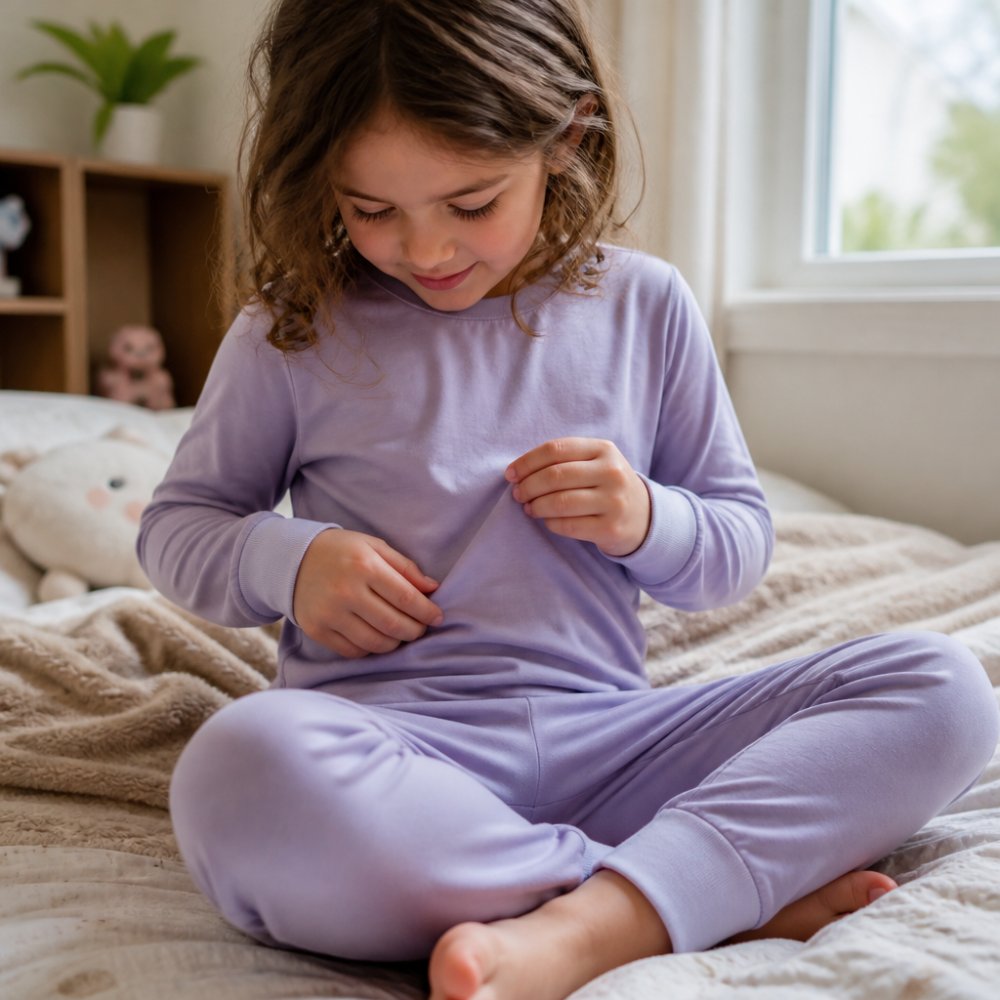
Sensory-friendly clothing for kids goes beyond softness. It removes triggers that cause distress: itchy tags, seams that press into skin, closures requiring fine motor control, fabric that doesn't breathe, and restrictive fits.
The best sensory-friendly options share these traits:
- No internal tags or labels, printed labels only, placed where they won't contact skin
- Flat or hidden seams, stitching that doesn't create pressure ridges
- Breathable, moisture-wicking fabric, cotton, bamboo, or blends that don't trap heat
For children with autism or sensory processing disorder, these features mean the difference between wearing clothes all day and constant complaints.
Bamboo Pajamas for Kids vs. Cotton: Comfort and Durability
Bamboo pajamas for kids have gained popularity because bamboo is softer, more breathable, and naturally hypoallergenic than standard cotton.
Bamboo advantages:
- Silkier feel, softer against sensitive skin
- Better temperature regulation (cooler in summer, warm in winter)
- Naturally antimicrobial (fewer odors between washes)
Cotton advantages:
- More durable through repeated washing
- Less prone to pilling
- Better for children who sweat heavily
Bamboo works best for tactile sensitivities needing maximum softness; cotton suits active kids or humid climates. Many families use both, bamboo for sensitive days and cotton for everyday wear.
The durability gap is real: bamboo softens with each wash but can pill over time. Premium bamboo holds up better than budget options.
Kids' Pajamas for Sensitive Skin: What the Data Shows
Kids' pajamas for sensitive skin require more than soft fabric. Chemical residues from manufacturing, dyes, and finishes can trigger reactions in children with eczema, allergies, or sensory sensitivities.
The safest options are certified organic or chemically processed under strict standards. Look for:
- GOTS certification, ensures organic fibers and safe dyes throughout manufacturing
- Oeko-Tex Standard 100, tests for harmful substances and heavy metals
- Free & Clear labeling, indicates hypoallergenic processing
Caden Lane vs. Little Sleepies: The Direct Comparison
Most "alternative" roundups name brands and stop there. Parents need a like-for-like read on fabric, fit, sizing, and price by garment type so the switch isn't a guess. Here's how the two most-compared names stack up.
Fabric composition, side by side
- Caden Lane: Built around organic cotton, with GOTS certification on its organic cotton lines. GOTS covers the full chain, from fiber growing through dyeing and finishing, verifying both organic content and restricted chemical inputs.
- Little Sleepies: Built around a bamboo viscose and spandex blend. Bamboo viscose is regenerated cellulose, not a raw fiber, so the "bamboo" claim describes the source pulp, not the finished fiber's performance. The spandex gives it the stretch and recovery parents notice.
That difference matters for sensory-sensitive kids. Cotton is a staple fiber with low stretch and predictable hand-feel; bamboo viscose drapes and stretches more, which some children find soothing and others find "too slippery." Neither is universally better, but fiber percentages explain the behavior.
Certifications: what's actually verified
- GOTS is a third-party standard covering organic fiber content, processing, and social criteria. If a brand claims GOTS, ask for the license number and scope certificate.
- Oeko-Tex Standard 100 tests the finished article for harmful substances. It does not certify organic content. A garment can be Oeko-Tex certified and still be conventional cotton.
- "Bamboo" alone is unregulated as a marketing term. Look for "bamboo viscose" or "bamboo lyocell" and, for lyocell, a closed-loop manufacturing claim.
Sizing and fit
- Caden Lane: Generous cut, wide age span (newborn through roughly 14). Parents commonly report room to grow and a relaxed silhouette.
- Little Sleepies: More tapered, narrower age span (newborn through roughly 8). The stretch accommodates some growth, but the silhouette is closer to the body.
For a sensory-sensitive child, "generous" and "fitted" aren't neutral words: loose fabric can bunch and twist, snug fabric can feel restrictive. Order one piece in each silhouette before committing to a full set.
Price by garment type
Prices shift with sales, so treat any number as a snapshot. What's stable is the structure of the pricing:
| Garment | Caden Lane | Little Sleepies |
|---|---|---|
| Convertible footie (newborn) | Premium tier | Mid tier |
| Two-piece pajama set (toddler) | Premium tier | Mid tier |
| Matching family set | Premium tier | Mid tier |
Both brands run frequent promotions and sell multi-packs that lower per-piece cost. The honest comparison isn't sticker price but cost per wear: a premium footie surviving 60 washes beats a cheaper one that pills at 20.
Where a third option fits
GOTS public certificate database
Oeko-Tex Standard 100 label check
Durability and Care: How Alternatives Hold Up After Washing
Durability is where soft-pajama marketing quietly falls apart. Every brand promises day-one softness; the real question is what the fabric looks like at wash 30, and whether seams, color, and fit survived. Here's what drives wear, by fiber and garment type.
Why bamboo and cotton age differently
- Bamboo viscose is a regenerated cellulose fiber. Short fibers at the surface work loose with agitation and friction, producing pilling. The fiber also loses strength when wet, so hot water and high-heat drying accelerate shrinkage and surface wear.
- Organic cotton is a staple fiber with longer individual fibers. It abrades more slowly, holds color longer, and tolerates warmer wash temperatures. It may feel slightly less silky at first but tends to look newer for longer.
Care by garment type
- Convertible footies and sleepers: The feet and cuffs take the most friction. Turn them inside out before washing so the outer surface isn't abrading against zippers or snaps from other garments.
- Two-piece sets: Wash tops and bottoms together so they fade at the same rate. Separating them is the fastest way to end up with a mismatched set.
- Newborn gowns and knot gowns: The open bottom and ties are the weak points. Use a mesh laundry bag to keep ties from snagging.
A realistic wash timeline
These are patterns most parents report, not guarantees:
- Washes 1-5: Fabric softens as residual sizing and finishes wash out. Some shrinkage is normal, especially in bamboo.
- Washes 6-20: Peak feel and fit. This is the window where you'll know whether the garment works for your child.
- Washes 21-40: Color begins to soften. Bamboo may show light pilling at friction points (underarms, inner thighs, cuffs). Cotton typically still looks new.
How to tell if a fabric is failing or just aging
- Pilling is surface fiber breakage. It's cosmetic and can be removed with a fabric shaver, but it signals the fiber is wearing.
- Thinning is fiber loss. If light passes through the fabric at stress points, the garment is near end of life.
- Seam separation is a construction failure, not a fabric failure. It usually shows up first at the crotch and underarm.
The cost-per-wear math
A premium pajama that survives 60 washes costs less per wear than a budget one that pills at 20, even if the sticker price is double. Track it simply: divide the price by the number of washes before the garment looks worn. That number, not the tag, is the real value comparison.
Common Mistakes Parents Make When Switching Brands
The biggest mistake is assuming sizing translates across brands. Your child's Caden Lane size doesn't predict their size elsewhere.
Another common error: ignoring care instructions. Bamboo washed in hot water or dried on high heat shrinks dramatically; organic cotton benefits from cold water and line drying.
Parents also underestimate how much their child's preferences matter.
Finally, don't assume "organic" or "certified" means hypoallergenic. Some children react to specific dyes or finishes regardless of certification.
Finding the right caden lane alternative for kids means matching your child's sensory needs with a brand that delivers on comfort, durability, and your family's values. At Doodlebug's Children's Boutique, we specialize in sensory-friendly clothing designed specifically for children with sensory sensitivities.
| Feature | Caden Lane | Little Sleepies | Doodlebug's Children's Boutique |
|---|---|---|---|
| Primary Fabric | Organic Cotton | Bamboo-Cotton Blend | Organic Cotton & Bamboo Options |
| Tag-less Design | Yes | Yes | Yes |
| Size Range | Newborn-14 | Newborn-8 | Multiple sizes |
| Fit Style | Generous | Fitted | Relaxed, sensory-optimized |
| Certifications | GOTS | Not specified | Fair-trade |
| Price Point | Premium | Mid-range | See website for current prices |
Frequently Asked Questions
What brands are similar to Caden Lane and offer sensory-friendly options?
Several alternatives prioritize sensory comfort for kids with sensitive skin. Little Sleepies, Babytodd & Co., and specialty retailers like Doodlebug's Children's Boutique offer tag-less pajamas and sleepwear made from organic cotton or bamboo fabric. The key differences lie in fabric composition, seam construction, sizing accuracy, and price. Each brand approaches sensory-friendly design differently, so testing fit and fabric softness before committing to larger orders helps you find the best match for your child's specific needs.
How do bamboo pajamas for kids compare to organic cotton in terms of softness and durability?
Bamboo fabric typically feels softer initially and offers superior breathability, making it excellent for temperature regulation. Organic cotton is more durable through repeated washing and resists pilling better over time. Bamboo-cotton blends balance both qualities, providing softness while improving longevity. For children with severe sensory sensitivities, bamboo often wins on first-wear comfort. For parents prioritizing long-term value and washability, organic cotton or blended options may be more practical, especially for active kids who wear clothes frequently.
What should I look for in kids' pajamas for sensitive skin to avoid irritation?
Prioritize tag-less construction, flat seams, and certified organic or hypoallergenic fabrics. Check for fold-over cuffs at wrists and ankles to eliminate elastic irritation. Avoid synthetic dyes and chemical finishes; look for GOTS (Global Organic Textile Standard) certification or similar credentials. Pay attention to closure types: magnetic or elastic waistbands are gentler than snaps or zippers for kids with fastener sensitivities.
How do I know if a brand's durability claims are real, or if clothes will fall apart after a few washes?
Examine fabric weight, thread count, and construction details before buying. Bamboo blends with at least 20% cotton hold up better than 100% bamboo. Read parent reviews specifically mentioning pilling, shrinkage, and color fading after multiple washes. Fair-trade and certified brands often publish transparency reports about manufacturing standards, which correlates with longer-lasting garments.