
Table of Contents
- Why Parents Switch From Caden Lane to Alternatives
- Criteria for Choosing Organic Pajamas for Sensitive Skin
- Why Children Refuse to Wear Certain Clothing Textures
- Bamboo vs Organic Cotton Pajamas for Babies
- Doodlebug's Organic Pajama Options: Durability and Comfort
- Safety Standards and Certifications in Organic Sleepwear
- Price-Per-Wear Analysis: Budget-Friendly vs Premium Organic Pajamas
- Conclusion: Making the Right Choice for Your Child
- Frequently Asked Questions
Last Updated: September 17, 2026
When your child has sensitive skin or sensory processing challenges, finding the right pajamas becomes more than a shopping task, it becomes essential to their comfort and sleep quality, which is why exploring organic pajamas alternatives can help you discover options tailored to your child's needs. Many parents discover that Caden Lane alternatives for organic pajamas offer different approaches to addressing what makes sleepwear work for kids who struggle with standard options. At Doodlebug's Children's Boutique, we understand that the best choice depends on your child's specific needs, not just brand reputation.
This guide breaks down what makes organic pajamas for sensitive skin actually work, compares the key differences between materials and construction methods, and shows you exactly how to evaluate options that genuinely fit your family's situation.
Why Parents Switch From Caden Lane to Alternatives
Parents leave established brands for specific, practical reasons. The most common isn't dissatisfaction with quality, it's that one brand doesn't solve every child's sensory needs, or the fit and pricing don't align with their family's reality.
Some children need tag-free construction but also require specific fabric weight or breathability. Others have severe seam sensitivity that standard pajamas, even well-made ones, simply can't address. Price matters too: when you're buying multiple sets because your child refuses to wear anything uncomfortable, the cost per outfit adds up quickly.
The real shift happens when parents realize that "premium brand" doesn't always mean "best for my specific child." A pajama set that works beautifully for one kid with sensory issues might trigger meltdowns in another because the fabric weight, seam placement, or fit doesn't match their particular needs.

Criteria for Choosing Organic Pajamas for Sensitive Skin
The best organic pajamas for sensitive skin start with understanding what "organic" actually protects against and what sensory factors matter most to your child.
Fabric composition matters first. Organic cotton and bamboo viscose (made from organically grown bamboo) both eliminate synthetic pesticide residues, but they behave differently. Bamboo viscose tends to be softer and more moisture-wicking, while organic cotton offers durability and breathability in different proportions.
Construction details determine real comfort. Tag-free labeling is standard now, but seam placement, seam type (flat-lock versus traditional), and how the garment is cut all affect whether a child will actually wear it. Some children tolerate visible seams if they're flat and smooth; others need seamless panels.
Fit consistency matters for sensory kids. Snug-fitting sleepwear is a federal safety requirement for flame-retardant-free pajamas, but "snug" varies. Some children need genuinely fitted garments; others find tight waistbands intolerable. Understanding whether your child needs compression-like fit or just a trim silhouette changes which brands work.
Durability after washing is non-negotiable. Organic fabrics can shrink, pill, or lose softness faster than synthetic blends. If you're investing in sensory-friendly pajamas, they need to maintain their properties through multiple wash cycles.
Certifications provide transparency. Look for OEKO-TEX or GOTS (Global Organic Textile Standard) certification, which verify that the fabric is free from harmful chemicals and dyes. These aren't marketing claims, they're third-party tested standards.
| Selection Criteria | What to Look For | Why It Matters |
|---|---|---|
| Fabric type | 95%+ bamboo viscose or organic cotton | Eliminates synthetic pesticide residue |
| Tag placement | Tag-free or flat printed labels | Prevents tactile triggers |
| Seam construction | Flat-lock or seamless panels | Reduces sensory irritation |
| Fit type | Snug but not restrictive | Meets safety; matches sensory needs |
| Certifications | OEKO-TEX or GOTS | Verifies chemical-free production |
| Shrinkage resistance | Pre-shrunk or minimal shrinkage noted | Maintains fit and comfort long-term |
Why Children Refuse to Wear Certain Clothing Textures
Texture rejection in children isn't picky behavior, it's a genuine sensory response. Understanding the difference changes how you approach finding pajamas that actually work.
Children with sensory processing differences experience fabric weight, surface texture, and seam placement as more intense than other kids do. What feels soft to you might feel scratchy or overwhelming to them. This isn't a preference; it's neurological.
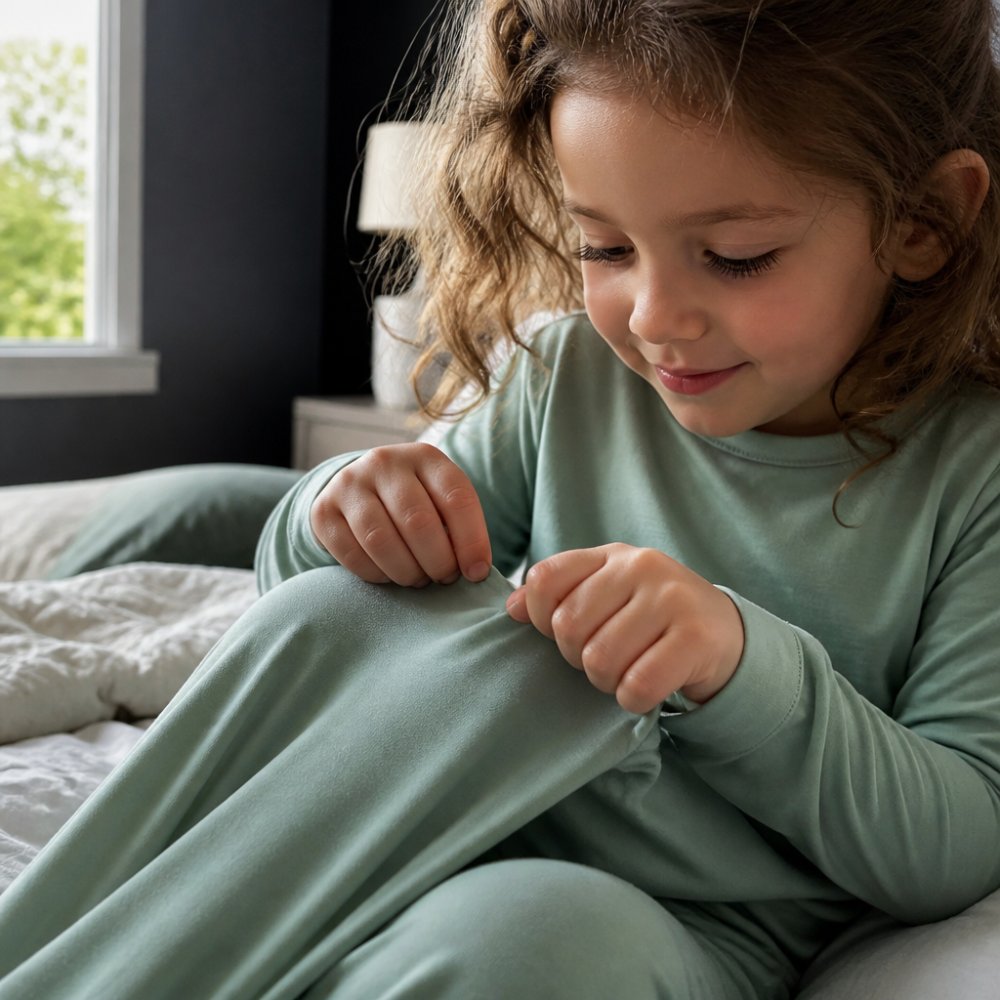
The specific triggers vary widely. Some children reject anything with visible seams. Others tolerate seams if they're perfectly flat but refuse any garment with a tag, even a printed one. Weight matters too: some sensory-sensitive kids need lightweight, barely-there fabric; others find thin fabric uncomfortable and prefer denser, more substantial material.
Elastic bands, cuffs, and closures create additional sensory input. A child who's fine with the main fabric might still refuse pajamas because the waistband feels wrong, the cuff is too tight, or the zipper placement creates unexpected pressure.
The solution isn't to find one "perfect" brand, it's to understand your child's specific triggers and then match them to construction details rather than brand names, which is exactly what organic pajamas alternatives allow you to do.
Long Sleeve Pajama Set in Natural →
Bamboo vs Organic Cotton Pajamas for Babies
Both bamboo viscose and organic cotton work well for sensitive skin, but they're different enough that the right choice depends on your child's specific needs.
Bamboo viscose (made from organically grown bamboo) offers exceptional softness and moisture-wicking properties. It's lightweight and breathable, making it ideal for children who sleep hot or live in warmer climates. Bamboo fabric has natural hypoallergenic properties and is often gentler on eczema-prone skin.
Organic cotton is more durable and holds its shape better through multiple wash cycles. It's naturally breathable and works well for year-round wear. The softness depends heavily on how the fabric is processed, high-quality organic cotton can be exceptionally soft, but it requires more processing than bamboo.
Doodlebug's Children's Boutique offers both options. The Long Sleeve Pajama Set in Natural Bubbles uses our signature bamboo blend (95% viscose from bamboo, 5% spandex) and is priced at $29.99. The Short Sleeve Pajama Set Cake Pop Doe & Fawn uses the same bamboo blend at $25.99, giving you options across seasons and preferences.

Doodlebug's Organic Pajama Options: Durability and Comfort
Our pajama sets are built specifically for children with sensory sensitivities. Every design starts with the understanding that comfort isn't optional, it's foundational to sleep quality and emotional regulation.
All Doodlebug's pajamas feature tag-free labels and are crafted from our KICKEE Bamboo Signature Blend (95% viscose from bamboo, 5% spandex). The spandex provides stretch and recovery, so the fabric maintains its shape through washing. The snug fit is intentional: federal regulations require flame-retardant-free sleepwear to fit snugly for safety, and we've designed our fit to meet that requirement without feeling restrictive.
Moisture-wicking is built in, which matters more than many parents realize. Children who sweat during sleep stay cooler and drier, which reduces nighttime discomfort and restlessness.
Our current collection includes:
- Long Sleeve Pajama Set in Natural Bubbles ($29.99), best for winter or children who prefer long sleeves year-round
- Short Sleeve Pajama Set Cake Pop Doe & Fawn ($25.99), popular print for children who like visual interest
- Short Sleeve Pajama Set Shrinking Violet Forest Party ($25.99), nature-themed for outdoor-loving kids
- Short Sleeve Pajama Set Latte Camping Animals ($25.99), warm neutral tones for minimal visual stimulation
- Short Sleeve Pajama Set Fresh Air Fishing ($25.99), adventure-themed option
Safety Standards and Certifications in Organic Sleepwear
Federal regulations and third-party certifications exist for good reasons: they protect children from chemical exposure and ensure construction safety.
Price-Per-Wear Analysis: Budget-Friendly vs Premium Organic Pajamas
Comparing pajama prices requires looking beyond the initial cost. Price-per-wear accounts for durability, how long your child will actually wear the garment, and how many wash cycles it survives.
Conclusion: Making the Right Choice for Your Child
Finding organic pajamas for sensitive skin isn't about choosing the most expensive brand or the one with the best marketing. It's about matching your child's specific sensory needs to actual construction details: fabric type, seam placement, tag-free design, and fit.
Frequently Asked Questions
What makes organic pajamas better for sensitive skin than conventional options?
Organic pajamas are grown without synthetic pesticides or chemical fertilizers, which means fewer residual chemicals against your child's skin. Bamboo viscose, used in many organic pajamas, is naturally hypoallergenic and moisture-wicking, making it ideal for children prone to eczema or sensory sensitivities. Products like our Short Sleeve Pajama Set in Cake Pop Doe & Fawn are crafted from bamboo that's organically and sustainably grown, with tag-free labels to eliminate common irritants that trigger discomfort in sensitive kids.
How do bamboo and organic cotton pajamas compare for sensitive skin?
Bamboo viscose is softer and more moisture-wicking than organic cotton, making it better for temperature regulation and sweat management. Organic cotton is durable and breathable but can feel slightly stiffer initially. For children with sensory processing issues or eczema, bamboo typically wins because of its silky texture and thermal properties. Both are chemical-free when certified organic, but bamboo's lightweight, stretchy nature makes it more forgiving for kids who are texture-sensitive.
Are Doodlebug's organic pajamas flame retardant free, and is that safe?
Yes, all Doodlebug pajamas are flame retardant free. Federal regulations require sleepwear without flame retardant chemicals to be snug-fitting for safety. Our pajamas meet this standard with a fitted design that reduces fire risk without toxic chemical treatments. This is especially important for children with sensitive skin or sensory sensitivities, as flame retardant chemicals can trigger reactions. The snug fit also provides comfort for kids with autism or sensory processing disorders who prefer secure, pressure-like clothing.
Why do some children refuse to wear certain clothing textures?
Children with sensory processing disorders, autism, or general sensory sensitivity experience clothing textures differently. Tags, seams, loose fabric, and rough materials can feel painful or unbearable rather than merely uncomfortable. Their nervous systems process tactile input more intensely. Tag-free designs, seamless construction, and ultra-soft materials like bamboo viscose help reduce sensory input overload. Understanding this texture sensitivity is key to finding pajamas your child will actually wear without distress or meltdowns.