
Table of Contents
- Why Sensory Friendly Gifts Matter More Than You Think
- What Makes a Toy or Clothing 'Sensory Friendly'?
- Best Fidget Toys for Sensory Processing and Calming
- Sensory-Friendly Clothing for Kids: What to Look For
- The Benefits of Bamboo Clothing for Sensory Needs
- Gifts That Help With Regulation at Home and School
- Budget-Friendly and DIY Sensory Gift Ideas
- How to Choose the Right Sensory Gift for the Person
- Frequently Asked Questions
Last Updated: September 16, 2026
Why Sensory Friendly Gifts Matter More Than You Think
A gift that overwhelms a child isn't a gift at all. For kids with sensory processing differences, the wrong present can trigger a meltdown, while the right one becomes a daily tool for calm. This guide from Doodlebug's Children's Boutique covers sensory friendly gift ideas, organized by need rather than price.
CDC overview of autism spectrum disorder
What Makes a Toy or Clothing 'Sensory Friendly'?
A sensory friendly item removes friction instead of adding stimulation. The best options share three traits: soft or neutral materials, no irritating construction details, and a predictable sensory experience the child can control.
The Checklist: Fabric, Fasteners, and Feedback
- No tags, rough seams, or scratchy embroidery
- Soft, breathable fabric such as bamboo or organic cotton
- Elastic waistbands or magnetic closures instead of buttons and zippers
- Gentle, consistent texture rather than mixed scratchy-and-soft surfaces
- Predictable weight, sound, or motion the child can regulate themselves
Run any gift through this list before buying, a shirt that fails on fasteners fails on everything else.
Best Fidget Toys for Sensory Processing and Calming
Fidgets work because they give restless hands a job. For a child who seeks tactile stimulation, a small, quiet fidget can mean the difference between a focused afternoon and a frustrated one.
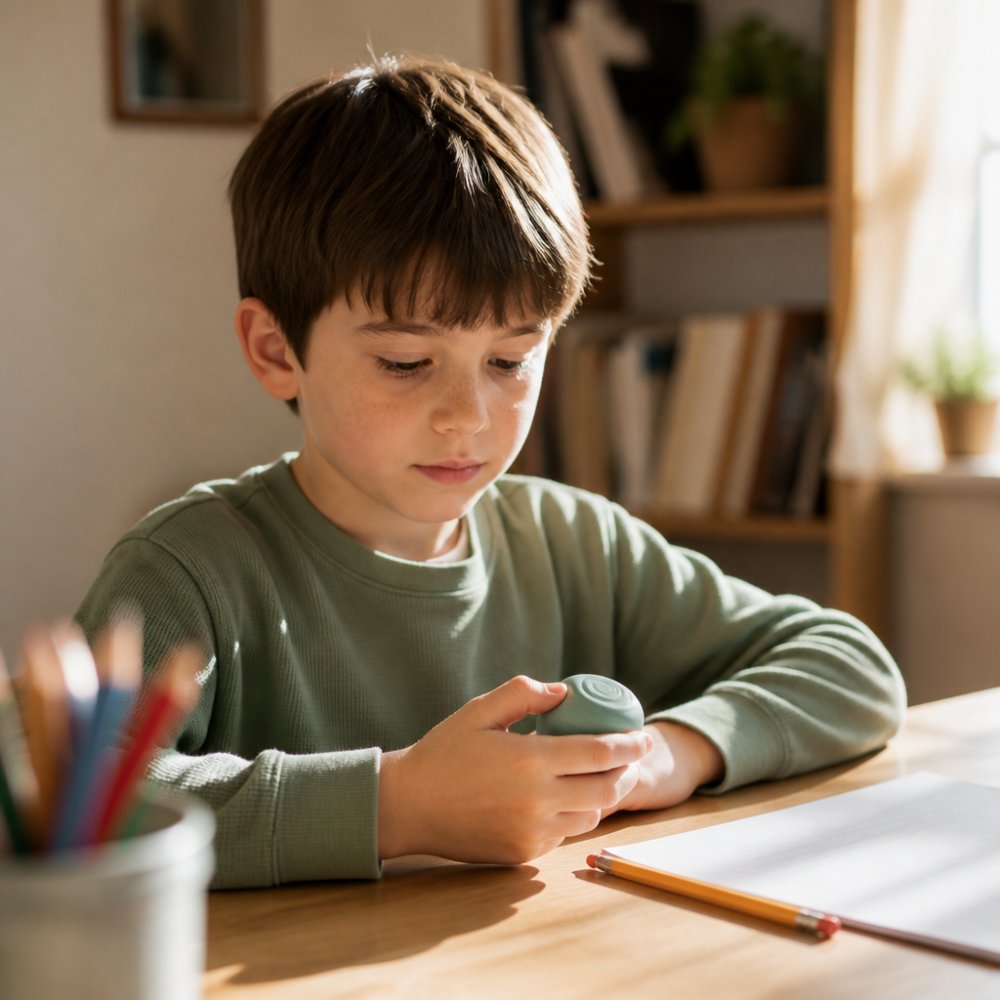
Pocket-Sized Calm: Worry Stones and Squish Fidgets
The Worry Stones set from Doodlebug's Children's Boutique ($19.99) packs six uniquely textured silicone stones into a pocket-sized kit. Each stone has a different surface, giving kids a discreet grounding tool for school or travel. They're food-grade, BPA-free silicone, which matters for kids who mouth their fidgets.

Bigger Tools for Bigger Feelings: Weighted Plush and Breathing Aids
When a child needs full-body regulation rather than a hand fidget, weighted plush does more work. Ollie the Weighted Octopus ($68.99) uses gentle deep touch pressure to calm the nervous system and doubles as a hot-or-cold therapy tool. It's a bedtime and transition companion, not just a toy.
| Gift | Price | Best For | Key Feature |
|---|---|---|---|
| Worry Stones (Set of 6) | $19.99 | School, travel, discreet use | Six unique silicone textures |
| NeeDoh Nice Cube Swirl | $11.99 | Tweens, desk fidgeting | Dense squish, returns to shape |
| Blowing Bubble Dumplings | $14.99 | Playful sensory seekers | Bubble action on every squeeze |
| Ollie the Weighted Octopus | $68.99 | Bedtime, big feelings | Weighted pressure, hot/cold therapy |
| Mindfulness Magic Ball | $21.99 | Breathing practice | Visual expanding-sphere guide |
Sensory-Friendly Clothing for Kids: What to Look For
Clothing is where sensory gifts get practical. A tag-less, soft-fabric garment gets worn every day, delivering calming value far more often than a toy that lives in a drawer.
The Benefits of Bamboo Clothing for Sensory Needs
Bamboo fabric earns its place in sensory wardrobes for three reasons: it's naturally soft, it breathes, and it regulates temperature. For a child who overheats easily or can't stand synthetic fabric against skin, that removes a daily source of discomfort.
Gifts That Help With Regulation at Home and School
Regulation tools should live where the child spends time, not in a toy box. The most useful sensory gifts support focus during homework, transitions, and classroom hours.
Seating and Movement Tools for Focus
The Balance Cushion Sensory Seat by Bouncyband ($32.99) lets a wiggly kid move without leaving their chair. The curved base adds gentle side-to-side motion while textured dimples provide quiet sensory input, so a child can release restless energy without disrupting class. It ships pre-inflated at 13.5 inches in diameter, includes a hand pump, and supports up to 300 lb for ages 3 and up.
Visual and Auditory Calming Aids
For babies and toddlers, the Baby Calm Down Bottle ($18.99) uses mesmerizing, sealed liquid motion to encourage watching, pausing, and self-soothing. Fully sealed and baby-safe, it fits tummy time and winding down before naps.
Budget-Friendly and DIY Sensory Gift Ideas
Most sensory gift guides assume a $50+ budget, leaving out the families who need these tools most. The good news: some of the most effective sensory gifts cost under $15 to assemble.
DIY Kits That Actually Work
- Calm-down kit in a pouch (about $10-$15): A small zippered pouch with a smooth stone, a textured silicone item, a squish ball, and a laminated breathing card. The variety matters, an overstimulated child needs different input than an understimulated one, and having both options in one place lets them choose.
- Weighted lap pad (about $8-$12): A sealed fabric sleeve filled with rice or poly pellets, sized to the child's lap (roughly 12 by 18 inches for a preschooler, larger for older kids). A common guideline is about 10% of the child's body weight, but check with an occupational therapist if the child has respiratory or mobility concerns. Sew the closure shut, don't rely on hook-and-loop tape alone.
- Sensory bin (about $5-$10): A shallow plastic tub filled with dry rice, dry beans, or kinetic sand, plus scoops, cups, and a few textured objects. One of the highest-value DIY gifts because contents can be swapped seasonally for ongoing novelty.
- Calm-down bottle (about $3-$6): A sealed water bottle filled with water, clear glue, and glitter or small floating beads. The glue slows the glitter so the child has to watch and wait, that pause is the regulation skill. Seal the lid with waterproof tape or hot glue.
- Texture swatch book (about $5): Fabric scraps in different weaves, fleece, corduroy, satin, burlap, minky, stitched or glued onto cardstock and bound with a ring. Excellent for kids who explore by touch.
- Chewable-safe alternatives: Silicone straws and food-grade silicone tubing cut to length can serve as chew tools for kids who mouth items, but only if the material is explicitly food-grade and the child is supervised. Never substitute non-food-grade silicone, rubber bands, or pen caps.
What DIY Saves You, and What It Costs You
DIY sensory gifts typically cost less than retail. A retail weighted lap pad runs $30-$50; a homemade version costs under $12 in materials. A retail calm-down bottle can be $15-$20; DIY is under $6.
Sensory Genius 12 Days of Fun & Focus →
- No third-party verification of material safety
- No standardized choking-hazard testing
- No guarantee the seams, seals, or closures will hold up to repeated use
- No recourse if the item fails
Material Safety and Sustainability
If you're buying rather than making, the material question matters as much as price. Kids who mouth their fidgets or wear sensory clothing all day have prolonged skin and mouth contact with these materials.
A few practical guidelines:
- Look for food-grade or medical-grade silicone on anything a child might chew. It's free of BPA, phthalates, and lead, and doesn't harbor bacteria the way porous materials can.
- Choose organic cotton or bamboo for sensory clothing. Both are softer against skin and less likely to carry the chemical finishes that make conventional fabrics scratchy or cause reactions.
- Avoid PVC, phthalates, and BPA in soft plastics. These are the materials most commonly flagged in sensory toy recalls.
- Check for third-party certifications where available. A manufacturer that publishes material sourcing and safety testing is generally safer than one that doesn't.
- Consider end-of-life. Bamboo, organic cotton, and silicone are more recyclable or biodegradable than mixed-material plastic toys, which matters to a growing number of gift-givers.
Budget Commercial Options Worth Knowing
The Sensory Genius 12 Days of Fun & Focus Fidget Toy Advent Calendar ($36.99) sits at the value end of the commercial range. It packs 12 individually boxed fidget toys into one countdown, working for birthdays, holidays, or the first day of school. Recommended for ages 5 and up, it suits kids, teens, and even adults who fidget.

How to Choose the Right Sensory Gift for the Person
Most gift guides stop at "know the child." That's not actionable. What works is matching the gift to three variables at once: the child's sensory profile, their developmental stage, and the environment where the gift will live. Get those three right and almost any well-made item becomes a good gift.
Step 1: Identify the Sensory Profile
Sensory processing differences generally fall into three patterns, and the same child can shift between them depending on the day, setting, and how tired they are.
- Sensory seekers crave input. They press hard, crash into furniture, chew sleeves, and seek loud or fast experiences. Gifts that work: weighted plush, chewable jewelry, balance cushions, textured fidgets, and anything with resistance.
- Sensory avoiders are overwhelmed by input. Tags, seams, loud rooms, and bright lights register as painful. Gifts that work: tag-less bamboo apparel, noise-reducing headphones, soft plush, dimmable or amber lighting, and quiet, predictable fidgets.
- Mixed or fluctuating profiles are the most common. A child may seek deep pressure at home but avoid it in a crowded classroom. For these kids, a gift with adjustable intensity, a removable weighted lap pad, a fidget with a smooth side and a textured side, outperforms a single-purpose item.
Step 2: Match the Gift to the Developmental Stage
Age changes what a sensory gift needs to do. The same product category can be perfect at one stage and useless at the next.
- Toddlers (ages 1-3): Prioritize mouth-safe materials, sealed construction, and one clear sensory feature. Calm-down bottles, large-texture balls, and soft tag-less clothing work well. Anything with small parts is a choking risk, check the manufacturer's age rating, not the box art.
- Preschool and early elementary (ages 4-7): The sweet spot for fidgets, sensory bins, and chewable jewelry. Kids at this stage are learning to self-regulate, so tools they can operate independently, a worry stone in a pocket, a chew necklace on a shirt, build real skills.
- Tweens (ages 8-12): Design and discretion matter more than function. A fidget that looks babyish won't get used, no matter how well it works. Look for neutral colors, adult-adjacent shapes, and items that fit in a pencil case or backpack pocket.
- Teens and adults: Sensory needs don't disappear at 13. Weighted blankets, lap pads, noise-reducing earbuds, and desk-friendly fidgets are legitimate gifts for older recipients. Many adults never diagnosed as children are discovering sensory tools for the first time.
Step 3: Choose for the Environment
Where a gift gets used determines whether it gets used at all.
- School: Quiet, small, and non-disruptive. A worry stone, a chew necklace worn under a collar, or a pencil-top fidget won't draw attention or make noise. Balance cushions work if the teacher is on board.
- Home: Bigger tools are fair game. Weighted plush, sensory swings, crash pads, and calm-down corner items can live where the child decompresses.
- Travel and car rides: Portable, sealed, no loose parts. A small fidget pouch, a calm-down bottle, and noise-reducing headphones cover most travel needs.
- Bedtime: Weighted blankets, weighted plush, and soft plush pillows support the wind-down routine. Avoid anything with lights or sounds that stimulate rather than settle.
A Simple Decision Shortcut
If you're still stuck, use this rule: buy for the hardest moment, not the happiest one. A gift that helps a child through a meltdown, a transition, or a noisy classroom delivers more value than one that only works when everything is already calm.
Frequently Asked Questions
What makes a toy or piece of clothing 'sensory friendly'?
A sensory friendly item reduces unwanted input while meeting a sensory need. For clothing, that means tagless designs, flat seams, soft bamboo or organic cotton, and stretchy waistbands instead of buttons or zippers. For toys, it means predictable texture, no sudden loud noises or flashing lights, and a clear purpose like squeezing, stretching, or rocking. The goal is to support self-regulation without adding stress.
What are the best fidget toys for sensory processing?
The best fidget toys for sensory processing match the child's specific need. For tactile seekers, squishy cubes and textured worry stones offer calming tactile stimulation. For kids who need movement, a balance cushion provides proprioceptive input while sitting. For visual calm, a calm-down bottle or mindfulness ball gives something to watch and breathe with. Look for quiet, durable options that fit the environment, like a classroom or car ride.
What are the benefits of bamboo clothing for sensory needs?
Bamboo clothing is naturally hypoallergenic, moisture-wicking, and temperature regulating, which helps kids who are sensitive to heat, sweat, or scratchy fabrics. It feels smooth against the skin and stretches with movement, reducing the friction that can trigger sensory overwhelm. Tagless bamboo pieces like ruffle pants or lounge sets also cut down on the itching and irritation that traditional tags and seams cause.
How do I choose a gift for someone with sensory processing sensitivities?
Start by observing whether they seek or avoid sensory input. Sensory-seeking kids often love weighted plush, squishy fidgets, and movement tools. Sensory-avoiding kids usually prefer quiet, soft, predictable items like tagless bamboo clothing or a plush pillow with no scratchy edges. When unsure, choose something adjustable, like a balance cushion or a set of worry stones, and keep the packaging simple to avoid overwhelm.
Are there sensory-friendly gift options for tweens?
Yes. Tweens often want gifts that do not look babyish. Discreet fidgets like silicone worry stones in pastel colors, a marbled squish cube, or a weighted octopus plush work well because they look like accessories or room decor. For clothing, tagless bamboo pants and soft lounge pieces in solid colors feel mature while still meeting sensory needs. A 12-day fidget advent calendar also appeals to tweens who like surprises.