
Last Updated: October 29, 2026
Quick Summary
Sensory toys for calm down corners are worth it when they match your child's sensory needs, the room's noise level, and their age. Stock one tool from each sensory group, keep three to five tools visible at a time, and practice with them during calm moments so your child knows what to reach for.
- A well-stocked corner has at least one tool from each of the four sensory groups.
- Keep three to five tools visible at a time and rotate the rest weekly.
- The Worry Stones set at $19.99 offers six textured silicone stones for silent use.
- The Comfy Cozy Peapod Inflatable Chair at $89.99 is for ages 4 to 10 and holds up to 200 pounds.
- Sensory jars require 3 AAA batteries, not included, so keep spares in the corner.
Table of Contents
- Why the Right Sensory Toys Make or Break a Calm-Down Corner
- Calming Toys and Tools for Kids: What Belongs in the Corner
- Sensory Fidget Toys for Kids: Small Tools, Big Regulation Wins
- Self-Regulation Toys for Kids: Teaching the Pause, Not Just the Distraction
- Calm-Down Corner Supplies: Building the Space Around the Toys
- Matching Toys to Sensory Needs: A Practical Selection Guide
- Safety, Age Guidance, and What These Tools Can't Do
- Stock Your Calm-Down Corner at Doodlebug's Children's Boutique
- Frequently Asked Questions
Why the Right Sensory Toys Make or Break a Calm-Down Corner
A calm-down corner succeeds or fails on one question: does the child actually reach for what's in it? Sensory toys for calm down corners work only when the tools match the child's sensory needs, the room's noise level, and the kid's age.
The right sensory toys for calm down corners do three jobs at once: they give restless hands something to do, lower the volume of a busy room, and teach a child what "calm" physically feels like.
Calming Toys and Tools for Kids: What Belongs in the Corner
Calming toys and tools for kids fall into four groups: visual, auditory, tactile, and deep pressure. A well-stocked corner has at least one tool from each group, because you never know which sense is driving the overwhelm on a given day.
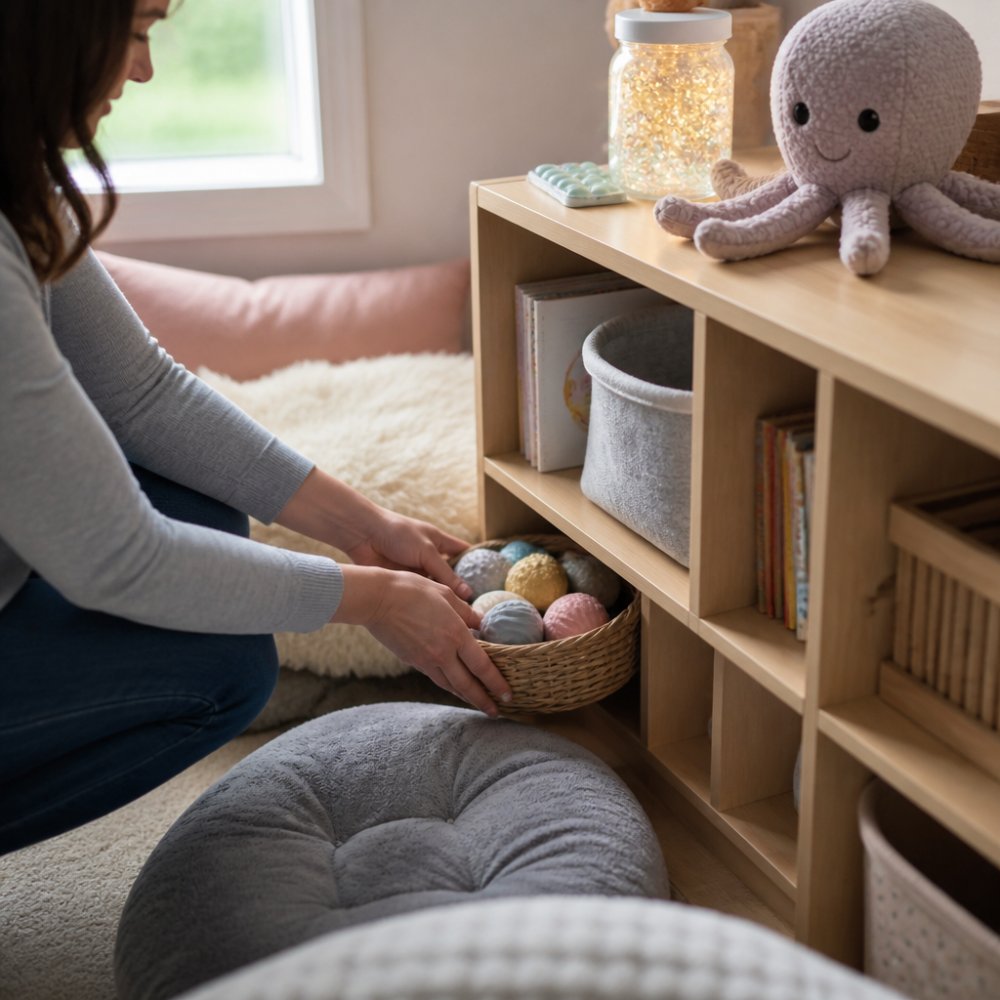
Sound and light hit a child before touch does, so visual and auditory tools set the tone for the space.
Visual and Auditory Tools That Settle a Busy Room
Visual tools give a child something soft to focus on instead of the chaos around them. A sensory jar with a gentle glow, like our Sensory Jar: Blue at $21.99, offers a calm point of focus that a child can tap and watch. The Teal and Coral versions run the same price.
For sound, the priority is reducing auditory input, not adding to it.
Deep Pressure and Weighted Comfort
Deep touch pressure helps a dysregulated nervous system settle, and weighted items deliver it without requiring a child to ask for a hug. A weighted plush like Ollie The Weighted Octopus Toy at $68.99 gives kids something to hold onto during big feelings, and it works for cold or heat therapy too.

For full-body pressure, a Comfy Cozy Peapod Inflatable Chair at $89.99 offers that soothing "hug" sensation for ages 4 to 10, holds up to 200 pounds, and comes with a pump.
Sensory Fidget Toys for Kids: Small Tools, Big Regulation Wins
Sensory fidget toys for kids are the workhorses of a calm-down corner: small, cheap to stock in multiples, and easy for a child to grab without help. The trick is choosing fidgets that regulate without distracting everyone else in the room.
Quiet Fidgets That Won't Disrupt the Room
Silent fidgets matter in classrooms and shared spaces. Our Worry Stones set at $19.99 gives kids six textured silicone stones that fit in a pocket. They're a practical swap for nail-biting and skin-picking.
The Calming Stretchy Band at $14.99 is another silent option, stretching from 30 inches to over 46 inches, snapping back, and machine washing on a gentle cycle.
Tactile Dough and Textured Mats
Tactile input is where most corners under-deliver. Mood Mudd Dough at $9.99 changes color as kids squeeze and warm it, keeping hands busy and eyes engaged without a screen. It's the cheapest entry point into the corner and the easiest to replace.

For feet and hands together, Sensory Genius Sensory Mats at $19.99 come as a set of four textured mats, each 7.75 inches across, for ages 5 and up. Lay them on the floor as a sensory path or set one on a desk as a focus surface.
| Tool | Price | Sensory Input | Best For |
|---|---|---|---|
| Worry Stones (set of 6) | $19.99 | Tactile | Pockets, classrooms, silent use |
| Calming Stretchy Band | $14.99 | Tactile, movement | Restless hands, decompressing |
| Mood Mudd Dough | $9.99 | Tactile, visual | Quiet time, transitions |
| Sensory Genius Mats | $19.99 | Tactile, balance | Floor paths, desk focus |
| Sensory Jar (Blue/Teal/Coral) | $21.99 | Visual | Bedtime, reset, travel |
| Ollie Weighted Octopus | $68.99 | Deep pressure | Big feelings, sleep routines |
| Comfy Cozy Peapod Chair | $89.99 | Deep pressure | Full-body calming, ages 4-10 |
Self-Regulation Toys for Kids: Teaching the Pause, Not Just the Distraction
Self-regulation toys for kids only build real skills when an adult teaches the pause around them. A fidget that distracts a child from a feeling isn't regulation; it's avoidance.
Breathing is the clearest example. The Mindfulness Magic Ball at $21.99 expands and contracts as a child pulls it, mimicking the lungs.
A common mistake is handing a child a fidget and walking away.
Calm-Down Corner Supplies: Building the Space Around the Toys
Calm-down corner supplies go beyond the toys: seating, storage, lighting, and a visual routine card. The space should feel enclosed and low-stimulation, with soft surfaces, dim light, and tools within arm's reach of a seated child.
- Choose a low-traffic spot away from doorways and screens
- Add soft seating, a cushion, or a Peapod chair
- Place a small shelf or basket at child height
Watch out: a corner stuffed with twenty toys becomes its own source of overwhelm. Keep three to five tools visible at a time and rotate the rest.
Child Mind Institute guidance on calm-down spaces
Matching Toys to Sensory Needs: A Practical Selection Guide
Most buying guides sort toys by category. A more useful approach for a calm-down corner is to sort by sensory profile, because the same tool can settle one child and overwhelm another.
Start with two questions. First, does your child seek this input or avoid it? A sensory seeker craves more of a sensation and may crash, squeeze, or touch everything; a sensory avoider is flooded by the same input and needs it reduced. Second, which sense floods fastest in your child?
Tactile: Touch and Texture
- Seeks touch and texture: Mood Mudd Dough at $9.99, Sensory Genius Sensory Mats at $19.99, and the Worry Stones set at $19.99 give hands and feet steady input. Mats work for floor paths or a desk focus surface.
- Avoids touch and texture: start with one smooth, predictable item rather than a set of six. A single worry stone in a pocket is less overwhelming than a basket of textures, and it does not look like a toy, which helps older kids use it without stigma.
- Mechanism and trade-off: tactile tools regulate by giving the nervous system a concrete, low-stakes task. The trade-off is mess: dough picks up carpet fibers and needs replacing, while silicone stones and mats wipe clean.
Visual: Light and Focus
- Seeks visual input: a sensory jar such as the Sensory Jar: Blue at $21.99 (Teal and Coral at the same price) gives a child a soft point of focus to tap and watch.
- Avoids visual busyness: use one jar, not three, and keep the corner dim. A single glowing object is calming; a shelf of glowing objects is stimulation.
- Mechanism and trade-off: visual tools work by narrowing attention to a slow, predictable pattern. The trade-off is batteries: the jars require 3 AAA batteries, not included, so keep spares in the corner.
Auditory: Sound Reduction
- Overloaded by sound: noise-canceling headphones belong in every corner that serves a sound-sensitive child, paired with a silent visual tool so the child has something to do while the room goes soft.
- Seeks sound: this is the one category where a calm-down corner should usually subtract rather than add. A corner is for lowering input, not for adding music or noisemakers.
- Mechanism and trade-off: headphones reduce the auditory load that competes with a child's ability to think. The trade-off is that full noise cancellation can feel disorienting to some children; a lower setting or a quieter corner may work better than total silence.
Movement and Deep Pressure
- Seeks movement and pressure: the Ollie The Weighted Octopus Toy at $68.99 gives deep touch pressure without requiring a child to ask for a hug, and the Comfy Cozy Peapod Inflatable Chair at $89.99 offers full-body pressure for ages 4 to 10, holding up to 200 pounds.
- Seeks movement but not pressure: the Calming Stretchy Band at $14.99 stretches from 30 inches to over 46 inches and snaps back, giving restless hands a silent outlet.
- Mechanism and trade-off: deep pressure calms by simulating a firm hug, which many children find organizing. The trade-off is that weighted items are not for every child; some dislike the sensation, and weighted products require adult judgment about size and weight.
Oral: Mouth and Chew
- Seeks oral input: this is the category most calm-down corners miss. Chewable items give children who mouth objects a safe outlet, but they are not toys and must be chosen for the child's age and chewing strength.
- Safety note: chewelry and chewable tools are not appropriate for children who may bite through them, and they require supervision. Check the age range on every listing and inspect for tears before each use.
- Mechanism and trade-off: oral input organizes the jaw and can be calming, but chewable items wear out. Replace them at the first sign of cracking or thinning.
Putting the Profile Together
If your child's needs span several categories, build the corner around their top two and add the rest over time. A child who seeks deep pressure and avoids sound gets a weighted plush and headphones first; a child who seeks touch and movement gets dough and a stretchy band. The best sensory toys for calm down corners are the ones your specific child will actually use, not the longest list.
Safety, Age Guidance, and What These Tools Can't Do
Safety and age guidance matter more than most buying guides admit. A calm-down corner is used by a child who is already dysregulated, so supervision and product condition matter more than in ordinary play. Check every tool against the age range on its listing, and supervise young children with small parts, batteries, or dough.
Choking Hazards and Small Parts
- Worry Stones set: the stones are small enough to be a choking hazard for children under 3. Keep them out of reach of mouthing toddlers and inspect for tears or bites before each use.
- Sensory Genius Mats: ages 5 and up. The mats are large, but check seams and edges for wear.
- Sensory Jars: require 3 AAA batteries, not included; use only a Phillips 1 screwdriver on the battery compartment. Keep the battery compartment closed and check it regularly, because button-cell batteries are a serious hazard if swallowed.
Chewable and Mouthing Items
Chewable tools are the category most often bought without enough caution. They are not toys, and they are not appropriate for every child. A child who bites through silicone or has strong jaw strength needs a product rated for their chewing level, and any chewable item should be inspected for cracks, thinning, or tears before each use and replaced at the first sign of wear.
Weighted-Product Precautions
- Ollie The Weighted Octopus Toy: at $68.99, it is a comfort plush, not a medical device. Weighted items should be chosen with the child's size in mind, and a child should be able to remove the item independently.
- Comfy Cozy Peapod Inflatable Chair: ages 4 to 10, up to 200 pounds. Inflatable seating should be used on a stable floor and checked for punctures; a deflating chair can trap a child or tip.
- General rule: weighted products are not recommended for children who cannot remove them independently, and they should not be used over a child's face or chest during sleep.
Supervision Thresholds
A simple rule: the younger the child and the smaller the part, the closer the adult. Children under 3 should use only large, sealed items with direct supervision. Children 3 to 5 can use most tools with an adult nearby. Children 6 and up can often use silent fidgets independently, but new tools should be introduced with an adult present so the child learns the safe way to use them.
What These Tools Can't Do
These tools support regulation; they don't treat anxiety, ADHD, or autism on their own. A calm-down corner is one part of a plan, and an occupational therapist or pediatrician should guide the bigger picture. Most practitioners find that sensory tools help some children some of the time, and no tool is guaranteed to calm every child.
Keep fidgets clean between users, especially in classrooms and shared therapy spaces. For step-by-step instructions, see how to clean sensory fidget toys.
CDC information on autism and sensory differences
Stock Your Calm-Down Corner at Doodlebug's Children's Boutique
Building a corner that actually gets used comes down to matching tools to your child's sensory needs, keeping the space low-stimulation, and practicing with the tools before you need them.
At Doodlebug's Children's Boutique, our collection features sensory-friendly toys, including sensory jars, worry stones, weighted comfort plush, and sensory mats. Our brand focuses on fair-trade practices and sensory-conscious design.
Start with one tool from each sensory group, watch what your child reaches for, and build from there.
Frequently Asked Questions
What sensory toys are best for a calm-down corner?
The best sensory toys for a calm-down corner are the ones that match how your child settles. Visual tools like the Glo Pals Sensory Jars ($21.99) give a gentle light to focus on, the Mindfulness Magic Ball ($21.99) can be used for breathing exercises, and Ollie the Weighted Octopus ($68.99) is a sensory-comfort plush. Keep two or three options on rotation rather than a full basket, so the corner stays calm instead of cluttered.
Are fidget toys actually helpful in a calm-down corner?
Sensory fidget toys for kids can help by giving restless hands a quiet outlet while the nervous system settles. The Worry Stones set ($19.99) and the Calming Stretchy Band ($14.99) are sensory fidget options. Fidgets work best as one part of a routine that includes breathing or a few minutes of quiet, not as the only tool in the corner. If a fidget becomes a distraction, swap it for a simpler option.
How many items should a calm-down corner have?
Three to five items is usually enough: one comfort item, one visual or breathing tool, and one quiet fidget. Too many choices can overwhelm a child who is already overstimulated. Rotate supplies every couple of weeks so the corner stays interesting without becoming crowded. A small basket or shelf keeps everything visible and reachable, which matters when a child is upset and can't search for what they need.
What is the difference between a calm-down corner and a time-out?
A time-out is a consequence for behavior, while a calm-down corner is a tool kids choose or are guided to so they can regulate. The corner should never feel like punishment. Stock it with calming toys and tools for kids, keep the lighting soft, and let your child practice using it when they are already calm so the space feels familiar. Over time, they learn to go there before a meltdown rather than after one.
Are these sensory toys safe for younger children?
Check each product's age guidance before buying. The Comfy Cozy Peapod Chair is listed for ages 4 to 10. Small items like worry stones and dough should be supervised with children who still mouth objects. Inspect fidgets and stretchy bands regularly for tears, and follow the battery instructions on light-up jars.
The hardest part of a calm-down corner isn't buying the toys; it's choosing the right ones the first time so the space works when your child needs it most. Doodlebug's Children's Boutique can help you build a corner that fits your child's sensory needs, with silent worry stones, weighted comfort plush, and mess-free sensory jars chosen for real regulation, not just shelf appeal. Get started with Doodlebug's Children's Boutique and give your child a calm space that actually gets used.
