
Table of Contents
- Why Quiet Fidget Toys for School Matter
- What Makes a Fidget Toy Classroom-Friendly
- Silent Fidgets for School: Top Options
- Discreet Fidgets for Students: Age-Appropriate Selection
- Fidget Toy Alternatives for Kids Beyond Traditional Options
- Teacher-Approved Guidelines for School Fidgets
- Frequently Asked Questions
Last Updated: October 6, 2026
Why Quiet Fidget Toys for School Matter
Fidgeting isn't a distraction, it's how many children regulate their nervous systems. Kids with ADHD, anxiety, autism, and sensory processing differences frequently need tactile input to focus. The challenge is finding tools that provide that relief without disrupting the classroom.
This is where quiet fidget toys for school become essential. Unlike noisy spinners, silent fidgets work behind the scenes, giving restless hands something productive to do while the mind stays on lessons. At Doodlebug's Children's Boutique, we offer sensory tools that are genuinely silent and discrete.
The real benefit isn't just focus. When children have an appropriate outlet for fidgeting, anxiety drops, self-regulation improves, and academic performance often follows. A child who's been fighting the urge to move suddenly has permission to fidget quietly.
What Makes a Fidget Toy Classroom-Friendly
Not every fidget toy belongs in a classroom. Teachers have legitimate concerns about distraction, durability, and whether a tool actually helps. Understanding what makes a fidget classroom-appropriate helps you choose tools schools will allow and children will use.
Silent Operation and Non-Distraction
A quiet fidget toy for school must be genuinely silent: no clicking, beeping, or mechanical noises. The action itself should be smooth and subtle, something a child can do without their hand moving visibly above the desk.
Textured fidgets, stretchy bands, and worry stones excel here because they require minimal movement. A child can keep their hands below desk level, working the toy while taking notes. The sensory input happens through touch, not sight or sound.
Spinners and pop-its produce noise and visible motion, so teachers often ban them because other students notice and want to fidget too. Silent alternatives solve that problem.
Size, Portability, and Discretion
Classroom-friendly means pocket-sized. A fidget should fit easily in a backpack, pencil case, or desk drawer, so a child can access it without drawing attention or taking up desk space.
Size also matters for discretion. A spinner or pop-it signals to teachers and peers that the child is fidgeting. A worry stone or stretchy band looks like something you might find in any pocket.

The best quiet fidget toys for school are almost invisible: there when needed, but never announcing themselves.
Durability and Maintenance
Classroom fidgets take a beating: backpacks, squeezed hands, dropped on floors. A toy that falls apart after two weeks frustrates both child and parent.
Look for durable materials like food-grade silicone, metal, or reinforced plastic. Equally important: can you clean it? Silicone washes easily, metal stays clean naturally, and anything with fabric or intricate parts becomes a hygiene problem at school.
A clean fidget is a fidget the child will actually use without hesitation.
Silent Fidgets for School: Top Options
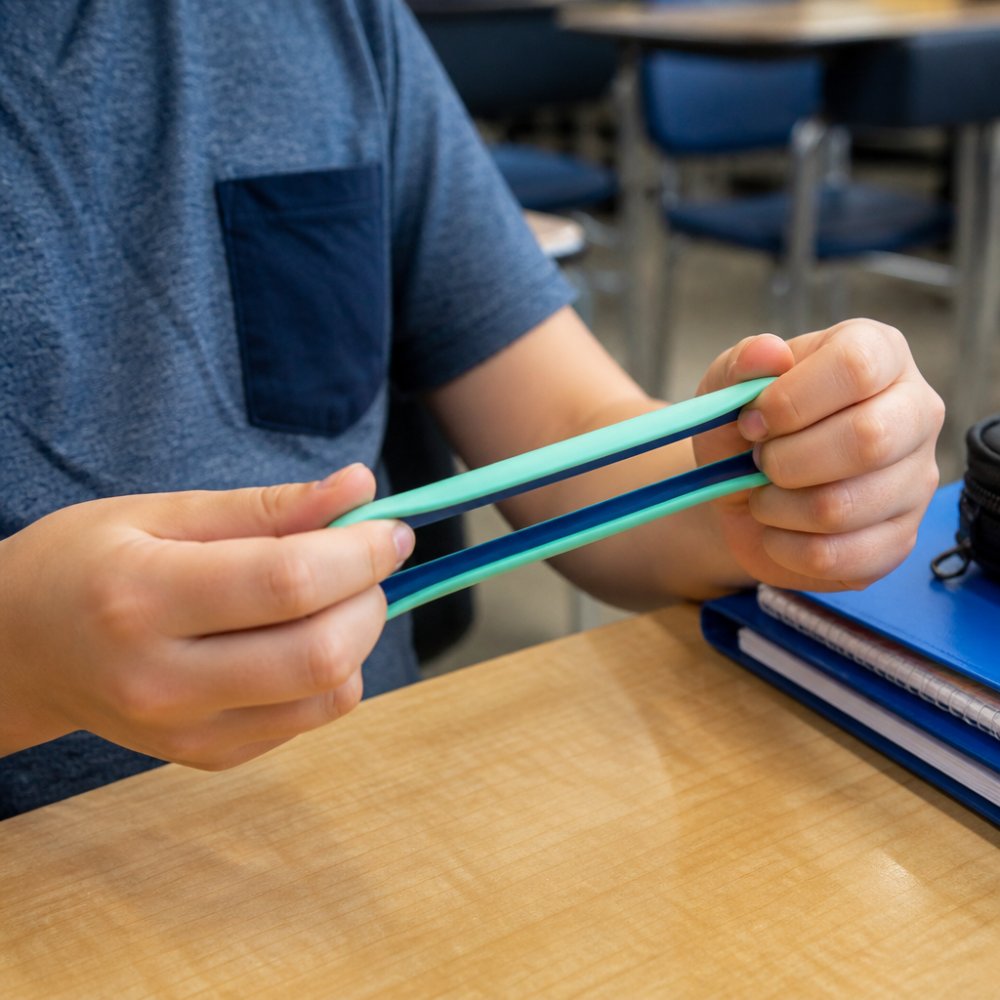
We've curated the best quiet fidget toys for school based on what actually works in classrooms. Each is silent, durable, and genuinely helpful for sensory regulation.
Stretching and Tactile Fidgets
Calming Stretchy Band Fidget Toy by Bouncyband® ($14.99) is a silent sensory tool that reduces stress and anxiety while increasing focus. The 30" x 6" band stretches to over 46" without a sound, and kids can pull, twist, knot, and bend it while strengthening hand muscles.
There are no moving parts, no batteries, no noise. A child can stretch it under the desk for calming, grounding tactile input, and teachers approve because it's genuinely silent and needs no setup.
Machine wash on gentle cycle and air dry. It's built to last through years of daily use.
Worry Stones - Calming Sensory Fidget for Kids (Set of 6) ($19.99) from Doodlebug's Children's Boutique offers six uniquely textured silicone stones in soft pastels, each with different tactile surfaces that lower stress and improve focus.

Made from 100% food-grade silicone, these pocket-sized tools are soft, easy to clean, and built to withstand daily fidgeting. A child can slip one into a backpack or pencil case, and no one will know it's there, perfect for tests, transitions, or anxiety spikes.
Clicking and Counting Fidgets
Fidget Counter - 2 Pack ($9.99) turns fidgeting into a satisfying challenge. Slip on the adjustable finger strap and click, each quiet press tracking fidgets from 1 to 99,999. The quiet button design makes it genuinely discreet for classroom use.
This fidget works brilliantly for children who need rhythmic input. The repetitive clicking is calming without producing sound others can hear, and kids can race themselves or set daily goals. Recommended for ages 6 and up.
Clickety Click - Fidget Ring Counter ($6.99) is a more compact version. This handheld gadget counts up with every button press, and its pocket-sized, quiet design means classroom teachers won't object.
Both counting fidgets appeal to children who like measurable progress, turning fidgeting into play with a score.
Textured and Sensory Fidgets
Sticky Stretch Puzzle Cube - Sensory Fidget Toy for Kids ($10.99) combines puzzle inspiration with stretchy, sticky texture. Kids can pull, squeeze, twist, and explore satisfying tactile feedback, and the compact size makes it easy to grab whenever fidgety fingers need something to do.
This fidget works for tactile seekers who want more resistance than a smooth stone. The sticky-stretchy material provides proprioceptive input, which calms many children with sensory processing needs.
Sensory Genius Sensory Mats ($19.99) take a different approach. While not pocket-sized, these four uniquely textured mats provide soothing tactile input for hands and feet, each with a different surface. A child can use them on the desk during homework or on the floor for movement breaks.
These mats work best for home or therapy settings, though some schools with sensory corners allow them. They suit children who need more intense tactile input than small fidgets provide.
Calming Stretchy Band Fidget Toy by Bouncyband® →
Manipulative and Transforming Fidgets
Twiddle Cube ($15.99) unfolds, twists, and refolds in countless ways. Made primarily of durable metal, it has a solid, satisfying weight, and the palm-sized design fits easily in a pocket or on a desk.
This fidget appeals to children who like manipulative play. The metal construction lasts indefinitely, and each cube includes a mini activity booklet.
Flip Cube ($5.99) measures 3.25" and transforms into new shapes with every twist. Its connected geometric blocks flip and fold for endless tactile fun, and the fidgeting itself is quiet.
The flip-and-fold action works for children who need constant movement.
Discreet Fidgets for Students: Age-Appropriate Selection
Fidget preferences change as children grow. A toy that captivates a first-grader might embarrass a sixth-grader, so matching fidgets to age and maturity ensures your child will actually use them.
Elementary School Students
Younger children (ages 5-8) respond well to fidgets with obvious sensory feedback. Stretchy bands, worry stones, and flip cubes appeal because they're satisfying, easy to understand, and novel.
At this age, discrete appearance matters less than silence and teacher approval. Many elementary teachers accept fidget tools because they understand sensory needs.
The Calming Stretchy Band Fidget Toy by Bouncyband® and Worry Stones work beautifully for this age: engaging, safe, and clearly beneficial for focus.
Middle and High School Students
Older children (ages 9-18) care deeply about whether a fidget looks "babyish." A toy that looks too young will sit unused, so they need quiet fidgets that look intentional and adult.
Worry stones in neutral colors, counting fidgets, and metal cubes fit this requirement. They don't announce "I'm a fidget toy" and look like something anyone might fidget with.
At this stage, discretion becomes critical. Peer awareness increases, and a child won't use a fidget that draws attention or looks juvenile. The best quiet fidget toys for school at this age are genuinely invisible.
Fidget Toy Alternatives for Kids Beyond Traditional Options
Sometimes commercial fidgets don't work for every child. Household items and DIY solutions are worth exploring.
Household Items That Work as Fidgets
Many children find fidgeting satisfaction in everyday objects. A smooth stone, a piece of fabric, or a stress ball can serve the same purpose as a commercial fidget.
Worry stones are essentially smooth rocks a child can find in nature. Fabric scraps, textured dish towels, or soft socks provide tactile input, while a stress ball or small pillow gives proprioceptive feedback through squeezing.
The advantage of household alternatives is cost and availability; the disadvantage is durability. A stone might crack, fabric frays, and household items weren't designed for daily fidgeting.
DIY Fidget Solutions
Some parents create fidgets from craft supplies. Rice-filled pouches, pipe cleaner shapes, or homemade putty work temporarily and let you customize texture and size.
The catch: DIY fidgets fall apart quickly. Rice leaks, fabric tears, putty dries out, and a child who finally has a working fidget becomes frustrated when it breaks after a week.
Teacher-Approved Guidelines for School Fidgets
Before sending any fidget to school, understand your child's school policy. Some schools embrace fidget tools, others restrict them, and knowing the rules prevents conflicts.
Most schools allow fidgets if they're silent, don't distract other students, and don't interfere with learning. A quiet fidget toy for school that meets these standards will pass teacher approval.
Talk to your child's teacher directly. Bring the fidget, explain why your child needs it, and demonstrate that it's genuinely silent. Teachers who understand the sensory benefit are usually supportive.
Document the fidget's effectiveness. If your child's focus improves or anxiety decreases, share that with the teacher. Data builds trust and makes future accommodations easier.
Schools increasingly recognize that fidgeting supports learning. The quiet fidget toys for school we've covered all work silently, require no special setup, and genuinely help children regulate their nervous systems.
| Fidget Type | Best For | Price | Portability |
|---|---|---|---|
| Stretchy Band | Tactile seekers, fine motor development | $14.99 | Pocket-sized |
| Worry Stones | Anxiety, discrete fidgeting, emotional regulation | $19.99 | Pocket-sized |
| Counting Fidgets | Rhythmic input, achievement-oriented kids | $6.99-$9.99 | Pocket-sized |
| Puzzle Cube | Tactile exploration, manipulative play | $10.99 | Pocket-sized |
| Metal Cube | Durable fidgeting, premium feel | $15.99 | Pocket-sized |
| Sensory Mats | Intense tactile input, home/therapy use | $19.99 | Desk or floor |
| Flip Cube | Budget-friendly, satisfying movement | $5.99 | Pocket-sized |
Choosing the right quiet fidget toys for school transforms how your child experiences the classroom.
Start with one fidget that matches your child's sensory preference, test it at home, then introduce it to school with teacher approval.
Frequently Asked Questions
What are some good silent fidgets for school?
The best silent fidgets for school include worry stones ($19.99 for a set of 6), stretchy bands ($14.99), and flip cubes ($5.99). These provide tactile stimulation without making noise. Worry stones offer unique textures for sensory regulation, while stretchy bands allow creative shaping. All are small enough to fit in a pocket or pencil case, making them ideal for classroom use without distracting peers.
How do I know if a fidget toy will distract other students?
Look for fidgets that are silent, require minimal hand movement, and don't produce clicking or rattling sounds. Avoid fidgets with loose parts, bright lights, or loud mechanisms. Test the fidget yourself in a quiet room, if you hear any sound, it may distract classmates. Worry stones, stretchy bands, and textured mats are excellent choices because they rely on quiet tactile feedback rather than auditory stimulation.
What are some fidget toy alternatives for kids who need sensory input?
Beyond traditional fidgets, consider sensory mats ($19.99) for desk use, sticky stretch puzzle cubes ($10.99), or Silly Putty ($4.99). These alternatives provide varied tactile experiences, textured surfaces, stretching, squishing, and molding. Household items like stress balls or smooth stones also work. The key is finding what engages your child's specific sensory needs while remaining classroom-appropriate and non-disruptive.
Should I ask a teacher before sending a fidget toy to school?
Yes, it's wise to ask your child's teacher first. Many educators appreciate advance notice and can help determine which fidgets work best in their classroom environment. Teachers may have specific policies about fidgets and can guide you toward options that support your child's focus without disrupting lessons. This conversation also helps teachers understand your child's sensory needs and support their success.