
Last Updated: October 29, 2026
Quick Summary
Clothing sensory issues mean a child's nervous system reacts strongly to how clothes feel, so a tag, seam or tight waistband can seem intense and distressing. Typical signs include refusing clothing that fits well, pulling at necklines and waistbands, and meltdowns during dressing most days. A one-to-two-week observation log helps show whether these reactions are persistent and disruptive.
- Look for persistence, intensity, distress and interference to separate typical preferences from possible sensory issues.
- Keep a one-to-two-week log recording the trigger, what happened and what helped.
- Common triggers include tags, seams, fabric texture, tight or loose fits, and waistbands.
- Rule out skin irritation, pain, temperature issues and anxiety before assuming a sensory processing difference.
- Talk with a pediatrician or occupational therapist if reactions cause frequent distress or interfere with school or sleep.
Table of Contents
- What Clothing Sensory Issues Look Like in Children
- Common Clothing Triggers: Tags, Seams, Socks and Tight Waistbands
- Signs Versus Typical Preferences: A Quick Observation Checklist
- When Clothing Distress Signals Something More
- Why Your Child Refuses to Wear Certain Clothes
- How to Help a Child With Sensory Issues Get Dressed
- Choosing the Best Fabrics for Sensory-Sensitive Children
- Next Step: Build a Tag-Free, Comfortable Wardrobe for Your Child
- Frequently Asked Questions
What Clothing Sensory Issues Look Like in Children
Clothing sensory issues happen when a child's nervous system reacts strongly to how clothes feel on the skin. A tag, a rough seam, or a tight waistband can feel far more intense to that child than it does to most adults. Many parents first notice this during getting dressed, when a child fights over a shirt they wore last week without any trouble.
This article is from Doodlebug's Children's Boutique, a retailer that focuses on soft, tag-free clothing for sensitive kids. The signs below are a starting point for observation, not a diagnosis.
Clothing sensitivity is often part of a broader sensory processing difference. It can appear alongside autism, ADHD, or other conditions, or it can show up on its own.
Common Clothing Triggers: Tags, Seams, Socks and Tight Waistbands
Most clothing complaints come from a short list of triggers. Knowing them makes it easier to spot patterns in your child's behavior.
- Tags and labels: Scratchy tags at the neck are a classic trigger.
- Seams: Flat-lock seams can still irritate, especially on the inner thighs or under the arms.
- Fabric texture: Coarse knits, stiff denim, and scratchy synthetics often cause problems.
- Tight or loose fits: Some children hate feeling squeezed, while others dislike loose fabric that moves around.
- Waistbands: Hard elastic or tight buttons can make a child feel uncomfortable all day.
Every child reacts differently, so a trigger for one child may not bother another at all.
Sock and Shoe Sensitivities
Socks cause more trouble than almost any other item. A bunched toe seam or a thick heel can make a child refuse to put shoes on. Shoes can add pressure, rubbing, or unfamiliar textures. Many children do better with seamless socks and shoes with soft, flexible uppers. If shoes are a struggle, try swapping one item at a time so you can see what helps.
Signs Versus Typical Preferences: A Quick Observation Checklist
Almost every child has a shirt they refuse or a sock they pull off. The question is not whether your child has clothing preferences, most do, but whether those preferences cross into something that consistently disrupts daily life. Four dimensions separate a typical preference from a possible sensory issue: persistence, intensity, distress, and interference. No single behavior is diagnostic on its own, and this is not a screening tool; it is a way to organize what you are already seeing.
- Persistence: A typical preference is situational. A child may hate a stiff collared shirt for a wedding but wear it without much fuss. A sensory pattern shows up most days, across settings, and does not fade once the novelty wears off.
- Intensity: Typical dislike produces a complaint, a negotiation, or a swap. A sensory reaction is out of proportion to the trigger, a child who cries, gags, or physically resists because of a seam that most people cannot feel.
- Distress: Watch the recovery, not just the reaction. A child with a preference moves on within minutes. A child with sensory sensitivity may stay dysregulated for a long stretch, or carry the discomfort into the rest of the morning.
- Interference: The clearest signal is whether clothing gets in the way of life. Missing parts of the school day, refusing to go outside in cold weather, or limiting activities because of what has to be worn matters more than any single item on a list.
A One- to Two-Week Observation Log
Memory is unreliable for patterns that happen at 7 a.m. under time pressure. Keep a simple log for one to two weeks, a notes app or a paper chart on the fridge is enough. For each incident, record:
- Date and time (morning dressing, after recess, bedtime)
- The specific trigger (tag, seam, waistband, sock toe, fabric, fit, temperature)
- What happened (tugging, scratching, crying, changing clothes, refusal)
- How long it lasted and how your child recovered
- What helped (removing the item, a swap, a break, a different fabric)
Patterns that repeat across days and settings are far more useful to a pediatrician or occupational therapist than a single dramatic morning. Bring the log to any appointment; it turns a vague "she hates clothes" into specific, observable data.
Quick Checklist
Use this as a starting point for observation, not a diagnosis. Check items that happen most days over the observation window.
- Refuses clothing that is otherwise in good condition and fits
- Pulls at the neck, sleeves, or waistband repeatedly through the day
- Scratches, rubs, or adjusts clothing constantly
- Cries, shouts, or melts down during dressing more often than not
- Changes clothes several times a day because something "feels wrong"
- Wears only a small rotation of very soft items
- Reacts strongly to socks or shoes, or refuses them altogether
- Clothing reactions interfere with school, sleep, or going outside
If several boxes are checked and the reactions are persistent and intense, the next step is a conversation with your child's pediatrician, not a self-diagnosis.
The article organizes four dimensions that separate a typical clothing preference from a possible sensory issue.
Girls Bamboo Ruffle Pants in Berry – Ultra Soft Sensory-Friendly Baby Bottoms →
| Dimension | Typical preference | Possible sensory issue |
|---|---|---|
| Persistence | Situational, fades with time | Shows up most days, across settings |
| Intensity | Complaint, negotiation or swap | Out of proportion to the trigger |
| Distress | Moves on within minutes | Stays dysregulated for a long stretch |
| Interference | Little effect on daily life | Disrupts school, sleep or outdoor play |
When Clothing Distress Signals Something More
Occasional fussiness is normal. Ongoing, intense distress that interferes with daily life is different, and it is worth ruling out other explanations before assuming a sensory processing difference. Several common issues can look like clothing sensitivity:
- Skin irritation or eczema: Itching and irritation from detergent, dye, or dry skin can make any fabric feel unbearable. A pediatrician can check for rashes, contact dermatitis, or other skin conditions.
- Pain or fit problems: A too-small shoe, an ingrown toenail, or a scratchy label can cause real discomfort that resolves once the item is fixed or replaced.
- Temperature regulation: Some children run hot or cold and react to fabric weight and breathability rather than texture.
- Anxiety: Worry about a new school, a change in routine, or a social situation can surface as clothing refusal, especially in older children.
- Developmental stage: Toddlers commonly resist dressing as part of asserting independence; this usually eases with age and consistent routines.
Red Flags That Warrant a Professional Conversation
Talk with your child's pediatrician or an occupational therapist if you notice:
- Clothing reactions that cause frequent meltdowns or physical distress most days
- Avoidance that interferes with school attendance, sleep, or outdoor play
- Reactions that come with other sensory differences, such as strong responses to noise, light, food textures, or movement
- Delays or differences in communication, social play, or motor skills
- Skin changes, pain, or symptoms that do not improve when the clothing trigger is removed
What an Occupational Therapy Evaluation Involves
An occupational therapist (OT) assesses how a child processes and responds to sensory input, including touch. A typical evaluation includes a caregiver interview, a review of daily routines and the observation log you kept, standardized questionnaires, and structured observation of the child's responses to different textures and clothing. The OT then works with the family on practical strategies, gradual exposure, clothing modifications, and dressing routines, and can coordinate with teachers and other clinicians. Most practitioners emphasize that sensory strategies are individualized; there is no single protocol that works for every child, and claims of a quick cure should be treated with caution.
If you are unsure where to start, bring your observation log to your pediatrician and ask whether an OT referral makes sense. Early guidance is usually easier than waiting for a crisis.
Why Your Child Refuses to Wear Certain Clothes
Children often refuse clothes because the feeling is unbearable to them, not because they are being difficult. A child may not have the words to explain that a seam is burning or a waistband is pinching. Refusal can look like defiance from the outside.
Many families find that once they remove the trigger, the resistance drops quickly. A shirt with no tag or a pair of seamless socks can change the whole morning.
How to Help a Child With Sensory Issues Get Dressed
Small changes to the routine can make dressing much easier.
- Lay out clothes the night before so your child can see and touch them ahead of time.
- Let your child choose between two or three approved options.
- Cut out tags before the first wear, or buy tagless clothing from the start.
- Dress in a calm space with fewer distractions.
- Keep a backup outfit ready for days when the first choice does not work.
Give your child time to adjust. Sensory comfort is personal, and it can take a few tries to find what feels right.
Choosing the Best Fabrics for Sensory-Sensitive Children
Soft, breathable fabrics are a good place to start. Bamboo viscose is a popular choice among parents because of how smooth it feels. At Doodlebug's Children's Boutique, our tagless bamboo pajamas are made with a soft, stretchy blend.
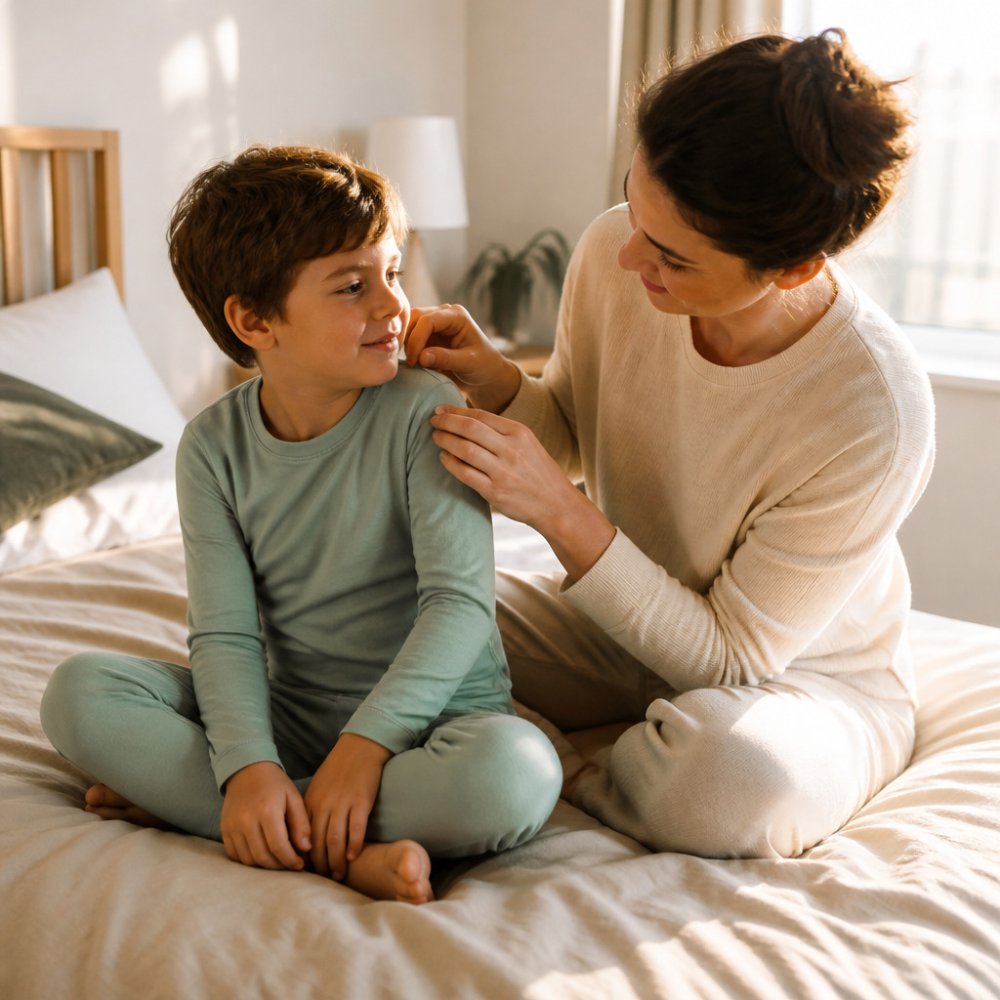
For example, the Minecraft: Time to Mine Bamboo Kids Pajamas ($39.99) use a stretchy bamboo fabric with a soft waistband. Our Girls Bamboo Ruffle Pants in Berry ($12.99) offer a lightweight, breathable option for everyday wear. Look for fabrics that feel comfortable to your child before you buy in bulk, and wash new items before wearing them to soften them further.


Next Step: Build a Tag-Free, Comfortable Wardrobe for Your Child
Recognizing the signs is the first step, and building a wardrobe that works is the next. Start with a few soft, tagless basics your child already accepts, then add pieces slowly. At Doodlebug's Children's Boutique, we offer tagless bamboo clothing, sensory-friendly toys, and styles for tweens. Browse our collection to find pieces that make getting dressed a little easier for your family.
Frequently Asked Questions
What are common signs of clothing sensory issues in children?
Common signs include pulling at tags, complaining about seams or socks, refusing certain fabrics, frequently adjusting or scratching clothing, and becoming upset when dressing. Some children only show distress with specific items, such as tight waistbands or stiff shoes. Watching which clothes cause repeated complaints, and whether the reaction happens across many outfits, helps distinguish a sensory pattern from a simple dislike. If distress is intense or interferes with daily life, talk with your pediatrician or an occupational therapist for an evaluation.
Why does my child refuse to wear certain clothes?
Children often refuse clothes because a texture, seam, tag, or snug fit feels uncomfortable to them. Tactile processing differences can make ordinary fabric feel intensely itchy or scratchy. Refusal can also come from wanting control over what they wear or from the clothing looking unfamiliar. Noticing the pattern, such as the same trigger appearing across items, gives you clues. Offering a few pre-approved options, removing tags, and choosing softer fabrics often reduces resistance.
What fabrics are best for children with clothing sensitivities?
Many parents of sensory-sensitive children choose soft, breathable fabrics such as bamboo viscose blends, which feel smooth against the skin and have stretch for comfortable movement. Tagless designs remove a common irritant. Look for flat seams, relaxed fits, and elastic waistbands that do not dig in. Because every child is different, test a new fabric with a single item first and watch how your child responds during a full day of wear.
