
Table of Contents
- Why Cleaning Sensory Fidget Toys Matters for Kids and Classrooms
- Best Cleaning Supplies for Sensory Toys: What to Keep on Hand
- How to Clean Sensory Fidget Toys Step by Step: The Core Method
- Material-Specific Care: Silicone, Foam, and Stretchy Fidgets
- How to Make Sticky Fidget Toys Not Sticky Again
- How Often Should You Clean Fidget Toys?
- Deep Cleaning vs. Surface Wiping: When Each One Is Needed
- Mold Prevention and Drying Tips for Hollow Toys
- Frequently Asked Questions
Last Updated: September 24, 2026
Why Cleaning Sensory Fidget Toys Matters for Kids and Classrooms
Learning how to clean sensory fidget toys step by step protects the kids who use them most. Fidget toys pass through many hands each day. They get squeezed during play sessions, dropped on floors, and shared between siblings or classmates. That constant contact makes them a home for germs and bacteria.
Cleaning matters for three reasons:
- It removes germs that spread between kids
- It protects the texture and stretch kids rely on
- It keeps toys durable enough to last
Best Cleaning Supplies for Sensory Toys: What to Keep on Hand
The best cleaning supplies for sensory toys are simple: mild dish soap, lukewarm water, a microfiber cloth, and a soft brush. You likely own most of these already. No special kit is required.
Everyday Supplies You Already Own
Gather these before you start:
- Mild dish soap, free of harsh additives
- Lukewarm water in a bowl or sink
- A microfiber cloth for wipe down
- A soft-bristled toothbrush for crevices
- A clean towel or drying rack for air dry
What to Skip: Harsh Chemicals and Abrasive Tools
Skip bleach, ammonia, and alcohol-based disinfectant sprays. These break down silicone and foam over time. They also leave residue that can irritate sensitive skin.
How to Clean Sensory Fidget Toys Step by Step: The Core Method
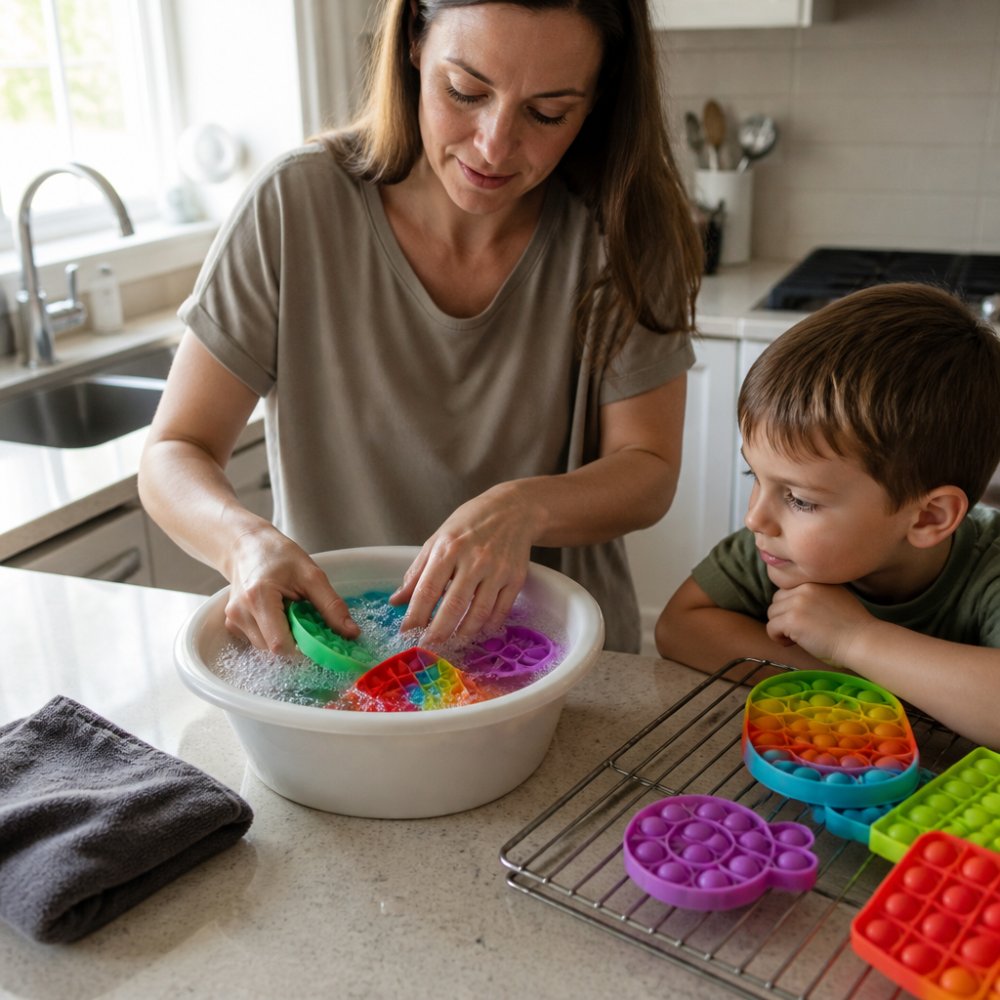
The core method works for most washable fidget toys in under ten minutes. It relies on mild soap, lukewarm water, and air drying. Here is the full process.
Step 1: Prep Your Workspace and Sort by Material
Clear a counter and lay down a clean towel. Then sort your toys into three piles: silicone, foam, and stretchy. This step matters because each material needs a different approach.
Step 2: Wash, Rinse, and Air Dry
Follow this sequence for washable toys:
- Add a few drops of mild dish soap to lukewarm water
- Submerge silicone toys and squeeze gently to work soap into crevices
- Wipe foam and stretchy toys with a damp microfiber cloth instead of soaking
- Rinse silicone under lukewarm running water until no residue remains
- Shake off excess water and place toys on a rack to air dry completely
Rushing the dry step is a common mistake. Moisture left in hollow toys invites mold within days.
Material-Specific Care: Silicone, Foam, and Stretchy Fidgets
Material-based care decides how long a fidget toy lasts. Silicone, foam, and stretchy toys each react differently to water, soap, and heat. Treating them the same shortens their life.
Silicone Fidgets: Dishwasher-Safe Options
Food-grade silicone is the easiest material to clean. Many silicone fidgets, like the Krumples Fidget Plungys 6-Pack, are dishwasher-safe. That makes deep cleaning simple.

Foam Squishies and Slow-Rising Toys
Foam toys, including slow-rising squishies, should never be submerged. Surface cleaning is the only safe method. Wipe down with a damp cloth and a drop of mild soap, then dry right away.
Stretchy and Sticky Fidgets
Stretchy toys need the gentlest handling of all. Wipe them with a barely damp cloth, then pat dry. Never wring or stretch them while wet, because the material can tear.
How to Make Sticky Fidget Toys Not Sticky Again
Stickiness is almost never the toy's fault, it is a surface chemistry problem. Three things cause it, and each has a different fix:
- Plasticizer migration. Soft PVC and some TPR (thermoplastic rubber) toys release plasticizer over time, especially when exposed to heat or sunlight. The surface turns tacky and stays tacky no matter how often you wash it.
- Body oil and lotion buildup. Hands transfer sebum, sunscreen, and hand sanitizer residue. These form a film that grabs dust.
- Soap residue. A rinse that was too quick leaves a surfactant film that feels sticky once it dries.
Diagnose Before You Treat
Wipe the toy with a dry microfiber cloth first. If the tackiness wipes away and stays gone, it was surface soil, move on to the wash below. If the surface stays tacky after a full wash and dry, it is plasticizer migration, and no cleaner will fix it.
The Wash-and-Rinse Fix for Oil and Residue Buildup
- Fill a bowl with lukewarm water, not hot. Hot water accelerates plasticizer release on soft plastics.
- Add one drop of mild dish soap. More soap is not better; excess surfactant is what causes the sticky-after-dry problem.
- Work the surface with your fingertips for 20-30 seconds, then rinse under lukewarm running water for a full 15 seconds. Count it. Quick rinses are the number-one cause of recurring stickiness.
- Pat, do not rub, with a microfiber cloth, then air dry on a rack.
If stickiness returns within a day, repeat the rinse with plain water and no soap. You are flushing out leftover surfactant, not adding more.
Restoring Texture on Silicone and TPR
Silicone and TPR toys that feel greasy or slick after washing can be refreshed with a light dusting of cornstarch. This is the same trick used on silicone baking mats and reusable food wraps.
Krumples Fidget Plungys - 6 PACK →
- Put a teaspoon of cornstarch in a zip-top bag.
- Add the dry toy and shake for 5 seconds.
- Shake off the excess over a sink and wipe with a dry cloth.
How Often Should You Clean Fidget Toys?
Clean fidget toys weekly for regular home use, and daily for classroom or shared use. Toys used during illness should be cleaned right away. Toys that travel in backpacks or pockets need more frequent wipe downs.
| Use Case | Frequency | Method |
|---|---|---|
| Home, one child | Weekly | Soap and water wash |
| Classroom or shared | Daily | Wipe down or wash |
| During illness | After each use | Full wash and dry |
| Travel or on-the-go | Every few days | Quick wipe down |
Deep Cleaning vs. Surface Wiping: When Each One Is Needed
Most guides treat "clean" as one activity. In practice there are three tiers, and matching the tier to the situation is what keeps toys sanitary without destroying them.
| Tier | What it removes | Time | Safe for |
|---|---|---|---|
| Surface wipe | Dust, oils, light grime | 30 seconds | All materials |
| Standard wash | Germs, residue, saliva | 5-10 minutes | Silicone, hard plastic, sealed TPR |
| Deep clean / sanitize | Biofilm, dried residue, illness exposure | 20+ minutes plus full dry | Silicone and hard plastic only |
Tier 1: Surface Wipe (Daily)
A dry or barely damp microfiber cloth removes the oils and dust that let germs and grime accumulate. This is the right call for foam squishies, stretchy toys, and any fidget with a fabric cover or electronic component. Do it at the end of each day in a classroom setting, or every few days at home.
Tier 2: Standard Wash (Weekly at Home, Daily in Classrooms)
Lukewarm water, one drop of mild dish soap, a 15-second rinse, and full air dry. This is the workhorse clean for solid silicone and hard plastic fidgets, poppers, spinners, marble fidgets, and sealed silicone plungers.
Tier 3: Deep Clean (After Illness, Visible Grime, or Monthly in Shared Settings)
Deep cleaning means the standard wash plus a sanitizing step. For dishwasher-safe silicone, the top rack of a residential dishwasher on a normal cycle with heated dry does the job, the heat is what sanitizes, not the detergent. For hand washing, a 1:10 dilution of unscented household bleach (about 1 tablespoon per cup of cool water) applied with a cloth, left for one minute, then rinsed thoroughly, is the standard sanitizing approach used in childcare settings. Never use bleach on foam, stretchy, or fabric toys, and never mix bleach with any other cleaner.
The Hollow-Toy Problem: Why "Dry" Is Not Enough
Hollow fidgets, squishy balls with air holes, popper domes with seams, water-filled toys, and any fidget with a squeaker, trap water inside. That trapped water is the single most common cause of mold in fidget collections, and it is the failure mode most cleaning guides ignore.
How mold actually starts:
- Water enters through a seam, air hole, or squeaker during washing or play.
- The interior stays humid because air cannot circulate.
- Within 24-72 hours in a warm room, mold spores that were already present on the surface colonize the interior.
- By the time you see dark spots through the plastic, the interior is already colonized and the toy cannot be safely cleaned.
Prevention protocol for hollow toys:
- Do not submerge them. Wipe the exterior only.
- After any accidental wetting, shake vigorously for 10 seconds, then place the toy near, not on, a fan or in front of an air vent for several hours.
- Hold the toy up to a light and look for condensation inside before storing.
- If you see any dark spots, discoloration, or smell a musty odor, discard the toy. Do not attempt to clean it.
Water-filled fidgets (liquid motion timers, some squeeze balls) cannot be sanitized at home. If the outer shell cracks and the inner liquid leaks, discard the toy, the interior cannot be cleaned and may harbor bacteria.
A Quick Decision Rule
Ask three questions in order:
- Is the toy hollow or water-filled? If yes, surface wipe only.
- Has a sick child used it, or is it visibly soiled? If yes, deep clean, but only if the material is silicone or hard plastic.
- Otherwise? Standard wash weekly at home, daily in shared settings.
This framework keeps you from over-cleaning delicate materials and under-cleaning the ones that actually need it.
Mold Prevention and Drying Tips for Hollow Toys
Mold prevention starts with drying. Hollow toys trap moisture inside, and that trapped water is where mold grows. Shake out excess water and place toys in a well-ventilated spot to air dry.
A few habits keep mold away:
- Dry toys fully before storing them
- Store in a breathable bin, not a sealed bag
- Check hollow toys for moisture after washing
- Skip the dishwasher for any toy with an opening that traps water
Frequently Asked Questions
Can you put sensory fidget toys in the dishwasher?
It depends on the material. Food-grade silicone fidgets, like the Krumples Fidget Plungys 6-Pack, are dishwasher-safe and can go on the top rack for a thorough clean. Foam squishies, slow-rising toys, and stretchy sticky fidgets should never go in the dishwasher because heat and water pressure break down their texture. Always check the toy's care instructions before loading it.
How do you remove lint and dust from sticky sensory toys?
Rinse the toy under lukewarm water to loosen debris, then gently pat it with a microfiber cloth. For stubborn lint, a small piece of tape pressed lightly on the surface lifts fibers without damaging the material. Avoid scrubbing with paper towels, which leave residue behind. Once clean, store sticky fidgets in a small pouch or container to keep dust off between play sessions.
Is it safe to use disinfectant wipes on sensory toys?
Most disinfectant wipes contain chemicals that leave residue on surfaces kids touch and put near their mouths. For sensory fidget toys, mild dish soap and lukewarm water are safer and just as effective for routine cleaning.
How often should you clean fidget toys used at school?
Classroom fidget toys should be wiped down daily and deep cleaned once a week, since they pass between many hands. At home, a quick wipe every few days and a full wash weekly keeps them hygienic. If a child is sick or the toy has been dropped on the floor, clean it right away. Toys used during meals or outdoor play need more frequent attention.