Quick Summary
To choose bamboo clothes for growth spurts, measure your child's chest, height, inseam and waist every 8 to 12 weeks, then compare those numbers to the garment's measurements. Add 2 to 4 inches of chest allowance and 1 to 2 inches of length, and check that the neck and wrists stay snug.
- Measure chest, height, inseam and waist every 8 to 12 weeks during active growth periods.
- Add 2 to 4 inches to chest measurement for everyday tops and layers.
- Add 1 to 2 inches of body length for tops so they don't ride up.
- Keep pajama necks and wrist cuffs snug even when the body has room.
- Wash bamboo cold on a gentle cycle, tumble dry low, and skip fabric softener.
Table of Contents
- Why Growth Spurts Make Sizing Tricky for Kids' Clothing
- What Bamboo Fabric Does Well for Growing Kids
- How to Size Bamboo Clothing for a Child Who's Growing Fast
- Bamboo Pajamas for Kids: Fit, Stretch, and Room to Grow
- How Bamboo Fabric Stretch and Fit Change Over Time
- Caring for Bamboo Clothing So It Lasts Through Growth
- Planning Your Child's Bamboo Wardrobe Around Growth Spurts
- Frequently Asked Questions
Why Growth Spurts Make Sizing Tricky for Kids' Clothing
Last Updated: November 1, 2026
Growth spurts catch most parents off guard. Learn how to choose sustainable bamboo baby clothes before your next wardrobe purchase.
Kids rarely grow evenly. A child might gain height quickly in one season and fill out slowly over the next.
Here is what makes sizing hard during these stretches:
- Height and width change at different times. A shirt can be long enough but too snug across the shoulders.
- Sleeves and pant legs often lag behind. They tend to become too short before anything else feels tight.
- Sizes overlap between brands. A "4T" from one maker may fit very differently from another.
Many parents respond by buying one size up. That works for a while, but oversized clothing can slip, bunch, or catch on play equipment.
What Bamboo Fabric Does Well for Growing Kids
Bamboo fabric, usually made as viscose from bamboo, is soft, stretchy, and light. These qualities make it easier for a child to move in, sleep in, and grow into.
Bamboo blends often combine viscose with a small amount of spandex, which adds stretch. That recovery matters when a garment needs to fit across several months of growth.
Bamboo tends to feel cool and breathable, which can suit kids who run hot at night or play hard outdoors. Browse durable bamboo options for active kids if your child spends most of the day moving.
Key properties to look for:
- Stretch recovery. The fabric should bounce back after being worn.
- Breathability. Light, airy knits suit warm weather and sleep.
- Softness. Smooth fabric reduces irritation at the neck and wrists.
How to Size Bamboo Clothing for a Child Who's Growing Fast
Growth spurts can make sizing difficult. Measuring the child and comparing those numbers with a garment's measurements can help you choose a fit.
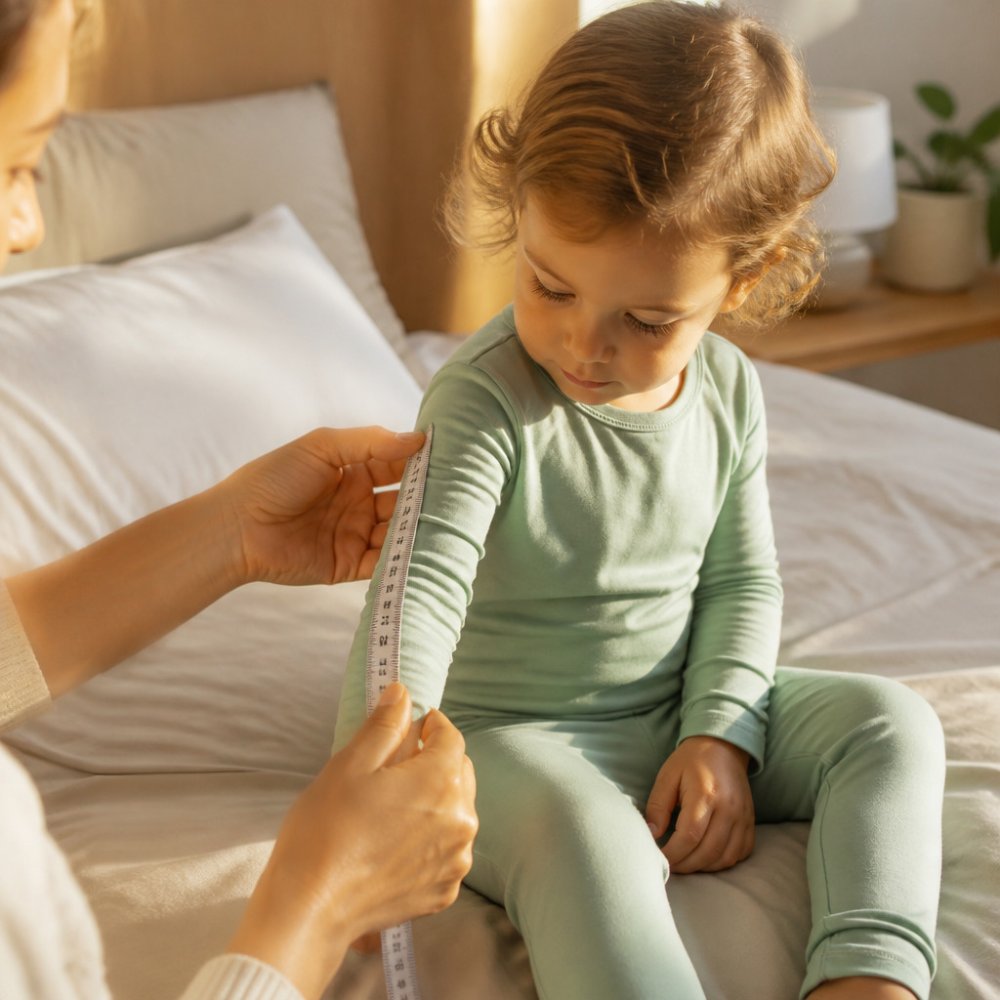
Step 1: Take Current Measurements (Not Age)
Use a soft measuring tape and record four numbers every 8-12 weeks during active growth periods:
- Chest: Around the fullest part of the chest, under the arms, with the child standing relaxed.
- Height: From the top of the head to the floor, standing straight without shoes.
- Inseam: From the crotch seam to the ankle bone for pants and pajama bottoms.
- Waist: Around the natural waist, usually just above the belly button for younger children.
Write these down and note the date. Height often jumps first, with chest and waist catching up a few weeks later, which is why a shirt can suddenly feel short before it feels tight.
Step 2: Compare Against the Brand's Size Chart, Then the Garment's Measurements
Size charts vary widely between brands. A '4T' from one maker can fit like a '5' from another. Always check the specific product page's size chart, then look for a garment measurement chart if the brand provides one.
Garment measurements matter more than size labels during growth spurts. Compare the garment's chest width and body length to your child's measurements plus an allowance:
- Chest allowance: Add 2-4 inches to your child's chest measurement for a comfortable knit fit that allows movement and layering.
- Body length allowance: Add 1-2 inches for tops so they don't ride up when arms are raised.
- Inseam allowance: Add 1-2 inches for pants, but avoid more than 2 inches or the cuffs will drag.
If the child falls between sizes, choose based on garment type rather than a blanket rule.
Step 3: Apply Garment-Specific Sizing Rules
Extra room affects each garment type differently. Use these guidelines:
- Pajamas and sleepwear: Size up when in doubt, but check that the neck opening and wrist cuffs aren't so loose that they slip over hands or bunch during sleep. Loose sleepwear can be a safety concern, so prioritize a snug fit at the neck and wrists even if the body has room.
- Everyday tops: Choose the size that matches chest measurement plus 2-3 inches. A top that's too long will bunch at the waist; too short and it rides up.
- Pants and leggings: Match waist and inseam. Bamboo leggings with spandex will stretch over the knee, but if the waistband is already tight, sizing up won't fix the waist-to-length ratio.
Step 4: Estimate the Growth Window
Most children grow about 2-3 inches per year between ages 2 and 10, with faster bursts in spring and early summer. Buying in fall for the coming year, plan for 2-3 inches of height growth and 1-2 inches of chest growth, so a garment with 2 inches of chest allowance and 2 inches of length allowance will likely last one full growth cycle.
A quick fit test before you commit: have the child raise both arms overhead and sit cross-legged. If the top rides up past the waistband or the pants pull tight at the knees, the garment is at its limit. If there's visible extra fabric at the wrists and ankles but the neck and waist feel secure, you've found useful growing room.
When to Size Up Versus Replace
Size up when the garment is only slightly short and the stretch still feels comfortable. Replace when seams pull, fabric looks thin, the child cannot move freely, or the neckline or waistband leaves marks or causes complaints. A garment that's too large can be as uncomfortable as one that's too small, especially for sensory-sensitive kids who notice bunching and slipping.
Bamboo Pajamas for Kids: Fit, Stretch, and Room to Grow
Pajamas are a great place to start with bamboo. They spend long hours against the skin, so softness and breathability matter most.
Our Let's Go! Bamboo Convertible Baby Pajamas are one example.
For older kids, look at the cut and the fabric together. Browse the Happy Honey Bees bamboo short sleeve pajama pants set for a roomy option.
Keep an eye on these details:
- Sleeve and leg length should allow a little movement without dragging.
- Waistbands should sit comfortably without digging in.
- Stretch should return to shape after each wash.
The article's key pajama figures are summarised below so you can compare them at a glance.
Dream Weaver Orange Bamboo Convertible Footie →
| Item | Value | Note |
|---|---|---|
| Product | Let's Go! Bamboo Convertible Baby Pajamas | Bamboo and spandex blend |
| Sizes | NB to 24M | Convertible feet, two-way zipper |
| Price | $23.99 | Priced for everyday use |
| Sleeve and leg length | About 1-2 inches | Allows movement without dragging |
How Bamboo Fabric Stretch and Fit Change Over Time
Bamboo viscose knits behave differently from cotton or polyester over time. Understanding how they stretch, recover, and shrink helps you tell the difference between a garment that's too big and one that's simply relaxing into its natural fit.
Why Bamboo Knits Relax With Wear
Bamboo viscose fibers are soft and flexible, and when knitted with a small amount of spandex, the fabric has stretch and recovery.
Recovery is a key property of stretch fabrics. Care with heat can affect how well any stretch fabric keeps its shape.
How to Tell Useful Growing Room From a Garment That's Too Large
A garment with useful growing room has:
- Secure neck and wrist openings that don't gap or slip.
- A waistband that stays in place without digging or rolling.
- Extra length at the sleeves and legs (about 1-2 inches) that can be cuffed or will be grown into.
A garment that's too large typically has:
- Necklines that slip off the shoulder.
- Sleeves that cover the hands entirely.
- A crotch that hangs low enough to restrict walking or cause chafing.
If the garment fails the arm-raise and sit test from the sizing section, it's too large regardless of the size label.
Shrinkage: What to Expect and How to Avoid Mistaking It for a Sizing Problem
Bamboo viscose can shrink, especially with hot water or high-heat drying, so following the care label helps protect fit.
To minimize shrinkage:
- Wash cold (under 86°F) on a gentle cycle.
- Tumble dry low or air dry flat.
- Avoid fabric softeners, which coat fibers and reduce breathability.
If a garment shrinks after washing, check whether the care label was followed, and contact the brand with questions about fit.
Garment Construction Details That Affect Fit Over Time
Not all bamboo garments age the same way. Look for these construction features:
- Flatlock or coverstitch seams at the shoulders and crotch reduce bulk and stress on the fabric, helping the garment hold its shape.
- Ribbed cuffs and neckbands with spandex maintain stretch and recovery better than self-fabric bindings.
- Two-way zippers on sleepwear distribute stress along the zipper tape rather than pulling at a single point.
When Stretch Loss Means It's Time to Replace
Watch for these signs that a garment has lost its recovery:
- The neckline sags or gapes after washing.
- The waistband no longer holds its shape and rolls or slides.
- Sleeves or legs look wider than they did when new, even after drying.
Pay attention to how each piece holds its shape, not just how it fits on day one.
Caring for Bamboo Clothing So It Lasts Through Growth
Care makes a big difference in how long bamboo clothing keeps its fit. Heat and harsh cleaning can cause shrinkage over time, so gentle care is a good habit.
Follow these steps for longer-lasting pieces:
- Wash cold on a gentle cycle. Cold water protects fibers and reduces shrinkage.
- Use a mild detergent. Harsh products can irritate sensitive skin and wear down fabric.
- Tumble dry on low, or air dry. High heat is the fastest way to shrink a garment.
- Avoid fabric softeners. They can coat fibers and reduce breathability over time.
A common mistake is washing bamboo with heavy towels or jeans, which can cause pilling and stress the stretch fibers. Wash bamboo items separately when you can.
Careful washing also helps clothing stay soft and comfortable.
Planning Your Child's Bamboo Wardrobe Around Growth Spurts
A smart wardrobe plan saves money and reduces stress. Instead of buying everything in one size, build a mix of sizes that covers the next few months.
Consider these planning tips:
- Buy basics in the next size up. Pajamas and lounge pieces are often the best place to size up.
- Choose versatile pieces. Simple tees, pants, and sleepers can be layered and reused.
- Track wear, not just price. A garment worn many times costs less per wear, even if the first price feels higher.
For a child with sensory needs, a short list of favorite, comfortable pieces can be more useful than a large closet of clothes they avoid.
Start with measurements, buy with growth in mind, and care for each piece so it lasts. Read a parent's guide to whether bamboo clothes are worth the price before deciding how much to spend.
Frequently Asked Questions
Does bamboo clothing keep you warm?
Bamboo fabric is lightweight and breathable, so it tends to feel cool and comfortable rather than heavy. For warm weather and year-round sleep it works well, since it helps reduce clinging in hot, humid conditions. For cold weather, layering a bamboo base layer under a warmer outer garment is usually the practical approach. Choose the weight of the garment to match the season, and avoid over-bundling a child, which can cause overheating.
Is viscose safe for babies?
Many bamboo garments are made from viscose derived from bamboo, often blended with a small amount of spandex for stretch. Look for a clear fiber content on the product listing and check whether the fabric is described as free of harsh chemical treatments. Always follow the care label and wash new garments before first wear, especially for babies with sensitive skin.
Should you size up when buying bamboo clothing for kids?
Sizing up is useful when your child is between sizes or in the middle of a fast growth phase, but it works best with stretchy fabrics that stay close to the body without feeling loose. Bamboo blends with spandex stretch and recover well, so a slightly larger size can extend wear. Avoid sizing up so far that the garment becomes a trip hazard or causes bunching at the ankles, cuffs, or waistband.
How do you choose bamboo pajamas for a growing child?
Start with your child's current measurements, then look for pajamas with extra length, stretchy fabric, and convertible or fold-over features that adapt as they grow. Check the sleeve and leg openings for comfortable room, and confirm that the closure, such as a two-way zipper, is easy to use. A soft, tagless design is helpful for sensitive skin. Buying one size up in a stretchy bamboo blend often gives you several months of wear.
