Last Updated: November 2, 2026
Quick Summary
To buy secondhand children's clothing well, inspect each piece at five points: seams, knees, cuffs, closures, and fabric weight. Wash items in the hottest water the label allows, and shop online by confirming flat measurements and paying through the platform for buyer protection.
- Cost-per-wear is price divided by how many times your child actually wears a garment.
- Skip used car seats, crib mattresses, breast pumps, worn-out shoes, and helmets.
- Ask sellers for flat measurements like chest width and inseam instead of trusting size tags.
- Buy next winter's coats in spring and next summer's shorts in fall for lower prices.
- Wash secondhand clothes separately from family laundry the first time.
Table of Contents
- Why Buying Secondhand Children's Clothing Pays Off
- How to Inspect Used Kids' Clothes for Quality
- How to Disinfect Secondhand Clothes Without Ruining Them
- Shopping Second Hand Children's Clothes Online Safely
- The Best Place to Buy Used Baby Clothes for Sensitive Skin
- Places That Buy Used Children's Clothes: Where to Sell and Trade
- Sizing Tips and Seasonal Capsule Planning for Growth Spurts
- What Not to Buy Used, and How to Spot Brands That Hold Value
- Frequently Asked Questions
Why Buying Secondhand Children's Clothing Pays Off
Secondhand children's clothing is the practice of buying gently used garments for kids from thrift stores, consignment shops, yard sales, and online resale platforms instead of purchasing everything new. This guide covers how to shop secondhand well, from inspection to sanitizing.
The math is simple. Kids outgrow sizes fast, often faster than clothes wear out. A shirt worn a dozen times before it's too small costs far less per wear when you paid a fraction of retail.
The cost-per-wear math that changes everything
Cost-per-wear is the price of a garment divided by how many times your child actually wears it. A pair of jeans worn twice a week for a season beats a cheaper pair worn once. Secondhand pieces lower the upfront price, so each wear costs pennies. That frees budget for the items worth buying new, like shoes and anything that touches sensitive skin.
How to Inspect Used Kids' Clothes for Quality
Inspect used kids' clothes by checking five points: seams, knees, cuffs, closures, and fabric weight. Run your fingers along each one before you buy. A quick check takes under a minute and saves you from clothes that fall apart after two washes.
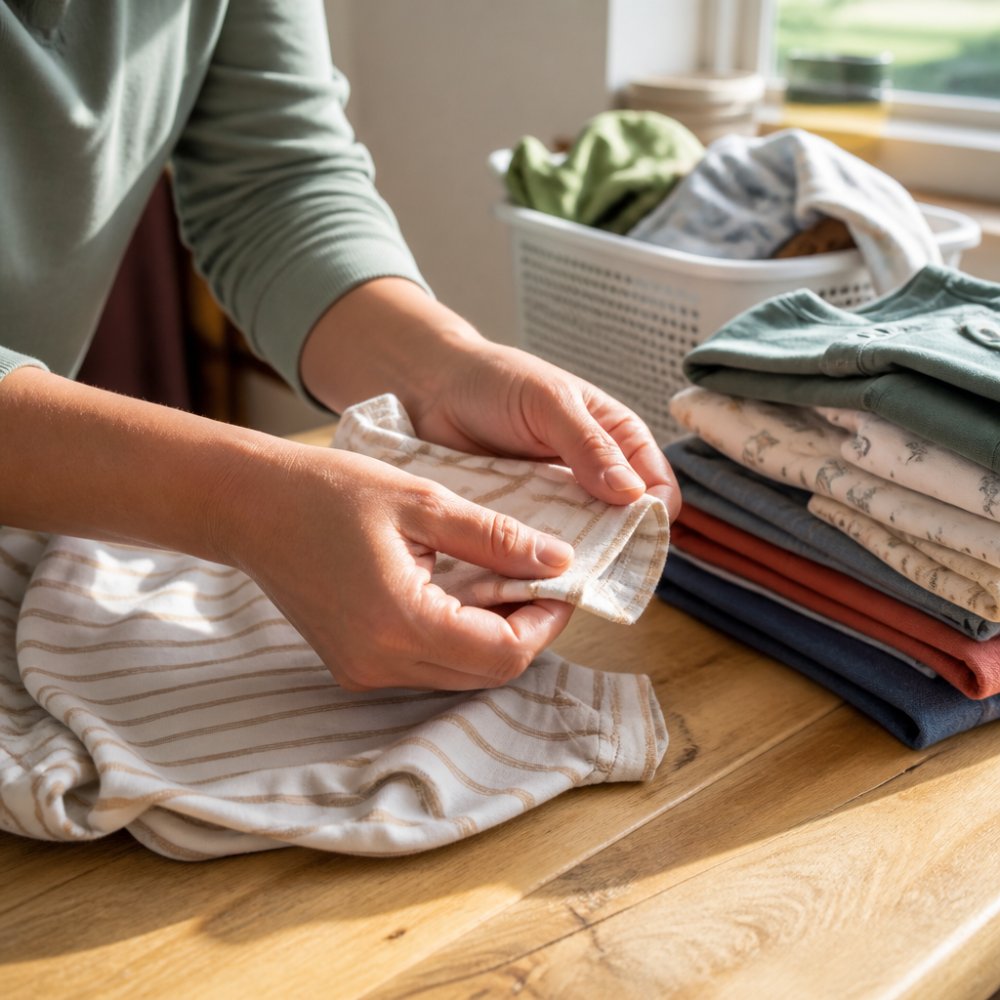
The five-point check: seams, knees, cuffs, closures, and fabric weight
- Seams: Look for split stitching, especially under the arms and along the crotch.
- Knees: Thin, shiny patches mean the fabric is about to give out.
- Cuffs and hems: Fraying signals heavy wear.
- Closures: Test every zipper, snap, and button. A stuck zipper is a meltdown waiting to happen.
- Fabric weight: Hold it to the light. If you can see through it, it won't survive many washes.
How to Disinfect Secondhand Clothes Without Ruining Them
Disinfect secondhand clothes by washing them in the hottest water the fabric label allows, then drying fully on a high setting if the material can take it. For delicates, use a laundry sanitizer made for cold water.
Sort by fabric first. Cotton and polyester handle heat well. Wool, bamboo, and spandex need cold water and air drying to keep their shape. For detergents that go easy on sensitive skin, see our guide to the best laundry detergents for sensitive skin.
Shopping Second Hand Children's Clothes Online Safely
Shopping for second hand children's clothes online works best when you treat each listing like an inspection you can't do in person. Read the listing closely, ask questions before you pay, and confirm measurements against a sizing chart rather than trusting the tag alone. The gap between a good online buy and a regret is almost always information the seller didn't volunteer.
Read the listing like an inspector
Start with the condition description and the photos together. A listing marked "excellent" with only styled flat-lay shots is a yellow flag, because flat-lays hide pilling, fading, and stretched necklines. Ask for close-ups of the underarms, knees, cuffs, and any printed graphic. On platforms that show seller ratings, read the reviews that mention condition accuracy, not just shipping speed. A seller with a 4.8 rating and complaints about "item not as described" is riskier than a 4.6 seller whose reviews all say "exactly as pictured."
Confirm measurements, not sizes
Children's sizing varies wildly between brands, and a tag that says "3T" can fit like a 2T or a 4T depending on the maker. Ask the seller for flat measurements: chest width pit-to-pit, body length shoulder-to-hem, and inseam for pants. Compare those numbers to a garment your child already owns that fits well. This one step prevents most fit-based returns and is the single most useful habit in online secondhand shopping.
Know the platform's buyer protection before you pay
Pay through the platform so you have recourse if the item arrives damaged or misrepresented. Many resale marketplaces hold funds until delivery and let buyers open a dispute within a limited window, which varies by platform.
Watch out: listings that show only stock photos or catalog images instead of the actual item can hide stains, shrinkage, and pilling. If a seller won't send a real photo of the garment in hand, walk away.
Ask the hygiene questions that matter
Before you buy, ask whether the item comes from a smoke-free and pet-free home, and whether it was washed before listing. For babies and kids with eczema or sensory processing differences, ask what detergent the previous owner used, since fragrance-heavy detergent and fabric softener residue can linger through several washes. Sellers who can't answer basic care questions are a sign the item wasn't inspected closely. For fabrics that need extra care once the package arrives, see our guide to hypoallergenic clothes for kids.
Time your buying to the resale calendar
Online resale prices often follow seasonal patterns, with off-season stock sometimes sitting longer. Buy next winter's coats in spring and next summer's shorts in fall, when competition from other buyers drops. Bundle multiple items from one seller to combine shipping, and make reasonable offers on listings that have been up for more than a few weeks, since stale listings are where negotiation works best.
The Best Place to Buy Used Baby Clothes for Sensitive Skin
The best place to buy used baby clothes for sensitive skin is a source that tells you the fabric content and how the item was washed. Ask whether the previous owner used fragrance-heavy detergent or fabric softener, since residue lingers.
Marky Personalized Name Stamp Kit – Custom Clothing & School Supply Labeling →
For babies with eczema or sensory processing differences, seams and tags cause more trouble than the fabric itself. Look for tag-less designs and flat-lock seams.
Places That Buy Used Children's Clothes: Where to Sell and Trade
Places that buy used children's clothes fall into three groups: consignment shops that pay cash or store credit, online resale platforms where you set the price, and local swaps or yard sales. Consignment is fastest. Online resale earns more per item but takes effort.
Before you sell, label everything clearly so items stay identifiable through sorting and pickup. The Marky Personalized Name Stamp Kit at $24.99 includes black textile ink for stamping names onto suitable fabrics, and 1 meter of thermo-adhesive tape for stamping and ironing onto dark garments.

Sizing Tips and Seasonal Capsule Planning for Growth Spurts
Consider buying secondhand kids' clothes one size up during growth spurts, and building a small capsule wardrobe instead of a full closet. A capsule of mix-and-match pieces in one or two sizes covers more outfits with fewer items.
Plan by season. Buy the next size during end-of-season sales and thrift clearances, when last year's stock drops in price. If you're building around fast growth, our guide to choosing bamboo clothes for growth spurts explains which fabrics stretch with your child instead of against them.
What Not to Buy Used, and How to Spot Brands That Hold Value
Some secondhand items carry risks that savings can't justify, and knowing which ones to skip is as important as knowing how to inspect the rest. The short list: car seats, crib mattresses, breast pumps, worn-out shoes, and anything with a safety history you can't verify.
The items to skip, and why
- Car seats. A used car seat may have been in a crash, and the damage isn't always visible. Used car seats should only be considered when the full history is known, and manufacturers' warranties commonly do not cover seats that have been in a crash. Expired seats are also a risk, since car seat shells degrade over time and carry expiration dates.
- Crib mattresses. Mattresses can harbor mold, allergens, and bed bugs, and older models may predate current safety standards. A used mattress with an unknown history is hard to verify against recall records.
- Breast pumps. Breast pumps carry sanitation concerns, and buyers should be cautious about used units.
- Worn-out shoes. A previous child's wear pattern molds the shoe to their foot, which can affect how the shoe supports your child's gait. Lightly worn shoes for a child who barely walked are usually fine; heavily worn soles are not.
- Helmets and other safety gear. Like car seats, helmets can be compromised by a single impact, and the damage is often invisible from the outside.
Everything else is fair game with a proper inspection. Everyday play clothes, special-occasion outfits, and outerwear are low-risk because they're easy to inspect and rarely carry safety certifications.
What makes a brand hold resale value
Brands that hold resale value share a few traits: durable construction, classic styles that don't date, and fabric that survives repeated washing. Look for reinforced knees, flat-lock or double-stitched seams, and substantial fabric weight.
A useful test is to check the resale listings for a brand you're considering. To understand which quality brands are worth the investment, read our fair trade organic kids clothes guide.
A quick reference table
| Item | Buy Used? | Why |
|---|---|---|
| Everyday play clothes | Yes | Low risk, easy to inspect |
| Special-occasion outfits | Yes | Rarely worn, often like new |
| Outerwear | Yes | Easy to inspect, holds up well |
| Shoes | Careful | Wear patterns affect support |
| Car seats | No | Unknown crash history, expiration dates |
| Crib mattresses | No | Hygiene, recall, and safety concerns |
| Breast pumps | No | FDA-regulated medical device, sanitation risk |
| Helmets | No | Invisible impact damage |
Watch out: a brand name alone doesn't guarantee quality. Counterfeits and diffusion lines exist in children's clothing too, so check the construction details on the actual garment rather than trusting the label.
Frequently Asked Questions
How do you disinfect secondhand children's clothes?
Wash most items in the warmest water the care label allows with a regular laundry detergent, then tumble dry on low or hang to dry. Delicate fabrics like organic cotton and bamboo do better on a gentle, cold cycle, so check the tag first. Sorting lights from darks and washing new-to-you items separately from your family's laundry the first time also helps prevent dye transfer.
Is buying thrifted clothes safe for children?
Yes, when you inspect and clean items properly. Check for broken zippers, loose buttons, or frayed drawstrings that could pose a choking or strangulation risk, and skip anything with visible mold, pest damage, or strong chemical odors. A normal wash cycle removes most germs and allergens. For babies and kids with sensitive skin, choose fragrance-free detergent and consider organic cotton or bamboo fabrics, which tend to feel softer against the skin.
Where can you buy secondhand children's clothes online?
Online marketplaces, consignment apps, and resale-focused boutiques all sell second hand children's clothes online. Look for listings with clear photos of seams, tags, and measurements rather than just a stock image. Ask sellers about smoke or pet exposure if it is not stated. Buying from a curated boutique that inspects items before listing them reduces the guesswork, and you often get consistent sizing and fabric details upfront.
What should you check before buying used kids' clothes?
Run through five checks: seams for splitting, knees and elbows for thinning, cuffs and hems for fraying, closures like zippers and snaps for smooth function, and fabric weight for signs of pilling or stretch loss. Pull gently on the fabric to see if it springs back. Also confirm the size against a sizing chart, since kids' sizes vary by brand and a labeled 4T from one maker can fit like a 5T from another.
Is it better to buy secondhand children's clothes in a store or online?
In-store shopping lets you feel fabric integrity and spot wear and tear immediately, which matters for sensory-sensitive kids who notice seams and tags. Online shopping wins on selection and price, especially for specific brands or sizes. A practical approach is to buy basics and sensory-friendly pieces from a curated online boutique where fabric and tag details are listed, and reserve thrift store trips for play clothes you can inspect in person.
