
Table of Contents
- What Fair Trade Organic Kids Clothes Actually Mean
- GOTS Certified Kids Clothing: The Gold Standard
- Why Fair Trade Certification Matters for Children
- Sensory-Friendly Organic Pajamas and Everyday Wear
- How to Identify Ethical Clothing Brands
- Durability and Cost-Per-Wear: Making Fair Trade Affordable
- Resale, Circularity, and Extending Garment Life
- Conclusion
Last Updated: August 25, 2026
What Fair Trade Organic Kids Clothes Actually Mean
Fair trade organic kids clothes combine environmental responsibility in cotton production with social responsibility in worker treatment. Organic cotton is grown without synthetic pesticides or fertilizers, reducing soil degradation and chemical runoff. Fair trade certification ensures farmers and factory workers earn living wages, work in safe conditions, and have workplace representation. Neither standard alone guarantees the other, clothing can be organic but made exploitatively, or fairly traded but grown with conventional pesticides.
At Doodlebug's Children's Boutique, we source fair trade organic kids clothes because sensory-sensitive children often react to chemical residues. Eliminating both pesticides in the fabric and exploitation in production addresses the full picture of what "clean" clothing means for your child's comfort and family values.
The certification landscape includes GOTS (Global Organic Textile Standard) for organic fiber, Fair Trade Certified for ethical labor practices, and OEKO-TEX for non-toxic dyes and finishes. Reputable brands typically carry multiple certifications working together across the supply chain.
GOTS Certified Kids Clothing: The Gold Standard
GOTS certified kids clothing has met rigorous standards for fiber production and manufacturing. The certification requires at least 95 percent organic fiber content and audits every stage from harvest through dyeing, weaving, and finishing.
What distinguishes GOTS is its requirement for low-impact dyes and chemicals during manufacturing. Many organic cotton pieces are grown responsibly but processed with harsh synthetic dyes that defeat the purpose. GOTS prevents that disconnect by requiring dyes to meet specific toxicity thresholds, resulting in softer pieces that cause fewer skin reactions than conventionally dyed organic cotton.
The certification also requires social compliance audits, though GOTS doesn't guarantee living wages the way Fair Trade does. For parents of sensory-sensitive children, GOTS certification is often the minimum acceptable standard because chemical restrictions directly impact how a garment feels on the skin.
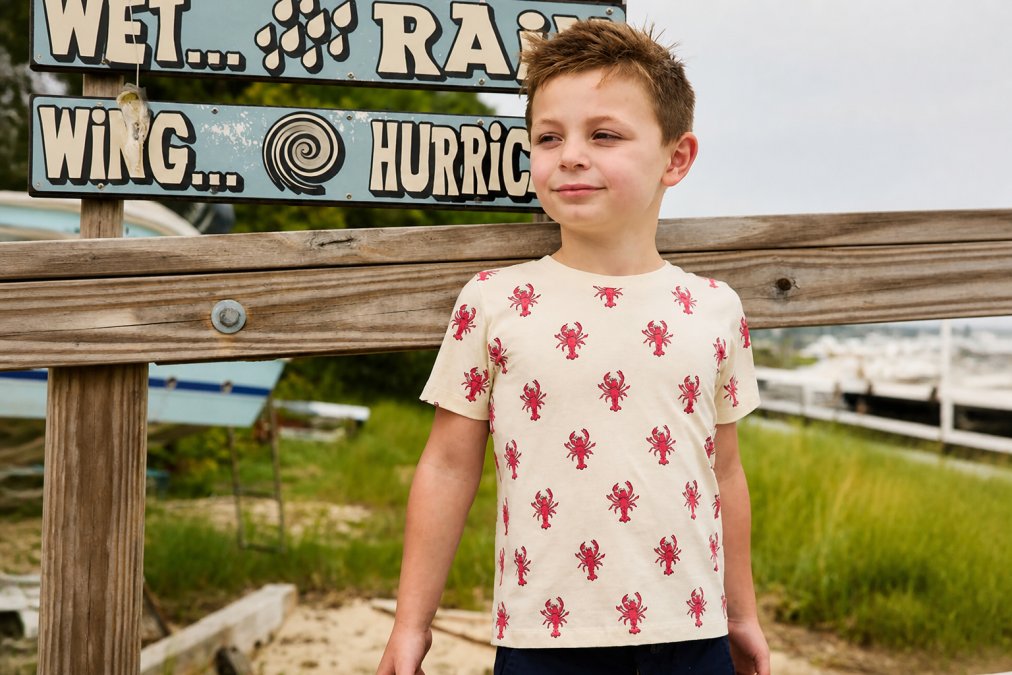
Our Kids Organic Tee in Lobsters is GOTS certified and uses eco-friendly dyes classified by OEKO-TEX criteria. The boxy fit and soft crewneck work well for kids who find fitted necklines triggering.

Why Fair Trade Certification Matters for Children
Fair Trade Certified means independent auditors have verified that workers earn at least a living wage, work in safe conditions, and have the right to organize (fairtradecertified.org). This affects quality and consistency, when garment workers are paid fairly and treated well, factories have lower turnover, experienced workers produce consistent quality, and defects are caught before shipping.
For children with sensory needs, consistency is crucial. A perfectly finished tag-less seam in one shirt but poorly finished in another creates frustration. Fair trade factories maintain higher quality standards because their workforce is stable and motivated. You're less likely to receive defective pieces.
Fair Trade Certified also means a portion of the purchase price goes into a community development fund controlled by workers themselves. They decide how to spend it, often on healthcare, education, or facility improvements.
Fair trade typically costs more upfront, but the math changes when you factor in durability and cost-per-wear.
Sensory-Friendly Organic Pajamas and Everyday Wear
Sensory-friendly organic pajamas combine three critical features: tag-less construction, non-irritating seams, and breathable fabric that doesn't trap heat or moisture. For children with autism, ADHD, or sensory processing disorder, these details determine whether sleep happens or becomes a nightly battle.
Tag-less design removes the most obvious irritant, but seams matter equally. Flat-felled seams and French seams enclose raw edges, creating smooth interior surfaces. Both take longer to produce, which is why they're more common in fair trade organic kids clothes prioritizing quality over speed.
Organic cotton breathes better than conventional cotton because it hasn't been chemically treated to reduce wrinkles or add shine (peer-reviewed research). This means less night sweating, fewer temperature regulation issues, and fewer sensory complaints. For children who overheat easily or have temperature sensitivity, this difference is significant.
Bamboo blends offer another sensory advantage: they're naturally hypoallergenic, softer than most cotton, and have better moisture-wicking properties. Fair trade organic bamboo options are less common than organic cotton but worth seeking out for children with severe sensory sensitivities.
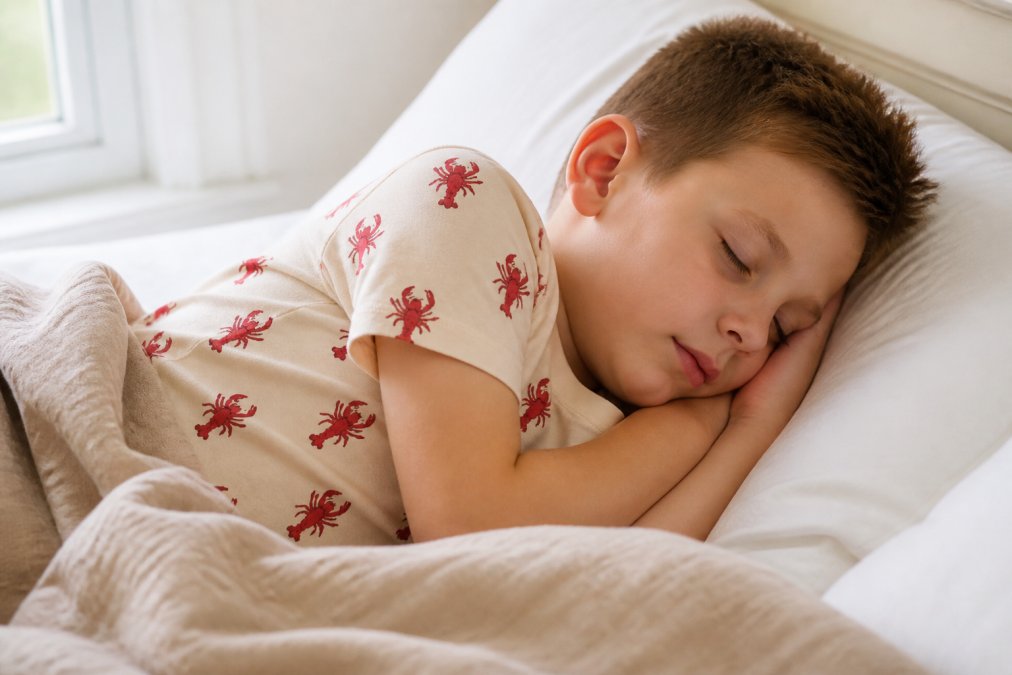
When shopping, look for elastic waistbands rather than drawstrings, gusseted crotches to reduce pressure points, and sleeve lengths that don't bunch at the wrists. Many sensory-sensitive children prefer slightly loose fits over snug ones.
How to Identify Ethical Clothing Brands
The easiest way to identify ethical clothing brands is to look for third-party certifications on the label or product page. Certifications cost money and require audits, so brands serious about ethics invest in proof.
Start with these certifications:
- GOTS Certified, organic fiber + low-impact processing
- Fair Trade Certified, living wages and safe working conditions
- OEKO-TEX Standard 100, non-toxic dyes and finishes
- B Corp Certified, verified social and environmental performance
Beyond certifications, examine supply chain transparency. Ethical brands publish information about factory locations, ownership, and audits. They name specific factories rather than hiding behind generic language and share audit reports publicly.
Ask specific questions before buying:
- Where is this garment made? (Specific country and factory)
- What certifications does it carry?
- What materials are in the fabric? (Organic cotton, bamboo, recycled fiber)
- How are workers compensated? (Living wage or vague "fair compensation"?)
Brands that dodge these questions are usually hiding something. Ethical brands answer directly because transparency is their competitive advantage.
Doodlebug's Children's Boutique carries fair trade organic kids clothes from producers who publish supply chain information. We vet each brand before stocking it, which is why our selection is smaller than mass-market retailers but higher integrity.
Durability and Cost-Per-Wear: Making Fair Trade Affordable
The upfront cost of fair trade organic kids clothes feels high until you calculate cost-per-wear. A $30 shirt worn twice weekly for two years costs roughly $0.29 per wear. A $15 shirt from fast-fashion that falls apart after six months costs $0.58 per wear.
Fair trade organic garments last longer because of better fabric quality, more skilled labor producing fewer defects, and design choices prioritizing durability. Seams are reinforced, hems properly finished, and elastic maintains stretch through repeated washing.
For sensory-sensitive children, durability matters psychologically. If a child finally finds a shirt that doesn't irritate their skin, losing it to a torn seam creates real distress. Buying durable pieces means your child can wear the same beloved shirt longer, reducing sensory overwhelm from constantly adapting to new clothing.
Washing practices extend life significantly. Wash in cold water, use gentle detergent, and air-dry when possible. This preserves fabric integrity and prevents reintroducing chemical irritants.
The affordability strategy is buying less but better. Instead of ten cheap shirts that wear out quickly, buy four fair trade organic pieces and rotate them. You'll spend less money over time, your child has fewer options to stress about, and you're not contributing to textile waste.
Resale, Circularity, and Extending Garment Life
Fair trade organic kids clothes hold their value in the resale market because they're built to last and parents actively seek them out. A well-maintained GOTS-certified shirt can be resold at 40-60 percent of its original price, offsetting your initial investment.
Resale platforms like Poshmark, Mercari, and Facebook Marketplace have active communities of parents buying and selling children's clothing. Fair trade and organic pieces move faster and at higher prices because the target audience actively searches for them.
Circularity means designing clothing to be worn by multiple children, repaired when needed, and eventually recycled or composted. Fair trade organic cotton can be composted at the end of its life, unlike synthetic blends (the EPA). When you buy fair trade organic kids clothes, you're buying pieces that can return to the earth without leaving microplastics behind.
To maximize resale value, keep original tags, wash gently, repair small issues before selling, and photograph items in good lighting. Be honest about wear, transparency builds trust in the resale community.
Some parents create clothing swaps with friends, trading outgrown pieces instead of selling them. This extends life further and costs nothing.
Conclusion
Fair trade organic kids clothes represent an investment in your child's comfort, health, and worker dignity. The higher upfront cost reflects actual quality, better materials, more skilled labor, and ethical wages. When you calculate cost-per-wear over a child's actual use period, fair trade organic pieces often cost less than fast-fashion alternatives while delivering superior durability and comfort.
Start with one or two pieces to test fit and feel. Our Kids Organic Tee in Lobsters and the Knit Patterned Bunny Daisy toy are both GOTS certified and fair trade, giving you entry points without massive financial commitment. Once you find styles and brands that work for your child's sensory needs, building a capsule wardrobe becomes easier and more affordable.
At Doodlebug's Children's Boutique, we believe sensory-friendly clothing and fair trade practices go hand-in-hand. Every piece we stock is vetted for both comfort and ethics. Explore our collection of tag-less, GOTS-certified organic apparel designed specifically for children with sensory sensitivities, and discover how quality fair trade clothing can transform your child's daily comfort while supporting ethical manufacturing practices worldwide.
| Certification | What It Covers | Why It Matters |
|---|---|---|
| GOTS Certified | Organic fiber + low-impact dyes | Protects skin from chemical residue |
| Fair Trade Certified | Living wages and safe conditions | Ensures worker dignity and consistent quality |
| OEKO-TEX Standard 100 | Non-toxic finishes and dyes | Reduces allergic reactions and irritation |
| B Corp Certified | Verified social and environmental performance | Third-party accountability across operations |
Common Questions About Fair Trade Organic Kids Clothes
How do I know if "organic" means what I think it means? Look for GOTS certification specifically. GOTS audits the entire supply chain from farm to finished garment. "Organic" alone could mean only the fiber is organic; processing might use harsh chemicals. GOTS ensures both fiber and manufacturing meet strict environmental standards.
Is fair trade certification worth the extra cost? Yes, when you calculate cost-per-wear over the garment's lifespan. Fair trade pieces last longer than fast-fashion alternatives because of better materials and skilled labor. A $30 fair trade shirt worn 200 times costs $0.15 per wear. A $15 conventional shirt worn 60 times costs $0.25 per wear.
Can I find fair trade organic kids clothes in my size range? Fair trade and organic brands typically offer newborn through size 12-14. Tween and teen options are less common because the market is smaller. Resale platforms often have wider size ranges because inventory comes from multiple sellers.
What's the difference between Fair Trade Certified and Fair Trade USA? Fair Trade Certified (the international standard) has stricter wage requirements and more rigorous auditing. Fair Trade USA allows more flexibility in wage calculations and lighter-touch auditing. If you see "Fair Trade USA" labeling, verify what specific worker protections it includes.
How should I wash fair trade organic clothes to make them last longer? Cold water, gentle detergent, and air-drying preserve fabric integrity. Hot water and high heat damage fibers and cause shrinkage. Avoid chlorine bleach and fabric softeners, which break down fibers and reintroduce chemicals. Turn garments inside-out before washing to reduce pilling and fading.
Are bamboo blends better for sensory-sensitive skin than organic cotton? Both work well but feel different. Bamboo is softer and more hypoallergenic, ideal for children with severe skin sensitivity or eczema. Organic cotton is more durable and holds its shape better through repeated washing. Many sensory-sensitive children prefer bamboo for pajamas and cotton for everyday wear.
Frequently Asked Questions
What certifications should I look for when buying fair trade organic kids clothes?
Look for GOTS (Global Organic Textile Standard) certification, which guarantees organic cotton and non-toxic dyes. Fair Trade Certified labels ensure workers earned living wages. OEKO-TEX 100 certification means the fabric is free from harmful chemicals. These three together signal genuinely ethical, safe clothing. Check product tags or brand websites for certification logos, legitimate brands display them prominently and link to verification.
Are organic clothes better for children with sensory sensitivities?
Yes. Organic cotton and bamboo fabrics lack the chemical residues from conventional dyes and finishes that can irritate sensitive skin. Tag-less designs and flat seams reduce tactile triggers. Hypoallergenic materials are gentler on eczema-prone or reactive skin. Children with autism or sensory processing disorders often tolerate organic, chemical-free fabrics better. Start with one sensory-friendly organic piece to test your child's response before buying a full wardrobe.
How do I verify if a kids' clothing brand is truly fair trade?
Check for third-party certifications like Fair Trade Certified or Fair Trade USA on product pages. Visit the brand's website for supply chain transparency details, ethical companies publish factory locations and worker conditions. Look for statements about living wages and safe working conditions. Contact the brand directly with specific questions; transparent companies respond quickly. Avoid vague claims like 'ethically sourced' without certification backing. Doodlebug's Children's Boutique features fair-trade products with clear certification documentation.
Is fair trade organic kids clothing more durable than conventional apparel?
Generally yes. Fair trade and organic fabrics are often produced with higher standards and better construction. Organic cotton retains softness through many wash cycles and resists pilling. Higher-quality dyes and finishing processes mean colors last longer. Better-made seams withstand repeated wear. While the upfront cost is higher, fair trade organic pieces typically outlast cheaper alternatives, making the cost-per-wear lower over time. Proper care, gentle washing and air-drying, extends garment life significantly.
[EXTERNAL_LINK: Global Organic Textile Standard certification requirements | gots.org]
[EXTERNAL_LINK: Fair Trade USA labor standards and wage verification | fairtradeusa.org]
[EXTERNAL_LINK: OEKO-TEX Standard 100 certification for textile safety | oeko-tex.com]
This article was written using GrandRanker