
Table of Contents
- What You're Actually Paying For With Bamboo Clothes
- Bamboo Viscose vs. Traditional Cotton: What's the Real Difference
- Benefits of Bamboo Clothing for Kids With Sensitive Skin
- Bamboo vs Cotton Clothing Durability: Which Lasts Longer
- How to Wash Bamboo Baby Clothes to Maximize Their Lifespan
- Cost-Per-Wear Analysis: Is Bamboo a Smart Long-Term Investment
- The Hidden Environmental Cost of 'Eco-Friendly' Marketing
- Frequently Asked Questions
Last Updated: September 22, 2026
What You're Actually Paying For With Bamboo Clothes
When you pick up bamboo pajamas, you're investing in a specific manufacturing process that transforms bamboo pulp into viscose, a labor-intensive conversion that costs more than growing and spinning traditional cotton. To determine if are bamboo clothes worth the price, you need to understand what you're actually paying for.

Bamboo viscose production requires dissolving bamboo pulp in chemical solvents, then reconstituting it into fiber. Responsible closed-loop systems recycle most solvents, but the process demands specialized equipment and expertise. Cotton requires only harvesting, ginning, and spinning. These extra processing steps add real cost to the final garment.
Bamboo clothing typically features heavier-weight fabric construction. The Kids Bamboo Pajamas in Coral ($29.99) use deliberate weight and density to ensure durability through repeated washing. Thinner fabrics cost less to produce but pill, fade, and lose shape faster.
Tag-less construction adds manufacturing complexity, requiring different machinery and careful assembly. For children with sensory sensitivities, this feature justifies the premium by eliminating a constant source of discomfort.
Bamboo Viscose vs. Traditional Cotton: What's the Real Difference
Bamboo viscose and cotton are fundamentally different fibers. The difference affects how clothing feels, performs, and holds up over time.
Cotton is harvested directly and needs minimal processing. Bamboo starts as pulp that must be chemically converted into viscose fiber, which gives it characteristic silkiness and moisture-wicking properties.
Bamboo viscose has a smoother fiber structure, making it feel buttery against skin immediately, while cotton fibers are rougher and require multiple washings to soften. For children with sensory processing issues, this initial softness matters.
Bamboo viscose's structure allows moisture to evaporate faster than cotton, making it superior for keeping children cool during sleep. This distinction is critical for children who sweat heavily or struggle with temperature regulation.
Cotton becomes softer and more durable with age. Bamboo viscose can lose shape and develop pilling more easily, but heavier-weight bamboo viscose (250gsm) performs significantly better than lightweight blends.
Conventional cotton farming uses significant pesticides but is biodegradable. Bamboo viscose requires chemical solvents, though closed-loop systems recycle up to 99%. Neither is a clear winner.
Benefits of Bamboo Clothing for Kids With Sensitive Skin
For children with eczema, sensory processing disorders, or skin sensitivity, bamboo viscose offers specific advantages that justify the higher price.
Bamboo viscose's smoothness creates less friction against sensitive skin. Children with atopic dermatitis or eczema often experience irritation from cotton's rough texture. Bamboo's smoother surface reduces micro-friction and scratching, genuinely reducing daily irritation.
Bamboo viscose doesn't harbor dust mites as readily as cotton because it dries faster, creating a less hospitable environment for allergens. For children with dust mite allergies or asthma triggered by bedding, this can measurably improve sleep quality.
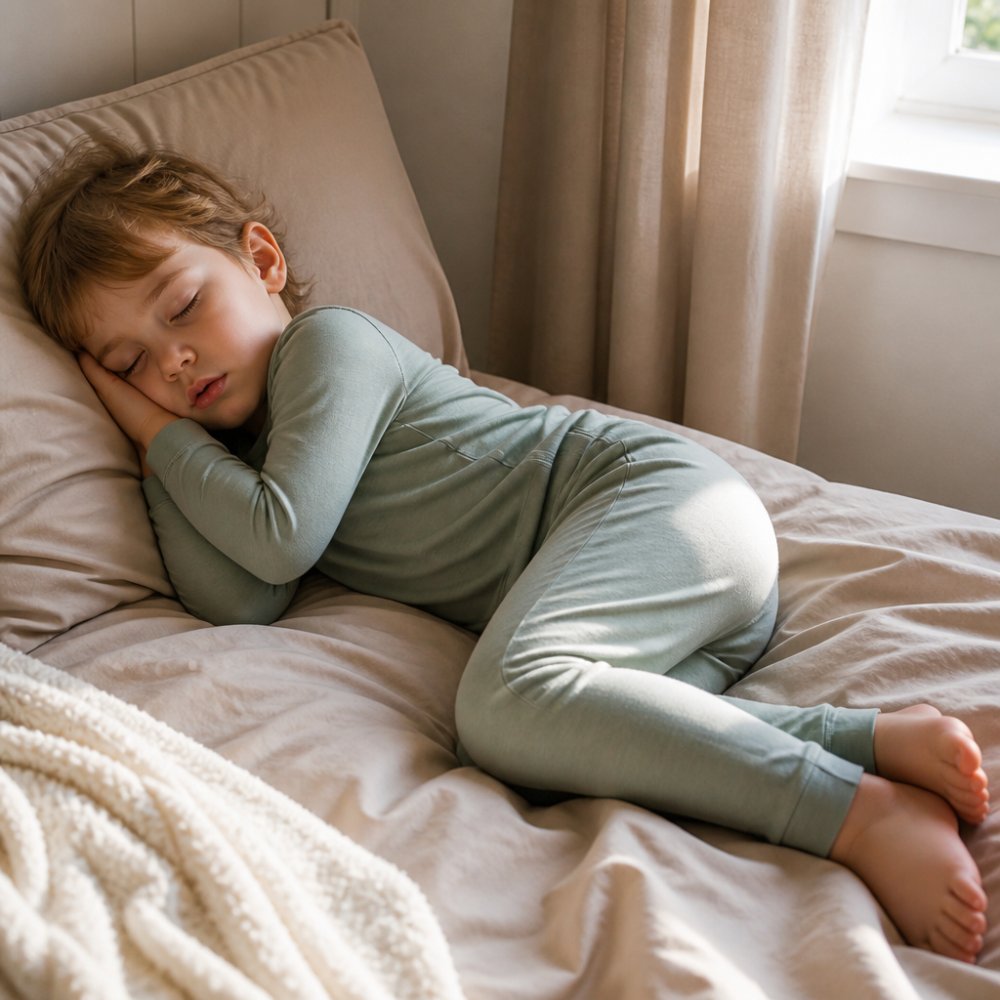
Temperature regulation is especially important for children with sensory sensitivities. Many kids on the autism spectrum experience temperature dysregulation. Bamboo's moisture-wicking properties stabilize body temperature by pulling sweat away and allowing faster evaporation, reducing the sensory input of feeling sticky or clammy.
The tag-less design available on Doodlebug's products eliminates a constant sensory irritant. For children with tactile defensiveness, even a soft label can create persistent discomfort that compounds throughout the day. Removing this single irritant can improve comfort and reduce anxiety related to clothing.
Bamboo clothing isn't a treatment for skin conditions, but as part of a sensory-friendly wardrobe, it reduces unnecessary irritation and allows other treatments to work more effectively.
Bamboo vs Cotton Clothing Durability: Which Lasts Longer
Bamboo viscose has a reputation for lower durability, but this depends entirely on fabric weight and construction quality.
Lightweight bamboo viscose (under 200gsm) pills noticeably after 10-15 washes. This is the bamboo clothing most people encounter at mass-market retailers, explaining the durability complaint.
Heavier-weight bamboo viscose (250gsm and above) behaves differently. The fabric's density means fibers are more tightly bonded, resisting pilling and maintaining shape through dozens of wash cycles. The Kids Bamboo Pajamas from Doodlebug's are constructed at this heavier weight specifically to extend lifespan.
Cotton's durability advantage is real but often overstated. Standard cotton clothing (150-180gsm) lasts longer than lightweight bamboo, but it also requires more frequent washing to maintain softness and color. Heavier cotton (like high-quality bed sheets at 300gsm+) is genuinely more durable than any bamboo viscose, but it's also significantly thicker and less breathable.
Kids Bamboo Pajamas -Ghouls Night out →
The practical lifespan difference between heavier bamboo and quality cotton is smaller than marketing suggests. Both can last 50+ washes when cared for properly. Bamboo may show slight pilling earlier, but it maintains its softness and color better. Cotton may resist pilling longer, but it gradually stiffens and fades.
How to Wash Bamboo Baby Clothes to Maximize Their Lifespan
The care instructions you follow determine whether your bamboo investment lasts 20 washes or 100+. This is where many parents inadvertently shorten garment lifespan.
Machine wash in cold water using a gentle cycle. Warm water accelerates fiber breakdown in bamboo viscose. Cold water maintains fiber integrity while still cleaning effectively. Use mild detergent.
Tumble dry on low heat or air dry. High heat damages the elastic properties of the spandex blend (typically 5-10% of bamboo garments) and can cause shrinkage. Air drying takes longer but extends garment lifespan significantly. If you use a dryer, remove items promptly to prevent wrinkles and creasing that can weaken fibers.
Don't overload the washing machine. Bamboo viscose needs space to move freely during the wash cycle. Cramming too many items causes excessive friction between garments, which accelerates pilling and fiber breakdown. Washing in smaller loads means more frequent washing, but each load lasts longer.
Turn items inside out before washing. This simple step reduces pilling on the visible surface by protecting the outer fiber layer from friction with other garments and the machine drum. It's a minor step that makes a measurable difference over 50+ wash cycles.
Avoid fabric softener and bleach. Both break down bamboo fibers and can cause discoloration. If you need to soften water, use a water softener in your washing machine rather than adding fabric softener to the load.
Store bamboo clothing in a cool, dry place away from direct sunlight. Bamboo viscose's color fades faster than cotton under UV exposure. A dark closet or drawer maintains color vibrancy through dozens of washes.
Cost-Per-Wear Analysis: Is Bamboo a Smart Long-Term Investment
This is the question that actually matters to most parents: does the higher price of bamboo clothing deliver better value than cheaper alternatives?
Start with actual pricing. The Kids Bamboo Pajamas at Doodlebug's cost $29.99. A comparable pair of cotton pajamas from a mass retailer runs $12-18. On the surface, bamboo costs 60-150% more. But cost-per-wear changes that calculation significantly.
If the bamboo pajamas last 80 washes (a realistic estimate with proper care) before noticeable pilling or fading, the cost-per-wear is $0.37. The cheaper cotton pajamas typically last 40-50 washes, bringing their cost-per-wear to $0.25-0.45 depending on initial price.
But this calculation misses the real value for children with sensory sensitivities. A pair of pajamas that causes daily discomfort has infinite cost-per-wear because the child won't wear them. If bamboo pajamas eliminate sensory irritation and the child actually wears them consistently, the value multiplies. You're not just buying durability, you're buying wearability.
Consider replacement frequency too.
The Hidden Environmental Cost of 'Eco-Friendly' Marketing
Bamboo is marketed as eco-friendly because bamboo grows fast and requires no pesticides. This is technically true but incomplete. The viscose conversion process introduces environmental complexity that marketing often glosses over.
Frequently Asked Questions
Why is bamboo clothing so expensive compared to cotton?
Bamboo clothes cost more because the viscose production process requires specialized equipment and closed-loop systems to recover chemical solvents safely. The fabric itself is engineered to be heavier-weight and more durable than standard cotton, which increases material costs. Additionally, bamboo viscose offers hypoallergenic properties and superior moisture-wicking that standard cotton doesn't provide, justifying the premium price for parents seeking sensory-friendly options.
Is bamboo fabric actually better for sensitive skin?
Yes, bamboo viscose is hypoallergenic and gentler on sensitive skin because it lacks the irritating substances found in conventional cotton production. Many bamboo clothes are OEKO-TEX certified, meaning they're free from harmful chemicals and pesticides. The smooth fiber structure reduces friction against skin, making it ideal for children with eczema, autism, or sensory processing disorders. Tag-less bamboo options eliminate another major irritant for sensory-sensitive kids.
Does bamboo clothing last longer than traditional fabrics?
When cared for properly, bamboo clothing can last due to its fiber integrity and heavier fabric weight. The key is washing in cold water and air-drying to prevent shrinkage and pilling. Bamboo viscose maintains its shape and color better than standard cotton across multiple wash cycles. However, durability depends on construction quality, heavier-weight bamboo blends (like those with spandex) outperform lightweight versions significantly.
How should you wash bamboo clothes to make them last?
Machine wash bamboo clothes in cold water on a gentle cycle, then tumble dry on low heat or air-dry to prevent shrinkage and fiber damage. Avoid bleach and fabric softeners, which break down the bamboo viscose fibers. Turn garments inside out to protect prints and reduce pilling.
Is bamboo clothing safe for babies with eczema?
Bamboo viscose is one of the safest fabric choices for babies with eczema because it's hypoallergenic, free from harsh dyes and chemicals (when OEKO-TEX certified), and naturally breathable. The smooth fiber reduces friction irritation that triggers eczema flare-ups. Tag-less designs eliminate additional irritation points. Many parents report their children's eczema symptoms improve when switching to bamboo, though results vary. Always patch-test new clothing and consult a pediatrician if skin reactions persist.