Last Updated: November 26, 2026
Quick Summary
Soft newborn clothes for sensitive skin should feel smooth and slightly stretchy, with no scratchy seams or stiff labels. Check how each garment is cut, sewn and finished, not just the fabric. Wash new pieces before the first wear, and use a mild, fragrance-free detergent.
- Rub the fabric between your fingers and along your wrist to test softness.
- Run your fingers along seams that touch skin; a ridge will likely rub the baby.
- Choose a snap or wrap front and a slightly roomy fit for easier changes.
- Wash new clothes before the first wear, in cold or lukewarm water on a gentle cycle.
- Skip fabric softener and scented dryer sheets, since their residue sits against the skin.
Table of Contents
- How Soft Newborn Clothes for Sensitive Skin Should Feel
- 100 Percent Organic Cotton Baby Clothes: Strengths and Trade-offs
- Bamboo Newborn Clothes and Why Parents Choose Them
- Hypoallergenic Baby Clothes: What the Label Does and Does Not Promise
- Soft Cotton Onesies for Newborns: Fit, Layering, and Tagless Seams
- Washing Newborn Clothes So They Stay Soft
- Building a Soft Newborn Wardrobe Starting With Doodlebug's Picks
- Frequently Asked Questions
How Soft Newborn Clothes for Sensitive Skin Should Feel
Soft newborn clothes for sensitive skin should feel smooth and slightly stretchy against the hand, with no scratchy seams or stiff labels. Buying soft newborn clothes is less about a single fabric and more about how it is cut, sewn and finished. A soft garment should lie flat, move with the baby and stay comfortable after several washes.
To test softness in person, rub the fabric between your fingers and along the inside of your wrist, the same way you would check a bottle's temperature. Look for a tight, even knit without loose threads. Pull the seams gently; if they pinch or bunch, they may rub newborn skin during sleep.
100 Percent Organic Cotton Baby Clothes: Strengths and Trade-offs
Organic cotton is a common choice for newborn clothes because it is breathable and gentle when first worn. For options suited to sensitive skin, see organic cotton pajamas for sensory-sensitive kids. Its main strength is a natural, airy feel, but it is not automatically softer than other fabrics. A tightly woven organic cotton can feel crisp, while a jersey knit usually feels softer against delicate skin.
Look for a certification on the label rather than relying on the word "organic" alone. Cotton also wrinkles and can shrink if it is not pre-washed, so wash before the first wear.
Bamboo Newborn Clothes and Why Parents Choose Them
Bamboo newborn clothes are usually made from bamboo viscose, a regenerated fiber that feels silky and smooth. Many parents choose bamboo because it drapes softly and handles warm rooms well. It is often described as breathable and moisture-wicking, which helps keep a baby comfortable during naps and overnight sleep.
Bamboo viscose is not the same as raw bamboo fabric, so check the fiber content on the tag. If you are weighing the higher price, see the parent's guide to whether bamboo clothes are worth the price. Most bamboo baby clothing is blended with a small amount of spandex for stretch. The bamboo ruffle pants and convertible footies in our catalog are made from a bamboo viscose and spandex blend.
Hypoallergenic Baby Clothes: What the Label Does and Does Not Promise
"Hypoallergenic" is a marketing term, not a guarantee. For a deeper comparison of fabrics and brands for kids, see hypoallergenic clothes for kids. No clothing can promise to prevent every reaction, and the label does not mean a garment has been tested for your baby specifically. What it usually suggests is that the fabric is gentle and made with fewer irritating finishes. That is a useful starting point, but it tells you almost nothing about the parts of a garment most likely to bother a newborn's skin.
Where irritation actually comes from
Reactions to newborn clothing are often linked to construction and finishing rather than the fiber itself. The common culprits are:
- Seams. Overlocked or serged seams create a raised ridge that can rub against the back, neck, and underarms during sleep. Flatlock seams lie flatter and are less likely to chafe.
- Tags. Woven neck labels and care tags are a frequent source of scratching. Tagless printing removes the label but can itself be a stiff patch if the ink is heavy.
- Elastic and binding. Tight elastic at the waist or cuffs, and narrow bindings at the neck and legs, can press into skin and leave marks.
- Snaps and zippers. Metal snaps can feel cold and catch fine hair; zippers need a fabric guard so the teeth do not contact skin.
- Dyes and prints. Dark saturated dyes and plastisol-style prints sit on top of the fabric and can feel stiff. Fiber-reactive dyes bond to the fiber and generally leave a softer hand.
- Finishing chemicals. Easy-care, wrinkle-resistant, and flame-retardant finishes are the most common chemical additions, and they are the ones most worth avoiding in newborn pieces.
A garment checklist you can use in the store or at home
- Turn the garment inside out and run your fingers along every seam that will touch skin. If you can feel a ridge, the baby will too.
- Check the neck, back, and underarms for tags, heavy print, or stiff binding.
- Stretch the waist and cuffs; elastic should recover without leaving a deep mark on your wrist.
- Look at the fiber content and care label together. A soft fabric with an easy-care finish is not the same as an untreated one.
- Wash before the first wear. This removes sizing and loose dye and softens the hand of most knits.
Sensitivity is not the same as eczema
General sensitivity means a baby reacts to scratchy seams, tags, or rough fabric. Eczema (atopic dermatitis) is a medical condition with a compromised skin barrier, and contact irritation is a localized reaction to a specific substance such as a dye or finish. Clothing changes can reduce triggers for all three, but they are not a substitute for medical advice. If a rash is persistent, spreading, weeping, or paired with fever, consult your pediatrician rather than cycling through more garments.
Our tagless pieces remove the neck label. Every child reacts differently, so treat the checklist above as a filter, not a diagnosis.
Soft Cotton Onesies for Newborns: Fit, Layering, and Tagless Seams
A soft cotton onesie is one of the most useful newborn basics because it works under sleepers and layers easily. Choose a snap or wrap-style front for easier diaper changes, and check that the shoulder seams sit flat. Newborns grow quickly, so a slightly roomy fit is often more practical than a snug one.
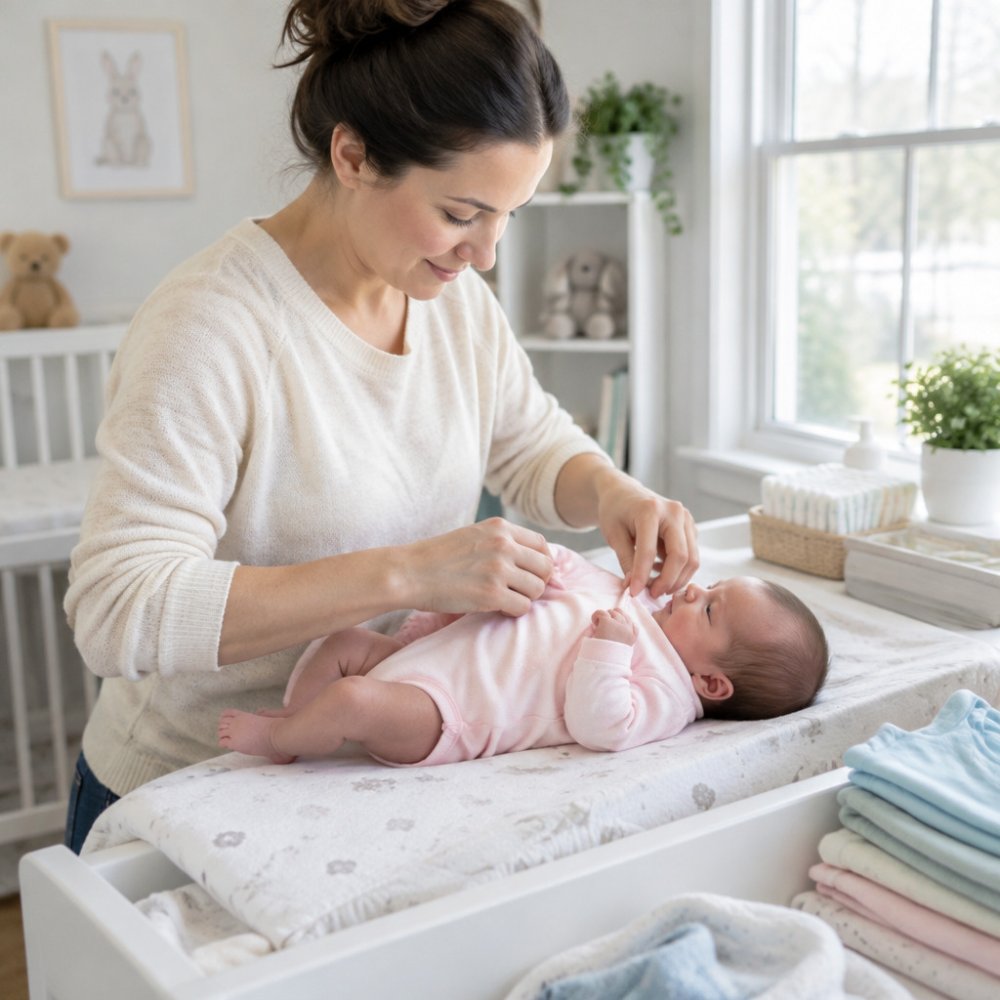
Layering matters more than heavy clothing. A single soft onesie under a light sleeper is usually enough indoors, and you can add a layer if the room feels cool. Avoid anything with bulky stitching at the neck, back or underarms.
Washing Newborn Clothes So They Stay Soft
Washing is where many soft garments lose their feel, and it is also where a lot of skin irritation starts. Residue from detergent, fragrance, and fabric softener stays in the fiber after the rinse and sits against the skin all day. A common pattern is that parents blame the fabric when the real trigger is the laundry routine.
Detergent: what to look for
Choose a mild, fragrance-free, dye-free liquid detergent. "Free and clear" formulas are the usual starting point because they leave out the perfumes and dyes most likely to irritate. Powder detergents can leave undissolved granules in cold water, so liquid is often easier on newborn knits. Use the amount on the label for the load size, not a little extra; more detergent means more residue, not cleaner clothes.
Watch out: "baby" on the detergent label is not a regulated claim, so read the ingredient and fragrance line rather than the front of the bottle.
Skip these
- Fabric softener. It coats fibers with a waxy film that reduces breathability and can trap irritants against the skin.
- Scented dryer sheets. Same residue problem, plus a fragrance load.
- Bleach and optical brighteners. Harsh on fibers and unnecessary for newborn pieces.
- Overloading the machine. Clothes need room to rinse; a packed drum leaves detergent behind.
A wash routine that protects both fabric and skin
- Wash new clothes before the first wear to remove sizing, loose dye, and factory residue.
- Turn garments inside out to protect the surface and any prints.
- Use cold or lukewarm water on a gentle cycle. Hot water sets some dyes and can shrink cotton.
- Add an extra rinse cycle if your machine has one, especially for the first wash of dark or heavily dyed pieces.
- Dry low or hang dry. High heat stiffens cotton, degrades spandex, and shortens the life of stretch fibers.
- Wash newborn clothes separately from adult laundry for the first few months, and avoid washing them with towels that shed lint into knits.
If a rash keeps coming back
If irritation persists after you switch to a fragrance-free detergent, add the extra rinse, and drop fabric softener, the cause may be the garment rather than the wash. Check seams, tags, and prints against the checklist in the hypoallergenic section above, and consult your pediatrician if the rash does not settle. Laundry changes are a useful first step, not a diagnosis.
Following the care label keeps the fabric soft and helps the clothing last through multiple children. For fabric-specific care, see our guide to washing bamboo baby clothes.
Keeping newborn clothes soft depends on how you wash and dry them, so the key steps are summarised below.
| Step | What to do | Timing or frequency |
|---|---|---|
| Pre-wash | Wash new clothes to remove sizing and loose dye | Before the first wear |
| Detergent | Use a mild, fragrance-free, dye-free liquid | Amount on the label for load size |
| Water | Cold or lukewarm, gentle cycle | Every wash |
| Rinse | Add an extra rinse cycle if available | Especially first wash of dark pieces |
| Drying | Dry low or hang dry | Every wash |
| Separation | Wash newborn clothes apart from adult laundry | First few months |
Building a Soft Newborn Wardrobe Starting With Doodlebug's Picks
At Doodlebug's Children's Boutique, we suggest starting with a small set of versatile pieces rather than a full drawer. A practical starter wardrobe includes a few soft bodysuits or onesies, two or three sleepers, and a pair of light pants for later. Pick one or two colors so everything mixes easily.
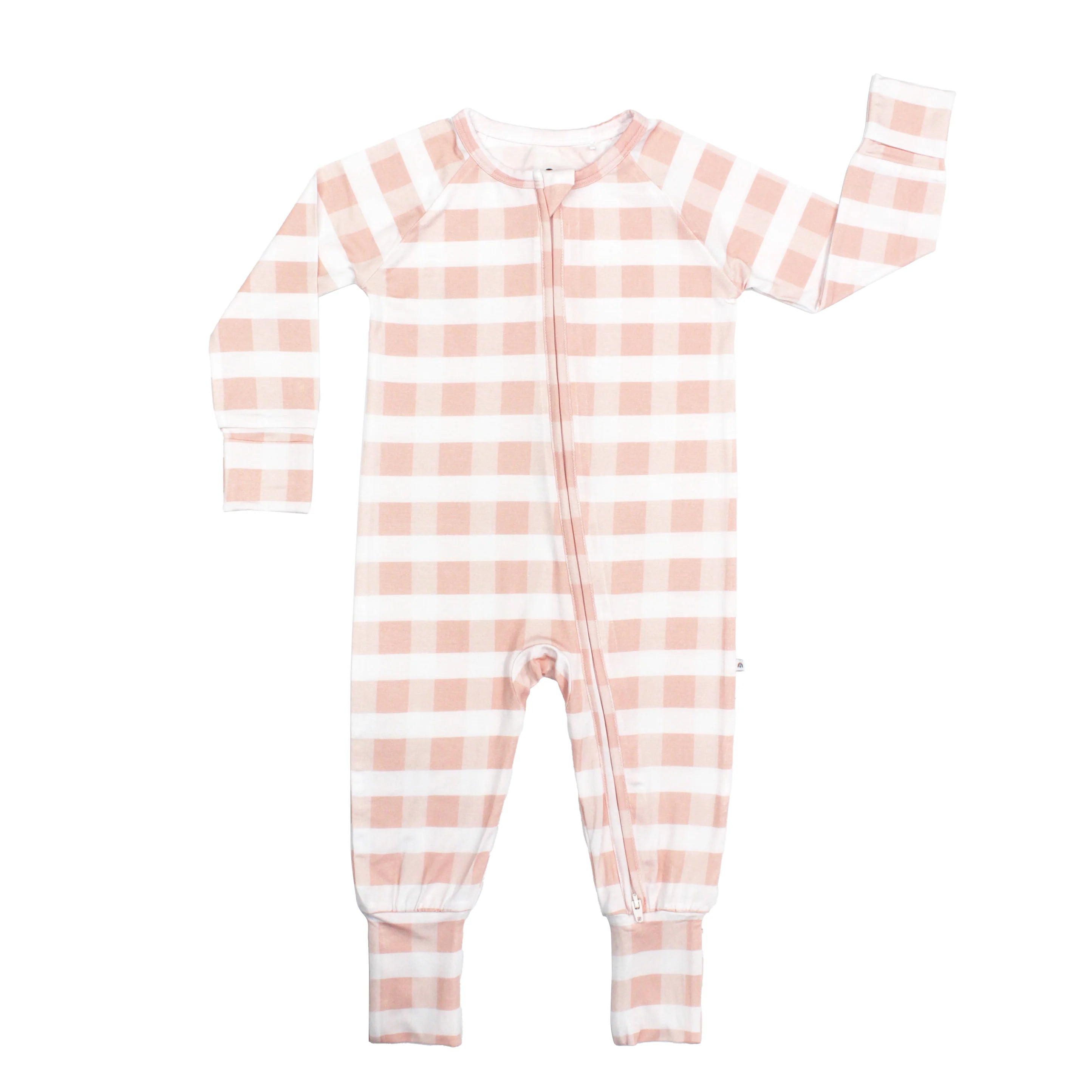
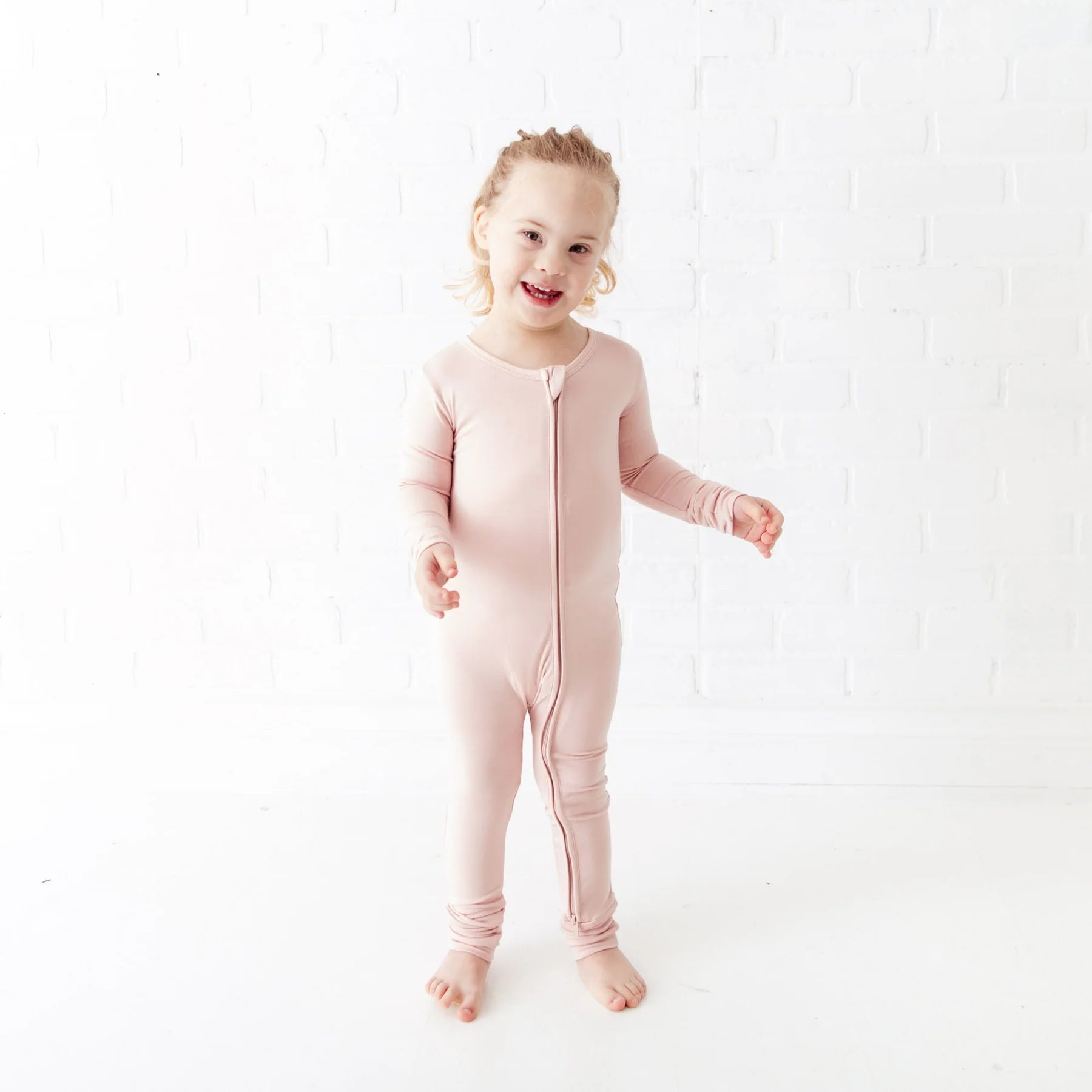
Our Pink Gingham Bamboo Convertible Footie Romper ($38.99) and Powder Pink Bamboo Convertible Footie ($38.99) are available in the catalog. The Bamboo Convertible Footie in Sugar Cookies is listed at $19.99. If you are building a wardrobe for a girl who is a little older, our Girls Bamboo Ruffle Pants in Berry ($12.99) are easy to layer.
Frequently Asked Questions
What are the softest baby clothes for newborns?
Bamboo viscose and 100 percent organic cotton are the two fabrics parents most often describe as soft for newborns. Bamboo viscose feels smooth and slightly silky, and it is commonly sold as breathable and moisture-wicking. Organic cotton is familiar, easy to wash, and gentle on most skin, especially in jersey or muslin weaves. The softest choice depends on the knit and the stretch in the fabric, so check the fiber content and feel the material before buying a full set. Doodlebug's Children's Boutique carries bamboo options such as the Pink Gingham Bamboo Convertible Footie Romper at $38.99.
Is organic cotton or bamboo better for a newborn's sensitive skin?
Neither fabric is better for every baby. Organic cotton is breathable, widely available, and easy to launder, which makes it a practical everyday choice for sensitive skin. Bamboo viscose is often described as smoother and cooler, and many parents find it comfortable in warm weather. Hypoallergenic claims do not guarantee that a baby with eczema or a known sensitivity will react well, so start with one or two pieces, watch the skin, and talk with your pediatrician if redness or rash persists.
What should I look for in clothes for a newborn with sensitive skin?
Look for soft fibers with a known fiber content, tagless or printed neck labels, flat or well-finished seams, and a stretchy but not tight fit. Avoid rough trims, heavy embellishments, and stiff fabric on the inside of the garment. Choose sizes with room for movement, and layer lightweight pieces rather than bundling a baby in thick clothing. Newborn sleepwear with a two-way zipper or snap-free closure can also reduce handling and friction during diaper changes. Doodlebug's Children's Boutique's Powder Pink Bamboo Convertible Footie at $38.99 is tagless and includes a two-way zipper.
How should I wash newborn clothes for sensitive skin?
Wash new newborn clothes before first use to remove factory residues, using a mild, fragrance-free detergent. Machine wash cold on a gentle cycle, and use a second rinse if your baby has sensitive skin. Avoid fabric softeners, which can coat fibers and reduce breathability. Tumble dry on low or hang to dry, since heat can weaken stretch in bamboo and spandex blends over time. Doodlebug's Children's Boutique bamboo pieces list machine wash cold on a gentle cycle and tumble dry low as their care instructions.
Price of Bamboo Baby Clothing Items at Doodlebug's
