
Table of Contents
- Why Bamboo Fabric Needs a Different Wash Routine
- What You'll Need Before Washing Bamboo Baby Clothes
- Step-by-Step: How to Wash Bamboo Baby Clothes
- Best Detergent for Bamboo Baby Clothes
- How to Remove Stains from Bamboo Fabric
- Drying and Storage: Keeping the Softness
- Common Bamboo Care Mistakes to Avoid
- Conclusion: Simple Care for Long-Lasting Comfort
- Frequently Asked Questions
Last Updated: September 7, 2026
Bamboo baby clothes are prized for their buttery softness, moisture-wicking comfort, and hypoallergenic feel, yet that same delicate fabric is surprisingly easy to ruin in a single wash cycle. Learning how to wash bamboo baby clothes correctly is the difference between pajamas that stay silky for years and ones that turn stiff, faded, or shrunk after a few washes. At Doodlebug's Children's Boutique, we offer bamboo pieces, and a common question we hear from parents is about care. The good news is that a simple, consistent routine keeps bamboo viscose soft and lasting.

Washing bamboo baby clothes is straightforward once you understand the fabric. Bamboo viscose is a natural fiber that is heat-sensitive and prone to damage from harsh detergents, high spin speeds, and tumble drying. Treat it like a delicate piece of your own wardrobe, and it will reward you with incredible textile longevity.
Below, we'll walk through the exact steps we recommend, from pre-treating stains to drying without heat.
Why Bamboo Fabric Needs a Different Wash Routine
Bamboo viscose is not cotton. It is a regenerated natural fiber with a smooth, round structure that feels silky against sensitive skin, but that same structure is vulnerable to heat and aggressive agitation. High temperatures can cause shrinkage, while rough washing leads to fabric pilling and a rough, scratchy texture that defeats the purpose of buying bamboo in the first place.
The biggest mistake most parents make is treating bamboo like everyday cotton. Cotton can handle hot water and a tumble dry low setting; bamboo cannot. The fiber integrity of bamboo viscose depends on gentle handling, which is why a dedicated routine matters more than the price tag of the garment.
What You'll Need Before Washing Bamboo Baby Clothes
Before you start, gather a few simple supplies. Most of these are probably already in your laundry room.
- A mild detergent that is free of dyes, fragrances, and optical brighteners
- A mesh laundry bag to protect delicate pieces
- A stain remover or enzyme-based cleaner for pre-treatment
- Cold or lukewarm water access
- A drying rack or flat surface away from direct sunlight
A mesh laundry bag prevents bamboo garments from snagging on zippers or Velcro from other items in the load, and it keeps the gentle agitation of the wash cycle from overworking the fibers.
Step-by-Step: How to Wash Bamboo Baby Clothes
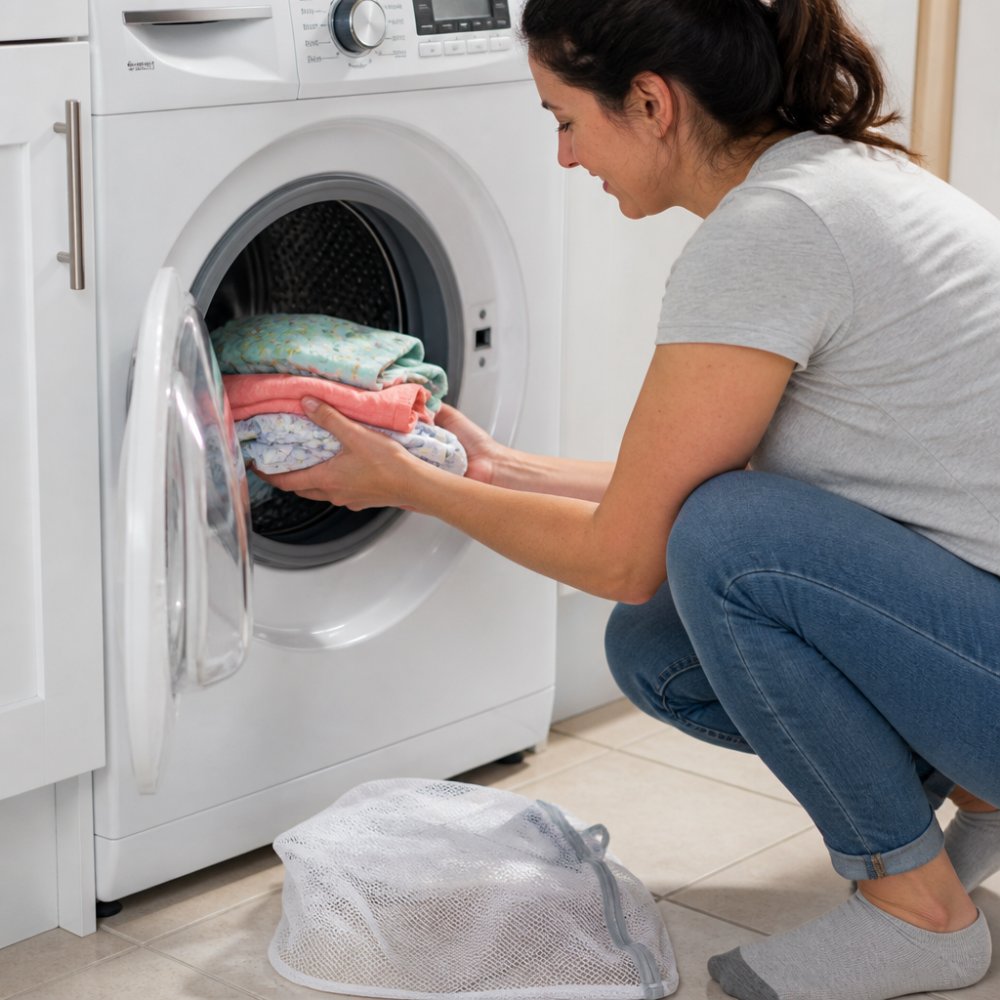
The most reliable method for washing bamboo baby clothes is a cold water wash on the delicate cycle, using a mild detergent, followed by air drying. This routine preserves softness, prevents shrinkage, and keeps colors from bleeding.
Step 1: Pre-Treat Stains Immediately
Bamboo fabric is highly absorbent, which means stains set quickly. Treat spit-up, food messes, or diaper blowouts as soon as possible. Rinse the stained area with cold water, then gently rub a small amount of enzyme-based cleaner into the fabric. Let it sit for 10 to 15 minutes before washing. Avoid hot water here, as heat can bake the protein in milk or food stains into the fibers permanently.
Step 2: Turn Garments Inside Out and Sort
Turn every bamboo garment inside out before washing. This protects the outer surface from abrasion and keeps prints or decorative details from fading. Sort bamboo pieces by color to prevent color bleeding, especially for the first few washes of new, brightly colored items. Wash bamboo separately from heavy items like jeans or towels, which can cause friction and pilling.

Step 3: Choose the Right Cycle and Water Temperature
Use the delicate or gentle cycle on your machine with cold water wash settings. Water temperature should stay below 86°F to protect the fibers. Select the lowest spin speed available, as high-speed spinning can stretch and distort the fabric's shape. If your machine has an extra rinse option, use it to ensure no detergent residue remains, which can irritate sensitive skin.
Step 4: Dry Without Heat
Never put bamboo in the dryer. Heat is the fastest way to ruin bamboo viscose, causing shrinkage and a stiff, rough texture. Instead, lay garments flat on a drying rack or hang them in a well-ventilated area away from direct sunlight, which can fade colors. Bamboo dries quickly, usually within a few hours.
Best Detergent for Bamboo Baby Clothes
The best detergent for bamboo baby clothes is a mild, liquid, phosphate-free formula without dyes, fragrances, or optical brighteners. These harsh additives can break down bamboo fibers over time and leave residue that triggers sensitive skin. Look for labels that say "free and clear" or "hypoallergenic."
Avoid fabric softeners entirely. Bamboo is naturally soft, and fabric softener coats the fibers with a waxy layer that reduces moisture-wicking and breathability. If you feel you need softness, run an extra rinse cycle instead. Enzyme-based cleaners are excellent for stain treatment but should not be used as the main detergent, as they are formulated for spot treatment rather than general washing.
How to Remove Stains from Bamboo Fabric
Bamboo's absorbency is a double-edged sword: it makes the fabric incredibly comfortable, but it also means stains set in quickly if you don't act fast. The good news is that most baby messes, from formula spit-up to sweet potato puree, are protein- or plant-based and respond well to enzyme-based cleaners. The key is matching the treatment to the stain type and never using heat until the stain is gone.
The General Protocol for Fresh Stains
- Act immediately. Rinse the garment inside-out under cold running water, holding the fabric so the water runs through the back of the stain, pushing it out rather than deeper into the weave.
- Pre-treat with an enzyme cleaner. Look for a product labeled "enzyme" or "bio-active," such as those containing protease or amylase. Apply the cleaner directly to the stain, gently work it in with your fingertips or a soft-bristled brush (an old baby toothbrush works well), and let it sit for 15-30 minutes.
- Wash on cold. Run the garment through your normal cold-water delicate cycle. Do not use warm or hot water, heat will cook the protein into the fiber, making the stain permanent.
- Check before drying. After washing, inspect the stain. If any trace remains, repeat the pre-treatment and wash. Never put a stained garment in the dryer or on a drying rack in direct sunlight, as heat will set the remaining stain.
Stain-Specific Treatments
Different baby messes require slightly different approaches. Here are the most common culprits and how to handle them:
| Stain Type | Common Sources | Best Treatment | Key Caution |
|---|---|---|---|
| Protein-Based | Formula, breast milk, spit-up, egg | Rinse with cold water, then soak in a solution of cold water and an enzyme detergent for 30 minutes before washing. | Never use hot water; it denatures the protein and sets the stain. |
| Plant-Based | Carrots, sweet potato, peas, fruit purees | Rinse with cold water, then apply a small amount of liquid dish soap (like Dawn) directly to the stain to break down the oils and plant pigments. Let sit for 10 minutes, then wash. | For berry or tomato stains, avoid rubbing, which can spread the pigment. Blot instead. |
| Oil-Based | Diaper cream, lotion, baby oil, food oils | Apply a degreasing agent like dish soap or a dab of a gentle, unscented shampoo. Gently rub it in, let it sit for 15 minutes, then wash. | Do not use hot water, which can melt the oils and drive them deeper into the fibers. |
| Diaper Blowouts | Mixed waste | Rinse off solid matter under cold water. Pre-treat with an enzyme cleaner, then soak in cold water with a scoop of oxygen-based bleach alternative (like OxiClean Free) for up to an hour before washing. | Do not use chlorine bleach; it will weaken the bamboo fibers and cause yellowing. |
Dealing with Set-In or Old Stains
If a stain has already been dried or set in, your options are more limited but not hopeless. Soak the garment in a basin of cold water with a dissolved oxygen-based bleach alternative (following the product's dilution instructions) for several hours or overnight. Oxygen bleach works by oxidizing the stain molecules, lifting them from the fiber without the harshness of chlorine. After soaking, wash as usual. This method is safe for bamboo viscose but should be tested on an inconspicuous seam first to ensure colorfastness.
A Note on Sunlight
While sunlight can naturally bleach some stains, it is not a reliable method for bamboo. Direct, prolonged sunlight can cause the dyes in bamboo clothing to fade unevenly, leaving a light spot where the stain was. Stick to the cold-water and enzyme method for consistent, color-safe results.
Drying and Storage: Keeping the Softness
Air drying is non-negotiable for bamboo viscose, but the way you air dry matters as much as the decision to skip the dryer. The goal is to dry the fabric quickly enough to prevent mildew and musty odors, but gently enough to avoid stretching, fading, or fiber damage.
The Mechanics of Air Drying Bamboo
Bamboo viscose can hold up to 200% of its weight in water when wet, which makes it heavy and prone to stretching. This is why the drying method matters:
- Lay flat on a mesh rack. This is the gold standard. A collapsible mesh drying rack (like the ones from Honey-Can-Do or Minky) allows air to circulate on all sides of the garment, speeding up drying time and preventing the fabric from staying damp against a solid surface. Reshape the garment gently while it's wet, smoothing out wrinkles and pulling the seams back into alignment.
- Hang on a padded hanger (for tops and dresses). If you must hang bamboo, use a wide, padded hanger to distribute the weight and prevent shoulder bumps. Never use wire or thin plastic hangers, which will leave permanent creases and stretch the shoulders.
- Avoid clothespins. The pressure from clothespins can leave permanent indentations in the soft bamboo weave. If you're hanging items on a line, use a flat, clip-free drying rack instead.
Managing Humidity and Drying Time
In humid climates (think the Southeast or Gulf Coast), air drying can take longer than expected, and damp fabric left too long can develop a musty smell. Here's how to handle it:
- Use a dehumidifier. If you're drying indoors and the relative humidity in your laundry room is above 60%, run a dehumidifier. This can cut drying time in half and prevents the damp, heavy feeling that bamboo can develop.
- Maximize airflow. Place the drying rack near a ceiling fan or an open window. A gentle breeze dramatically speeds up evaporation without the heat damage of a dryer.
- The towel-roll trick. For thicker items like bamboo pajama pants or hoodies, lay the garment flat on a clean, dry, absorbent towel, roll the towel up tightly, and press gently. This wicks out excess moisture before you place the garment on the rack, cutting drying time significantly.
- When to use a dryer (as a last resort). If you absolutely must use a machine dryer, perhaps during a week of relentless rain, use the "air only" or "no heat" setting on your dryer. Place the garments in a mesh laundry bag and check them every 10 minutes. Remove them while still slightly damp and finish air drying. This is not ideal, but it is far better than using any heat setting.
Storage: Folding, Stacking, and Protecting
Proper storage is the final step in preserving bamboo's softness and shape. The rule of thumb is to fold, not hang, and to store in a way that protects the fabric from dust, light, and pests.
- Fold, don't hang. Hanging bamboo for long periods can cause the fabric to stretch under its own weight, especially for heavier items like footed pajamas. Fold garments neatly and stack them in a drawer.
- Use drawer dividers. To keep stacks organized and prevent fabrics from rubbing against each other (which can cause pilling), use fabric or cardboard drawer dividers.
- Protect from light. Store bamboo in a drawer or closet that is not exposed to direct sunlight. Prolonged UV exposure will fade colors and weaken the fibers.
- Consider cedar or lavender for pest control. While bamboo is not a primary target for moths (which prefer animal fibers like wool), it can still be damaged by pests if stored for long periods. A cedar block or a small sachet of dried lavender in the drawer adds a natural, pleasant scent and deters insects without the harsh chemicals of mothballs.
- Rotate your stash. If you have a large collection of bamboo clothes, rotate which items are on top of the stack. This prevents the bottom items from developing permanent creases from the weight of the pile.
Common Bamboo Care Mistakes to Avoid
Several habits silently damage bamboo clothing, and most parents do not realize it until the damage is done.
| Mistake | What Happens | Better Approach |
|---|---|---|
| Hot water wash | Shrinkage, faded colors | Cold water wash below 86°F |
| Tumble drying | Stiff, rough texture | Air dry flat or hang |
| Fabric softener | Coats fibers, reduces breathability | Run an extra rinse cycle |
| Chlorine bleach | Weakens fibers, yellowing | Oxygen-based bleach alternative |
| High spin speed | Stretching, distorted shape | Lowest spin setting |
Another common error is washing bamboo too frequently. Bamboo is naturally odor-resistant and moisture-wicking, so it does not need washing after every single wear. Spot cleaning between washes extends the life of the garment and reduces wear on the fibers. When you do wash, always use a mesh laundry bag for extra protection.
Conclusion: Simple Care for Long-Lasting Comfort
Caring for bamboo baby clothes does not have to be complicated, but it does require a different mindset than cotton. Cold water, a mild detergent, the delicate cycle, and air drying will keep those buttery-soft pieces in rotation for years, saving you money and keeping your child comfortable.
At Doodlebug's Children's Boutique, our bamboo pajamas and daywear are made to hold their shape, color, and quality wash after wash, using a slightly heavier weight fabric. Our tag-less, hypoallergenic pieces are made for sensitive skin, and with the right care routine, they will stay that way.
Get started with Doodlebug's Children's Boutique and give your child the comfort of bamboo that lasts.
Frequently Asked Questions
Can you put bamboo baby clothes in the dryer?
You can, but only on the lowest heat or air-dry setting, and remove them while they are still slightly damp. High heat is the main cause of shrinkage and damage to bamboo viscose fibers. For the longest lifespan, lay the garments flat or hang them to dry. If you use a dryer, the gentle cycle with no heat is the safest option to preserve the fabric's softness and shape.
What temperature should you wash bamboo fabric in?
Always use cold water, ideally below 86°F, when washing bamboo baby clothes. Hot water can cause the fibers to weaken, leading to shrinkage and a loss of that buttery-soft feel. A cold water wash is effective for daily cleaning and helps prevent color bleeding. For heavily soiled items, pre-treat stains instead of raising the water temperature.
Is it safe to use bleach on bamboo baby clothes?
No. Chlorine bleach will break down the bamboo viscose fibers and cause yellowing or holes. It is also too harsh for a baby's sensitive skin. For whitening, use an oxygen-based bleach or a bleach-free alternative. These enzyme-based cleaners are safe for the fabric and still lift stains effectively without compromising the fiber integrity or the garment's hypoallergenic properties.
How do you wash bamboo baby clothes to keep them soft?
To maintain that signature softness, always wash bamboo clothes in cold water on a gentle or delicate cycle. Skip the fabric softener, as it leaves a residue that makes bamboo feel stiff and less absorbent over time. Instead, consider adding white vinegar to the rinse cycle to help break down detergent residue. Then, always air dry or use the lowest dryer setting to keep the fibers smooth.