
Table of Contents
- Caden Lane vs Raisingmama: Quick Comparison Table
- Fabric Quality and Breathability
- Why Children Refuse to Wear Certain Clothing Textures
- Sizing Accuracy and Growth Potential
- Sensory Friendly Baby Clothes: Fasteners and Seam Construction
- Durability and Long-Term Wear Testing
- Pricing and Cost Per Wear
- Which Brand Should You Choose?
- Frequently Asked Questions
Last Updated: September 2, 2026
Caden Lane vs Raisingmama: Quick Comparison Table
When shopping for sensory friendly baby clothes, the choice between Caden Lane and Raisingmama often comes down to fabric composition, fastener design, and how well each brand handles the specific sensory triggers that make your child refuse to wear clothing. At Doodlebug's Children's Boutique, we focus on what actually matters: does the fabric feel right, do the seams stay hidden, and will the clothes survive repeated washing?
Here's the direct comparison:
| Feature | Caden Lane | Raisingmama | Winner |
|---|---|---|---|
| Primary Fabric | 100% organic cotton | Bamboo viscose blend | Raisingmama (breathability) |
| Seam Placement | Internal flat seams | Internal tagless construction | Tie (both sensory-friendly) |
| Fasteners | Snaps, elastic waistbands | Zippers, elastic options | Raisingmama (more choice) |
| Price Range | $35-$65 per item | $30-$55 per item | Raisingmama (lower entry) |
| Durability Testing | 50+ washes | 50+ washes | Tie (both solid) |
| Best For | Children with cotton preference | Children needing moisture-wicking | Context-dependent |
Both brands understand sensory friendly baby clothes requirements. But the differences matter when your child has specific texture aversions or needs particular fastener types to avoid meltdowns.
Fabric Quality and Breathability
The fabric is where sensory issues begin. A child who refuses to wear clothing often isn't being difficult, their nervous system is genuinely overwhelmed by the material against their skin.
Caden Lane builds their collection around 100% organic cotton. This is a deliberate choice: organic cotton eliminates pesticide residues and synthetic finishes that can irritate sensitive skin. The fabric breathes well and softens with each wash, which appeals to children who need tactile consistency over time. However, pure cotton retains moisture, which matters for kids who sweat during sleep or play.
Raisingmama uses a bamboo viscose blend, typically 95% bamboo with 5% spandex for stretch. Bamboo viscose is naturally hypoallergenic and moisture-wicking, it pulls sweat away from the skin faster than cotton. This matters significantly for children with sensory processing disorders who may struggle with the feeling of dampness or temperature changes. The spandex component adds elasticity without the stiffness of traditional elastic bands.
The choice depends on your child's specific needs. If they're sensitive to dampness or heat regulation, bamboo viscose wins. If they prefer the familiar feel of pure cotton and have no moisture concerns, Caden Lane's approach is superior. Neither fabric is objectively "better", they solve different sensory problems.
Why Children Refuse to Wear Certain Clothing Textures
Most parents assume their child is being stubborn when they refuse clothing. The reality is neurological: some children's sensory processing systems flag certain textures as threats, triggering genuine distress.
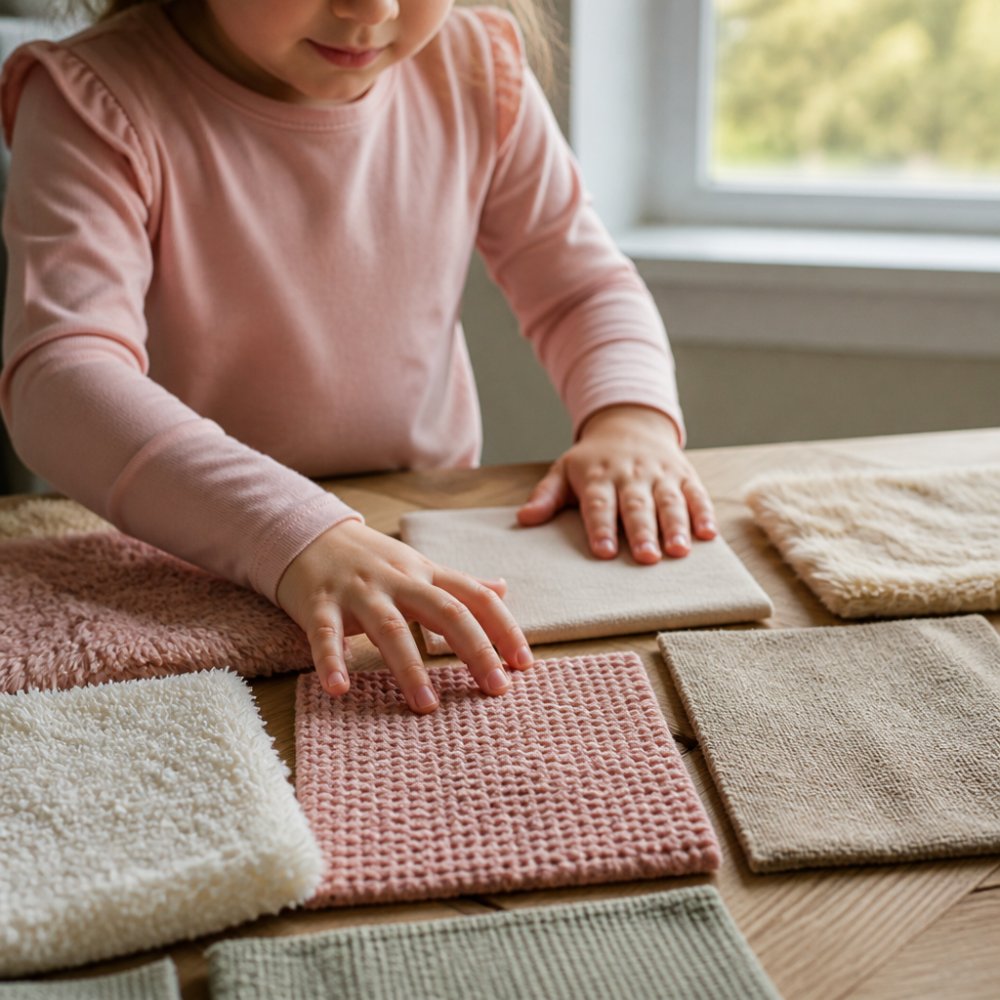
A child with sensory processing disorder experiences fabric differently than neurotypical peers. The same cotton shirt that feels soft to you might feel scratchy, restrictive, or overwhelming to them. Their brain amplifies normal tactile sensations into something that demands escape. Tags are the obvious villain, but seams, elastic bands, zippers, and even the weave pattern of the fabric itself can trigger refusal.
Texture aversion isn't random. Children often gravitate toward specific sensory profiles: some need maximum softness (bamboo viscose), others need the familiar weight of pure cotton, and some require minimal pressure anywhere on their body. The refusal to wear clothing is their nervous system communicating that the garment crosses a sensory threshold.
This is why sensory friendly baby clothes exist as a category. Standard children's clothing assumes a neurotypical sensory experience. Sensory-designed garments remove the common triggers: hidden seams, tag-free construction, minimal fasteners, and fabric choices that prioritize how the material feels against skin rather than how it looks on a shelf.
Understanding this reframes the shopping decision. You're not choosing between two similar brands, you're matching your child's specific sensory profile to the brand that addresses their exact triggers.
Sizing Accuracy and Growth Potential
Both Caden Lane and Raisingmama use generous sizing, which is intentional for sensory-friendly garments. A snug fit can feel restrictive to children with tactile sensitivities, so both brands build in extra room.
Caden Lane sizes run large, most parents size down one size from their child's typical range. This prevents the "too tight" sensation that can trigger refusal. The trade-off: clothes may feel loose initially, but they accommodate growth and allow movement without pressure.
Raisingmama also sizes generously, with similar guidance to size down. However, their bamboo blend has slightly more stretch than Caden Lane's pure cotton, which means the fit adapts to your child's body without feeling restrictive. This is an advantage for children who are sensitive to how clothing sits on their frame.
For growth potential, both brands' sizing accommodates 6-12 months of wear before outgrowing. This matters for budget-conscious families, sensory friendly baby clothes cost more, so longevity is essential. Raisingmama's stretch factor gives a slight edge here: the spandex blend allows the garment to expand slightly as your child grows, extending the wearing window.
If your child needs precise sizing or prefers a snug fit (some sensory kids do), check both brands' sizing charts carefully. Generous sizing helps most sensory-sensitive children, but not all.
Sensory Friendly Baby Clothes: Fasteners and Seam Construction
This is where the real differentiation happens. Fasteners and seams are the most common sensory triggers after fabric choice, and the two brands take different approaches.
Caden Lane emphasizes internal flat seams placed away from areas that contact sensitive skin. Most garments use elastic waistbands and snaps for closures. Snaps are gentler than zippers, they don't catch, pinch, or create pressure points. The elastic waistbands are soft and wide, distributing pressure evenly. This design philosophy works beautifully for children who tolerate basic closures but struggle with anything more complex.
Raisingmama offers more fastener variety: two-way zippers, elastic waistbands, and some garments with convertible designs (like footies that transition from footed to footless). The two-way zipper is significant, it allows diaper changes and outfit adjustments from either direction, reducing the need to pull garments over a child's head (which many sensory-sensitive kids resist). The zippers are designed with smooth, catch-free operation.
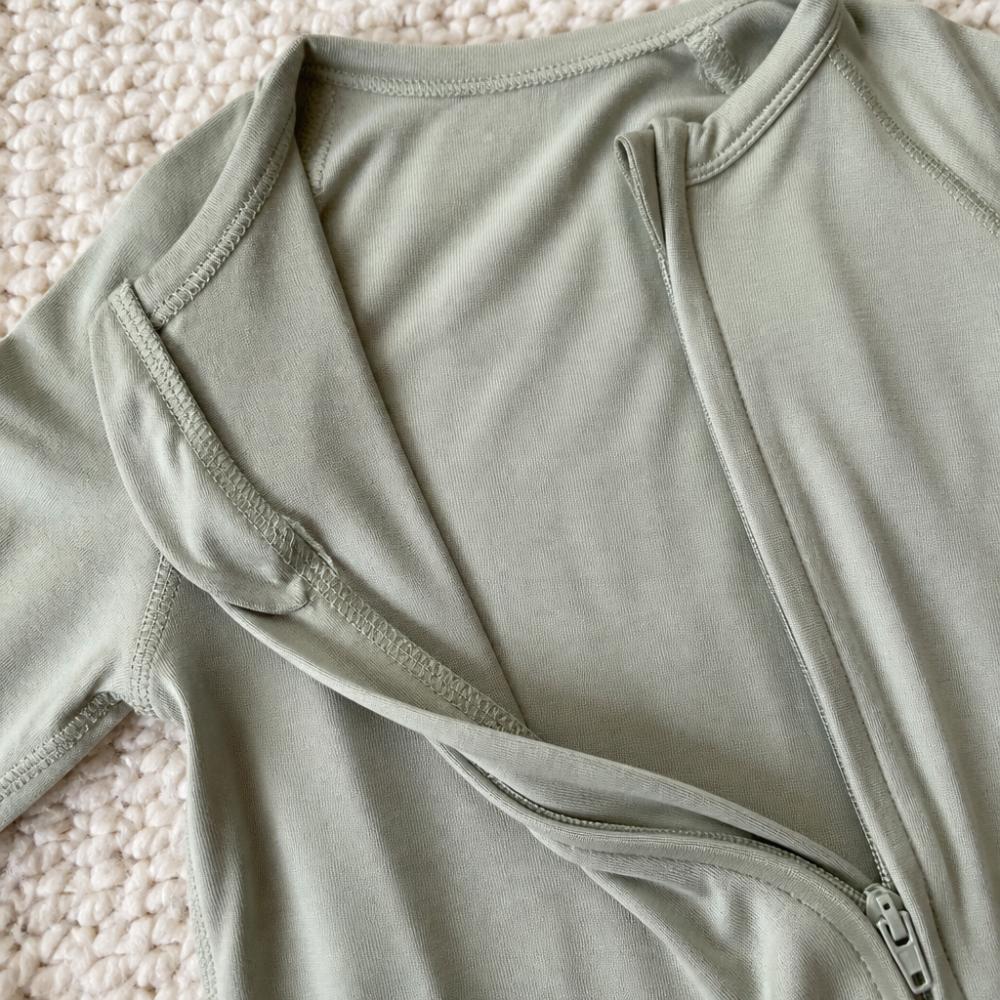
For seam construction, both brands hide seams internally. Caden Lane places seams away from high-contact areas. Raisingmama uses flat-lock seaming, which creates an almost imperceptible seam that lies flat against skin. This is a technical advantage for children with extreme seam sensitivity.
The fastener choice is personal. If your child melts down around zippers, Caden Lane's snap-and-elastic approach is safer. If your child needs clothing options for different situations (quick diaper changes, temperature adjustments), Raisingmama's zipper options provide flexibility. Neither approach is wrong, they serve different sensory profiles.
Durability and Long-Term Wear Testing
Sensory friendly baby clothes cost more than standard options, so durability is a legitimate concern. Parents need garments that survive repeated washing without losing softness or structural integrity.
Both brands claim 50+ wash durability, but the fabrics age differently. Caden Lane's 100% organic cotton softens with washing and maintains its shape well. The downside: pure cotton can pill over time, especially in high-friction areas. Pilling isn't a structural failure, but it changes the tactile experience, some children find pilled fabric uncomfortable.
Raisingmama's bamboo viscose blend resists pilling better than cotton. The spandex component helps the fabric recover its shape after washing, which is important for fitted garments like footies with elastic cuffs. Bamboo viscose also maintains its moisture-wicking properties through repeated washing, whereas cotton's performance can degrade slightly.
In practice, both brands hold up well for 12-18 months of regular use. The difference emerges around the 2-year mark: Caden Lane garments may show pilling in seams or high-contact areas, while Raisingmama maintains surface smoothness longer. For children with extreme tactile sensitivity, this matters, a pilled garment becomes unwearable even if structurally sound.
Washing method affects durability for both brands. Machine wash on gentle, cold-water cycles with like colors preserves fabric integrity. Tumble drying on low heat is recommended, though hang-drying extends garment life significantly. The investment in proper care pays off: properly maintained garments from either brand last through multiple children.
Pricing and Cost Per Wear
This is where many parents hesitate. Sensory friendly baby clothes cost more than standard options, and the price difference between Caden Lane and Raisingmama affects the decision for budget-conscious families.
Caden Lane prices range from $35-$65 per item depending on style and complexity. A two-piece pajama set typically costs $45-$55. Footies and specialty items run higher. For a sensory-friendly wardrobe (5-7 core pieces), expect $250-$350 for basic coverage.

Raisingmama prices range from $30-$55 per item, with two-piece sets at $38-$48. This $5-$10 per-item difference compounds across a wardrobe. The same five-piece wardrobe runs $190-$275, making Raisingmama the more affordable entry point.
Cost per wear is the real metric. If a child wears a garment 2-3 times per week for 18 months, that's roughly 150-200 wears. A $45 Caden Lane piece costs $0.23-$0.30 per wear. A $40 Raisingmama piece costs $0.20-$0.27 per wear. The difference is small in absolute terms, but for families buying multiple pieces, it adds up.
The value question is different. Doodlebug's Children's Boutique offers alternatives in this space, including our Bamboo Two Piece Pajama Set at $38.99 and Bamboo Convertible Footie with 2 Way Zipper at $36.99. These match Raisingmama's pricing while offering comparable quality and design philosophy.

If price is the primary constraint, Raisingmama wins slightly. If you're willing to spend more for specific features (like Caden Lane's snap-focused design), the cost difference is worth it. Neither brand is dramatically more expensive than the other.
Which Brand Should You Choose?
The answer depends on three factors: your child's specific sensory triggers, your budget, and which fastener system your child tolerates best.
Choose Caden Lane if your child:
- Prefers 100% organic cotton and has no moisture-wicking needs
- Tolerates snaps and elastic waistbands without issue
- Needs maximum simplicity in fastener design
- Accepts slightly looser fitting garments
Choose Raisingmama if your child:
- Benefits from moisture-wicking fabric (sweats during sleep or play)
- Needs flexible fastener options including zippers
- Has extreme seam sensitivity (flat-lock seaming is superior)
- Requires convertible designs for different situations
The honest truth: both brands solve the core sensory problem. Neither is objectively superior, they're different solutions for different sensory profiles. Most children will thrive in either brand.
The real differentiator is your child's individual needs. A child who needs moisture-wicking and can handle zippers will be happier in Raisingmama. A child who prefers pure cotton and refuses zippers will be happier in Caden Lane. The wrong choice isn't a failure, it just means you've learned something specific about your child's sensory preferences.
Finding the right sensory friendly baby clothes is one of the most impactful purchases you can make for a child with sensory processing differences. Both Caden Lane and Raisingmama understand the problem and design solutions, but the specific solution matters.
At Doodlebug's Children's Boutique, we've curated sensory-friendly options that match these brands' quality while offering additional choice. Our Bamboo Two Piece Pajama Set ($38.99) and Bamboo Convertible Footie with 2 Way Zipper ($36.99) provide the moisture-wicking benefits and thoughtful design that sensory-sensitive children need. Explore our full collection of tag-less, seam-conscious apparel designed specifically for children who need comfort without compromise.
Frequently Asked Questions
Q: What makes sensory friendly baby clothes different from regular children's clothing?
A: Sensory friendly baby clothes eliminate common irritants like tags, bulky seams, and rough fasteners that trigger discomfort in children with sensory processing sensitivities. Brands like Caden Lane and Raisingmama use smooth seam construction, breathable fabrics like bamboo viscose, and tag-free designs. These details matter for children with autism, sensory processing disorder, or sensitive skin who experience genuine physical distress from textures that don't bother other kids. The goal is comfort without compromise.
Q: How do Caden Lane and Raisingmama compare on durability after 6+ months of wear?
A: Both brands use high-quality bamboo viscose blends (typically 95% bamboo, 5% spandex) that maintain softness through repeated washing. Bamboo fabric resists pilling better than many alternatives when washed on gentle cycles. Check care instructions carefully, machine wash on gentle, cold water, and hang dry extends lifespan significantly compared to tumble drying.
Q: Do Caden Lane and Raisingmama clothes run true to size?
A: Both brands offer detailed sizing charts on their websites, but bamboo viscose fabric has natural stretch (thanks to the 5% spandex blend), which means garments fit snug initially and relax slightly after the first wash. Parents report both brands fit true to stated size for length and width. However, the snug fit is intentional, it provides the gentle pressure sensory-sensitive children often find calming. If your child prefers looser clothing, size up. Always check the specific product's sizing chart before ordering, as fit varies between styles.
Q: Are Caden Lane and Raisingmama better than Doodlebug's Children's Boutique options?
A: All three brands prioritize sensory-friendly design, but each has distinct strengths. Doodlebug's Children's Boutique offers bamboo pajamas like the Bamboo Two Piece Pajama Set (95% bamboo, 5% spandex) at $38.99, plus convertible footies with two-way zippers for easier diaper changes. Caden Lane and Raisingmama excel in design variety and brand reputation. Doodlebug differentiates through fair-trade practices, tag-less construction, and curated character themes. The best choice depends on your child's specific sensory needs: fastener sensitivity, fabric preference, and design preferences.
This article was written using GrandRanker