
Table of Contents
- Quick Comparison: Top Sensory Toys at a Glance
- What Makes Sensory Toys Essential for Kids
- 1. Ice Cream Squishy Stress Toy - Portable Fidget for Anxiety Relief
- 2. GIANT Go Bananas Banana Squishy - Deep Pressure Input for Calming
- 3. Shashibo Vapor 2.0 Magnetic Puzzle Cube - STEM Fidget for Tweens
- 4. Hape Glossy Slime - Tactile Stretching for Sensory Exploration
- 5. Sticky Stretch Puzzle Cube - Fidget Toy with Textured Feedback
- 6. Rainbow Push-Pop-It Bubble Fidget - Visual & Tactile Stimulation
- 7. Pop It! Letters & Numbers - Learning Through Sensory Play
- How to Choose the Right Sensory Toys for Kids
- Sensory Toys for Kids with Autism and ADHD
- Building a Sensory Toolkit at Home
- Maintaining and Cleaning Sensory Toys for Kids
- Why Doodlebug's Children's Boutique Sensory Toys Stand Out
- Common Mistakes When Choosing Sensory Toys for Kids
- Integrating Sensory Toys Into Daily Routines
- Sensory Toys for Kids: Investment in Wellbeing
- Frequently Asked Questions
Last Updated: September 3, 2026
Quick Comparison: Top Sensory Toys at a Glance
Sensory toys help children process information, manage anxiety, and engage their developing brains. At Doodlebug's Children's Boutique, we've curated a collection designed for kids who benefit from tactile input, visual stimulation, and hands-on exploration.
| Toy | Best For | Key Feature | Price |
|---|---|---|---|
| Ice Cream Squishy | Portable anxiety relief | Slow-rising soft squeeze | $11.99 |
| GIANT Banana Squishy | Deep pressure input | Jumbo size (17.7 inches) | $26.99 |
| Shashibo Vapor 2.0 | Tweens & problem-solvers | 70+ shape transformations | $26.99 |
| Hape Glossy Slime | Tactile exploration | Stretchy, glossy texture | $12.99 |
| Sticky Stretch Cube | Fidget + puzzle play | Textured, manipulable | $10.99 |
| Rainbow Push-Pop-It | Visual + tactile stimulation | Color-changing bubbles | $5.99 |
| Pop It! Letters & Numbers | Learning through play | Educational bubble popping | $9.99 |
What Makes Sensory Toys Essential for Kids
Sensory toys provide tactile stimulation, proprioceptive input, and vestibular feedback that support self-regulation, fine motor skills, and cognitive development. For children with sensory processing disorder, autism spectrum characteristics, or ADHD, these toys become therapeutic tools.

Sensory input helps children's nervous systems organize information. Predictable tactile feedback can calm an overactive nervous system or provide stimulation for a sensory-seeking child.
Sensory toys reduce meltdowns, improve focus during homework, and provide healthy outlets for restless hands, engaging the nervous system in ways screens cannot.
1. Ice Cream Squishy Stress Toy - Portable Fidget for Anxiety Relief
The Ice Cream Squishy at $11.99 is an effective entry point into sensory toys. The soft, slow-rising foam provides tactile input that signals safety to the nervous system. Its portable size suits small hands perfectly and withstands repeated squeezing.
What works: Perfect size, durable, playful design kids actually want to use.
What doesn't: Won't provide deep pressure for children needing heavier sensory work.
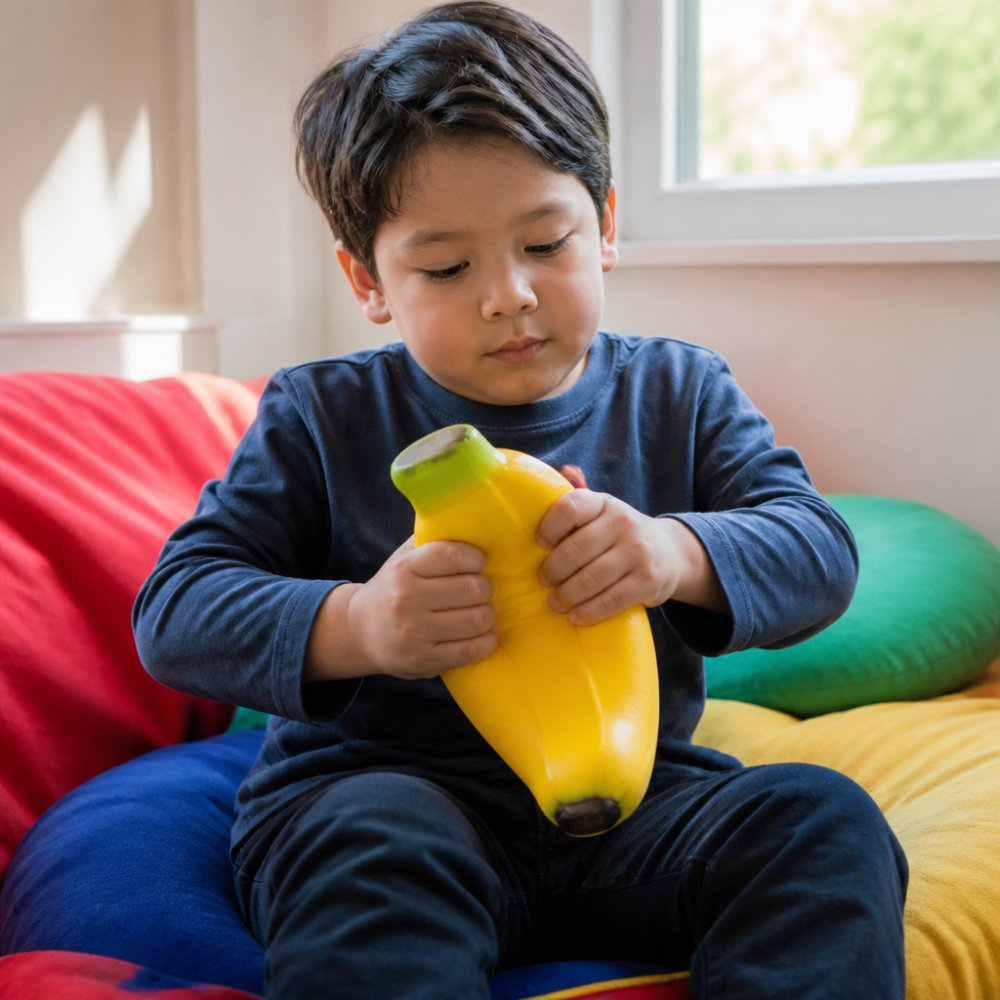
2. GIANT Go Bananas Banana Squishy - Deep Pressure Input for Calming
The 17.7-inch GIANT Banana Squishy at $26.99 delivers deep pressure that activates the parasympathetic nervous system, the same mechanism behind weighted blankets. The slow-rising foam withstands aggressive squeezing and makes an inviting statement piece in calm-down spaces.

What works: Genuine deep pressure, excellent durability, perfect for creating sensory-friendly spaces.
What doesn't: Not portable due to size. Pair with something smaller for on-the-go support.
3. Shashibo Vapor 2.0 Magnetic Puzzle Cube - STEM Fidget for Tweens
The Shashibo Vapor 2.0 at $26.99 transforms into 70+ configurations with internal magnets creating smooth, satisfying transformations. It keeps older kids engaged through spatial reasoning and pattern recognition without feeling educational, with a compact size ideal for desks or travel.
What works: Incredibly satisfying magnetic mechanism, problem-solving keeps tweens engaged, supports spatial reasoning, perfect for desks or travel.
What doesn't: More expensive, steeper learning curve. Younger children (under 8) may find it frustrating.
4. Hape Glossy Slime - Tactile Stretching for Sensory Exploration
Hape Glossy Slime at $12.99 engages tactile processing with a smooth, stretchy, visually interesting texture. Squeezing, stretching, folding, and poking each provide different sensory feedback for extended exploration.

What works: Genuinely satisfying texture, screen-free engagement, visual interest, easy cleanup with soap and water.
What doesn't: Requires space and time for proper play. Can stick to some fabrics. Some children find the texture overstimulating rather than calming.
5. Sticky Stretch Puzzle Cube - Fidget Toy with Textured Feedback
The Sticky Stretch Puzzle Cube at $10.99 combines puzzle shape with stretchy, sticky material. Each action feels different due to the unique texture, making it compact and portable for school or travel.
What works: Novel texture, durable for aggressive fidgeting, genuinely portable, works as both fidget and puzzle.
What doesn't: Sticky texture isn't for everyone. Not as satisfying as true squeeze toys for deep pressure needs.
6. Rainbow Push-Pop-It Bubble Fidget - Visual & Tactile Stimulation
The Rainbow Push-Pop-It at $5.99 combines visual satisfaction with tactile feedback through color-changing bubbles, engaging multiple sensory systems.
What works: Unbeatable price, genuinely soothing repetitive action, visual component adds interest, durable and washable, silent for classroom use.
What doesn't: Some children find repetition boring quickly. Doesn't provide deep pressure or complex engagement.
7. Pop It! Letters & Numbers - Learning Through Sensory Play
Pop It! Letters & Numbers at $9.99 combines bubble-popping with learning games for spelling, alphabet recognition, and math, with sensory feedback reinforcing learning through play.
What works: Educational element adds value, multiple game modes maintain engagement, self-contained with no loose pieces, suitable for ages 3-10, satisfying tactile feedback.
What doesn't: Requires active participation in games rather than passive fidgeting. May feel like pressure if your child needs simple, mindless sensory input.
How to Choose the Right Sensory Toys for Kids
Selecting sensory toys requires understanding your child's sensory profile. Sensory-seeking children thrive with intense input like the GIANT Banana Squishy or Shashibo Vapor 2.0. Sensory-avoidant children need gentle, predictable input like the Ice Cream Squishy or Pop It! Letters & Numbers. Observe what your child naturally gravitates toward and match toys accordingly.
Consider context: portable fidgets like the Ice Cream Squishy work everywhere, while larger items like the Banana Squishy belong in calm-down spaces. A toy that becomes essential to your child's emotional regulation is an investment in wellbeing.
Sensory Toys for Kids with Autism and ADHD
Children with autism benefit from predictable, controllable input and repetitive actions that offer comfort through consistency. Children with ADHD benefit from productive outlets for fidgeting that channel energy into focused play, many focus on homework only when their hands have something to do.
Children with ADHD often need more input to achieve focus, while children with sensory processing differences need the right input. The Shashibo Vapor 2.0 works for ADHD through puzzle engagement; the Ice Cream Squishy works for anxiety through predictable feedback.
Building a Sensory Toolkit at Home
Build a collection covering different needs: the Ice Cream Squishy ($11.99) for portable anxiety relief, Hape Glossy Slime ($12.99) for tactile exploration, Rainbow Push-Pop-It ($5.99) for repetitive input, and Shashibo Vapor 2.0 ($26.99) for brain engagement. Rotate toys to maintain novelty and store them in visible, accessible locations. A complete toolkit can provide months of regulation support.
Maintaining and Cleaning Sensory Toys for Kids
Most sensory toys can be hand-washed with warm soapy water. Squishies and fidgets should be cleaned weekly if used daily; slime toys need immediate cleanup. Never submerge battery-operated toys in water. Store toys in cool, dry locations away from direct sunlight in a dedicated sensory bin.
Why Doodlebug's Children's Boutique Sensory Toys Stand Out
Doodlebug's Children's Boutique curates sensory toys with care, selecting pieces that deliver genuine developmental benefits and durability for different sensory profiles. Sensory toys work best paired with sensory-friendly clothing, calm-down spaces, and consistent routines.
Common Mistakes When Choosing Sensory Toys for Kids
Mistake 1: Choosing based on what worked for someone else's child. Sensory profiles are individual. Mistake 2: Buying too many toys at once. Three toys your child uses matter more than ten she ignores. Mistake 3: Ignoring sensory avoidance. Not all children need more input. Mistake 4: Expecting toys to solve behavioral problems alone. They work best alongside routines and emotional support. Mistake 5: Treating toys as entertainment rather than tools. Teach your child to use them intentionally during transitions or when emotions escalate.
Integrating Sensory Toys Into Daily Routines
Integrate sensory toys into daily routines at predictable moments: before transitions, during homework, during calm-down time, or before sleep. Consistency helps your child's nervous system anticipate and benefit from the input, making the toy a signal that calm is coming.
Sensory Toys for Kids: Investment in Wellbeing
Sensory toys are tools supporting development, emotional regulation, and wellbeing. Start with observation, notice what your child naturally seeks and when she's most dysregulated, then select toys matching those observations. A small, intentional collection beats a toy box full of random fidgets. At Doodlebug's Children's Boutique, we've selected toys delivering genuine sensory benefits for different sensory profiles.
Frequently Asked Questions
Q: What are the best sensory toys for kids with autism?
A: The best sensory toys for autism depend on whether your child seeks sensory input or becomes overwhelmed by it. Fidgets like the Worry Stones ($19.99) and Shashibo Vapor 2.0 ($26.99) provide tactile feedback and proprioceptive input that support self-regulation. Deep pressure tools like the Comfy Cozy Peapod Chair ($89.99) help calm the nervous system. Look for toys that match your child's specific sensory needs, stretchy items for tactile seekers, quiet fidgets for those sensitive to sound, and weighted options for proprioceptive input.
Q: How do sensory toys help with focus and emotional regulation?
A: Sensory toys provide proprioceptive and tactile input that activates the parasympathetic nervous system, helping children self-regulate. Fidgets like squishies and puzzle cubes give busy hands something to do, freeing up mental energy for focus. Repetitive sensory input, pressing bubbles, stretching slime, or manipulating textured surfaces, helps calm anxiety and reduce restlessness. For kids with ADHD or sensory processing disorder, these tools offer a healthy outlet for fidgeting that supports concentration without classroom disruption.
Q: What should I look for when buying sensory toys for kids?
A: Consider your child's sensory profile: Are they sensory seekers (need more input) or sensory avoiders (overwhelmed easily)? Choose toys that match their needs, squishies and textured fidgets for tactile input, visual toys like glow jars for auditory/visual stimulation, or weighted items for deep pressure. Check durability, especially if your child chews or applies intense pressure. Look for non-toxic, food-grade materials (like our silicone worry stones). Start with one or two toys to see what resonates before building a full sensory toolkit.
Q: Are sensory toys effective for children with ADHD?
A: Yes. Research supports sensory tools as part of ADHD management. Fidgets reduce hyperactivity and improve focus by providing proprioceptive input and giving restless hands a productive outlet. Toys like the Sticky Stretch Puzzle Cube ($10.99) or Ice Cream Squishy ($11.99) offer satisfying tactile feedback that helps kids concentrate during homework or class. The key is finding toys that hold attention without becoming the distraction themselves. Quiet fidgets work best in school settings, while more engaging options like the Shashibo cube suit home use.
This article was written using GrandRanker