
Table of Contents
- Why Comfortable Apparel for Sensitive Kids Demands a Different Standard
- Benefits of Bamboo Fabric for Kids: Softness That Reduces Skin Irritation
- How to Identify Sensory-Friendly Clothing Before You Buy
- Tagless Pajamas for Sensitive Skin: What to Check Before Bedtime
- Certifications That Prove Chemical-Free Processing and Ethical Sourcing
- Sensory Processing Disorder Design: Beyond Soft Fabric
- Caring for Eco-Friendly Kids' Clothing So It Lasts
- Conclusion
- Frequently Asked Questions
Last Updated: October 3, 2026
Why Comfortable Apparel for Sensitive Kids Demands a Different Standard
Comfortable apparel for sensitive kids for sustainable fashion is clothing designed to reduce skin irritation and sensory triggers while being made from eco-friendly, ethically sourced materials.
Most parents discover this the hard way: a tag scratches, a seam rubs, and a perfectly good shirt becomes the enemy.
Below, we break down which fabrics help, which construction details matter, and how to spot real quality before you spend money.
Benefits of Bamboo Fabric for Kids: Softness That Reduces Skin Irritation
Bamboo fabric is a plant-based textile prized for being smooth, breathable, and gentle on reactive skin. Its fibers are naturally round and free of the rough edges found in conventional cotton, meaning less friction against the body.
For kids who complain about every seam and scratch, that smoothness is the whole point.
The Oeko-Tex certification standards set limits on harmful substances in textiles, which is why we look for that label on kids' sleepwear.
Bamboo Viscose vs. Organic Cotton: Which Works Better for Reactive Skin?
Bamboo viscose usually wins on softness, while organic cotton wins on durability and price. The right pick depends on your child.
| Fabric | Feel | Best For | Trade-Off |
|---|---|---|---|
| Bamboo viscose | Silky, cool, drapes softly | Severe sensitivity, eczema-prone skin | Can pill with rough washing |
| Organic cotton | Soft, breathable, structured | Everyday wear, heavy play | Slightly rougher texture |
| Bamboo-cotton blend | Balanced softness and strength | Kids hard on clothes | Less silky than pure bamboo |
A common mistake is buying pure bamboo for a child who destroys knees in a week; a blend holds up longer. For sleepwear and anything worn against reactive skin, pure bamboo viscose remains our pick.
How to Identify Sensory-Friendly Clothing Before You Buy
Sensitive kids apparel is engineered to minimize touch triggers through soft fabric, flat seams, and tagless construction. Spot it by reading the label and inspecting construction, not marketing copy.
Here is what to check:
- Fabric content: Look for bamboo viscose, organic cotton, or Tencel. Skip synthetic-free claims that hide polyester blends.
- Seams: Flat-lock seams lie smooth against the skin. Overlocked seams create ridges that rub.
- Tags: A true tagless design prints the label directly on the fabric.
Flat-Lock Seams, Tagless Design, and Fastener-Free Waistbands
Flat-lock seams join fabric without a raised edge, so nothing presses into the skin. Tagless design removes the neck label entirely, eliminating the scratch that sends many kids into a spiral.
Fastener-free waistbands matter just as much: for a child who panics at a zipper's sound, an elastic pull-on style restores independence and calm. Together these three details do more for comfort than fabric alone.
Tagless Pajamas for Sensitive Skin: What to Check Before Bedtime
Tagless pajamas for sensitive skin remove the single most common bedtime complaint: the scratch of a neck tag.
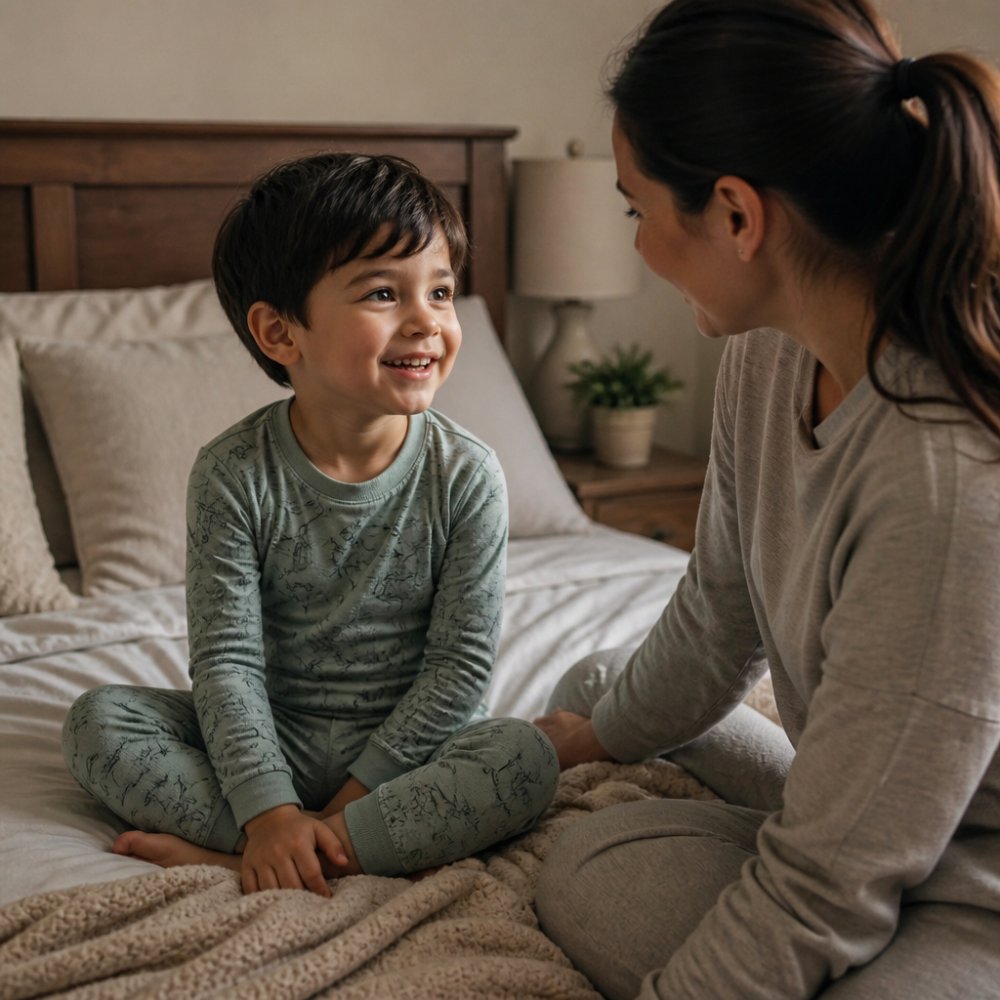
Check fabric weight, fit snugness, and whether the pajamas are flame-retardant-free.
For a bedtime upgrade, consider the Minecraft: Chicken Jockey Bamboo Kids Pajamas.

The Kickee Pants Falcon Snow Bamboo Pajama Set takes a similar approach with a snug, flame-retardant-free fit and a buttery-soft bamboo blend.

Certifications That Prove Chemical-Free Processing and Ethical Sourcing
Certifications verify a brand's claims about chemical-free processing and ethical sourcing; without them, "non-toxic" and "fair-trade" are just words.
Oeko-Tex Standard 100 tests the finished textile, not the raw fiber, for harmful substances including formaldehyde, heavy metals, azo dyes, and certain pesticides, with stricter limits for baby and toddler products (Product Class I).
GOTS (Global Organic Textile Standard) is stricter and broader.
Fair Trade Certified addresses the human side, confirming the factory or farm met labor standards, no forced labor or child labor, safe conditions, and a premium paid back to workers.
A few other labels you will see:
- OEKO-TEX ECO PASSPORT certifies the dyes and chemicals used in production, not the finished garment.
- bluesign verifies input chemicals and manufacturing processes with a focus on environmental impact.
- Cradle to Cradle Certified covers material health, recyclability, and renewable energy in one framework.
How to Read a Certificate Without Getting Fooled
Certification transparency means the brand says which certifications apply to which products, not just a vague homepage badge. Three checks:
- Match the certificate to the product. A brand may hold GOTS for its cotton line and Oeko-Tex for its bamboo line. If the badge is sitewide but the certificate only covers one fabric, the claim is misleading.
- Look up the certificate number. Oeko-Tex, GOTS, and Fair Trade all maintain public databases. A real certificate number resolves to a company name and a product scope. If the brand cannot give you a number, treat the claim as unproven.
- Check the scope of the claim. "Made with organic cotton" and "organic" are different GOTS labels with different fiber thresholds. "Non-toxic" is not a certification at all, it is marketing.
A common pattern: five certification logos in the footer but only one applies to your item. Asking the seller which certificate covers the specific product is the fastest way to separate verified claims from decoration.
The Fair Trade Certified program publishes its standards publicly, so you can check what a label actually guarantees.
Minecraft: Chicken Jockey Bamboo Kids Pajamas →
Cost-Per-Wear: Why Durable Construction Saves Money
Cost-per-wear is a garment's price divided by the number of times your child actually wears it. A cheap shirt worn twice costs more per wear than a sturdier one worn fifty times.
Kids with sensory issues often rotate the same three outfits, so those pieces get washed constantly. Durable construction, strong seams, and colorfast dyes keep them in rotation longer, which is why we favor pieces that hold their shape and softness after repeated washing.
Sensory Processing Disorder Design: Beyond Soft Fabric
Sensory processing disorder design goes past fabric choice into how a garment is engineered for kids whose nervous systems over-respond to touch. Softness is the entry point, not the finish line.
In children with tactile defensiveness, common in SPD and autism, the nervous system reads light, unexpected touch as a threat. A grazing seam, a shifting tag, or a riding waistband can trigger a fight-or-flight response that looks like a meltdown.
The Design Priorities That Actually Matter
Seam placement and finish. Flat-lock seams join fabric without a raised ridge, so no edge presses into the skin.
Tagless construction. A true tagless design prints the label directly on the fabric.
Fit consistency. A garment that shifts, bunches, or rides up reintroduces the unpredictability that triggers defensiveness.
Fasteners. Magnetic closures, elastic waistbands, and pull-on styles reduce both the tactile trigger of zippers and buttons and the auditory trigger of a zipper's sound.
The Age-Appropriateness Problem
That last point matters more than most brands admit. A 10-year-old will refuse clothing that looks babyish, no matter how soft it is, yet sensory-friendly clothing has historically been designed for toddlers and preschoolers, leaving older kids and tweens to choose between comfort and looking their age.
The Girls Bamboo Ruffle Pants in Berry offer tagless, hypoallergenic bamboo comfort with a ruffle detail that reads as stylish, not infantile. The Black & White Shorts in Organic Cotton use recycled and organic fabrics for kids who want a sporty look with a soft hand-feel.

Caring for Eco-Friendly Kids' Clothing So It Lasts
Eco-friendly kids' clothing lasts longer when washed gently and dried with care. Bamboo and organic cotton are softer than synthetics and need slightly different handling.
Follow these habits:
- Machine wash cold on a gentle cycle with like colors
- Skip fabric softener, which coats fibers and reduces breathability
- Tumble dry low or hang to dry to protect fiber integrity
- Wash bamboo inside out to reduce pilling
Good wash habits preserve wash-fastness, keep colors from fading, and protect the soft-touch finish that made the garment worth buying. Lasting garments also stay out of landfills, the quiet win behind circular fashion.
Conclusion
Building a wardrobe for a sensitive child takes trial, patience, and close label reading. The payoff is a kid who gets dressed without a fight and clothes that hold up wash after wash.
At Doodlebug's Children's Boutique, we curate tagless apparel, bamboo and organic options, and fair-trade pieces designed around real sensory needs.
Get started with Doodlebug's Children's Boutique and build a rotation your child reaches for without a second thought.
Frequently Asked Questions
What features make clothing sensory-friendly for children?
Sensory-friendly clothing typically includes tagless necklines, flat-lock seams that lie smooth against skin, and fastener-free waistbands like elastic or magnetic closures. Fabrics matter too: bamboo viscose and organic cotton reduce friction and skin irritation compared to rough synthetics. Look for soft-touch labels, breathable construction, and options that avoid zippers, buttons, or snaps if your child reacts to them.
Why are bamboo and organic cotton preferred for sensitive skin?
Bamboo viscose is naturally hypoallergenic and moisture-wicking, which helps reduce sweat buildup that triggers contact dermatitis. Organic cotton avoids pesticide residue and non-toxic dyes are used in certified processing. Both fabrics offer breathable fabric properties and thermal regulation, keeping kids comfortable during active play and sleep. The smooth fiber surface also minimizes friction reduction against reactive skin.
How do I know the tagless claim will actually solve my child's discomfort?
Tagless design removes the neck label, but seams and waistbands can still cause irritation. Check for flat-lock seams and covered elastic. Brands like Doodlebug's Children's Boutique offer tagless pajamas for sensitive skin with soft waistbands and no scratchy fasteners. Read the construction details before buying, and try one item first to confirm it works for your child's specific sensory triggers.
Are there specific certifications to look for in sustainable kids' apparel?
Oeko-Tex Standard 100 certifies that a garment is free from harmful chemicals and pesticides. GOTS (Global Organic Textile Standard) verifies organic fiber content and ethical sourcing. Fair Trade Certified confirms fair labor practices. These certifications provide transparency that marketing claims alone cannot. Look for the certification label on the product page or tag, not just the brand's general sustainability statement.
Do bamboo pajamas hold up in the wash?
Bamboo viscose maintains fiber integrity well when washed cold on a gentle cycle and tumble dried low. Avoid hot water and high heat, which can break down the fiber over time. Wash-fastness is good with non-toxic dyes, meaning colors stay vibrant. Many parents find bamboo pajamas last through multiple children because the fabric resists pilling and stretching when cared for properly.
What should parents look for when buying tagless clothing?
Beyond the missing tag, check for flat-lock seams, a soft covered waistband, and fastener-free closures if your child has severe sensory issues. Fabric content matters: 95% viscose from bamboo with 5% spandex offers stretch without pressure points. Also verify the return policy in case the fit or feel does not work for your child. Trying one item before buying multiples reduces waste and frustration.
How does sustainable fashion benefit children with sensory processing disorder?
Sustainable fashion often prioritizes natural fibers and chemical-free processing, which reduces skin irritation and contact dermatitis triggers. Breathable fabric and moisture-wicking properties help with thermal regulation, preventing overheating that can escalate sensory overload. Durable construction means garments last longer, providing consistent comfort without the disruption of replacing worn-out favorites. Eco-friendly options also support circular fashion and biodegradable end-of-life.
What is cost-per-wear and why does it matter for kids' clothing?
Cost-per-wear divides the purchase price by the number of times a child wears the item. A $40 pair of bamboo pajamas worn 100 times costs $0.40 per wear, while a $15 pair worn five times before falling apart costs $3.00 per wear. Durable construction, wash-fastness, and fiber integrity keep cost-per-wear low. Sustainable manufacturing and ethical sourcing often correlate with better garment longevity, making the upfront price more economical over time.