Quick Summary
The right kids pants fit comes from measuring your child's natural waist and inseam rather than relying on age. Measure the waist while the child stands relaxed, then compare that number to the brand's size chart. Choose the size that matches the waist and check the inseam for length.
- Age is a rough guess, since children of the same age can differ by several inches.
- Measure the natural waist with the child standing relaxed, never seated or lying down.
- Measure the waist twice, because kids move and a second reading catches slips.
- Measure inseam from the crotch seam to the ankle with feet about 8 inches apart.
- Choose a size that matches the waist, and go one length longer if unsure.
Table of Contents
- Why Age Alone Fails as a Sizing Guide for Kids Pants
- How to Measure Your Child's Waist for Pants
- Measuring Inseam and Length for Kids Pants
- Reading a Manufacturer Size Chart for Kids Clothing
- Choosing Adjustable Waist Pants for Kids
- Sensory-Friendly Kids Pants: Fit, Seams and Fabric Stretch
- Planning for Growth Spurts and Second-Hand Sizing
- Booking Your Next Pair: Checking Fit Before You Order
- Frequently Asked Questions
Why Age Alone Fails as a Sizing Guide for Kids Pants
Last Updated: November 17, 2026
If you have ever bought pants for a child based on age, you know how often the kids pants fit lands wrong.
This guide walks you through how to find the right fit for kids pants, step by step.
Age fails for a few clear reasons:
- Children have different builds. Two six-year-olds can differ by several inches in height and waist size.
- Brands cut differently. Each maker uses its own fit model, so the same label can mean different things.
- Growth is uneven. A child may grow taller one season and wider the next.
A better approach starts with the child's actual waist, inseam and rise, then checks those numbers against the brand's size chart.
How to Measure Your Child's Waist for Pants
Start with the waist, because it is the measurement that most often causes trouble with kids pants fit. A waist number that is off by an inch can mean the difference between pants that stay up and pants that slide down all day.
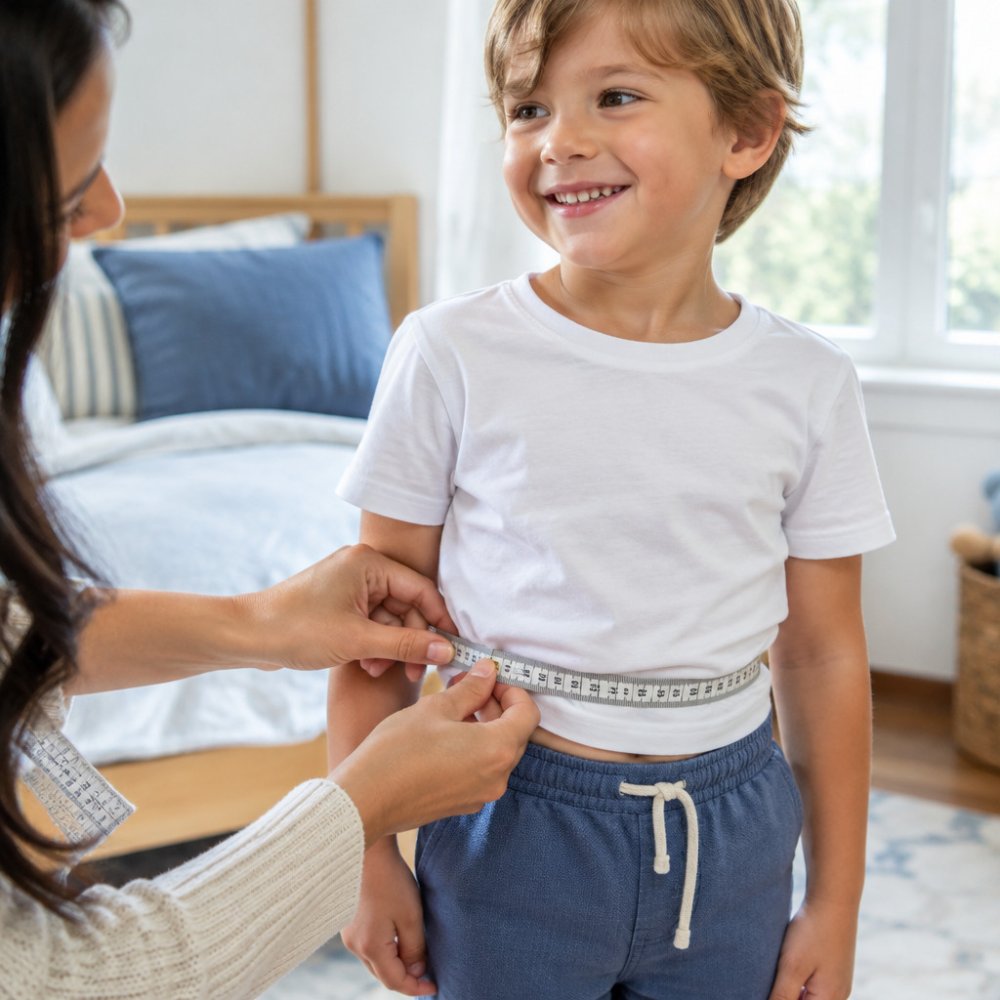
Finding the Natural Waist on a Child
On adults, the natural waist is easy to locate. On children, it is less obvious, especially for toddlers and preschoolers whose torsos are short.
A quick way to find it: have your child bend sideways. The crease that forms at the side of the body is close to the natural waist. Mark that spot with a fingertip, then wrap the tape there.
Step-by-Step Waist Measurement
- Have your child stand relaxed with feet together and arms down. Do not have them suck in or puff out their belly.
- Wrap a soft tape measure around the natural waist, keeping the tape parallel to the floor all the way around.
- Snug the tape until it touches the body without pressing into the skin. You should be able to slide one finger under it.
- Read the number at the point where the tape meets itself, and note it in inches.
- Measure twice. Kids move, and a second reading catches a tape that slipped.
Watch out: Measuring while a child is seated or lying down adds an inch or more, because the belly spreads when the torso is not upright. Always measure standing.
Measuring a Child Who Will Not Stand Still
Toddlers and preschoolers rarely hold still for a tape measure. A few approaches work better than chasing them with a tape:
- Measure while the child is distracted by a video or a snack, and keep the tape in place for only a few seconds.
- Measure a pair of pants that already fits well: lay them flat, measure the waistband straight across, and double that number. This gives you the finished waist measurement of a pant that works, which is often more useful than a body measurement.
- Measure over a thin t-shirt tucked into the waistband so the tape has a smooth path and does not catch on skin.
Converting the Waist Measurement to a Size
Once you have the number, compare it to the brand's size chart rather than to the age label. Most children's pants charts list a waist range in inches for each size. If your child measures 21 inches and the size 5 chart lists a 20-to-22-inch waist, size 5 is the starting point. If the measurement falls at the top of one range and the bottom of the next, choose based on the adjustable waistband and the fabric stretch, not on age.
Measuring Over Undergarments and Thin Clothing
Many parents measure over a diaper or a thick underwear layer. That adds bulk and can make the waist look bigger than it is. If your child wears pull-ups or a thick layer, measure over a thin t-shirt or nothing at all, then add about half an inch of ease for comfort.
The article breaks the waist measurement into clear steps, with a timing note on measuring while standing.
| Step | What to do | Note |
|---|---|---|
| 1 | Have child stand relaxed, feet together, arms down | No sucking in or puffing out |
| 2 | Wrap soft tape at natural waist, parallel to floor | Keep tape level all the way around |
| 3 | Snug tape without pressing skin | Fit one finger under the tape |
| 4 | Read the number where tape meets itself | Record in inches |
| 5 | Measure twice | Kids move; a second reading catches slips |
Measuring Inseam and Length for Kids Pants
Waist size alone does not solve the fit. Length matters just as much, especially for kids who run, climb and kneel.
To measure the inseam, have your child stand with their feet about 8 inches apart. Measure from the crotch seam down the inside of one leg to the ankle. For a standard length, compare this number to the inseam on the size chart.
Keep in mind that a long pant can feel fine in a store and then drag on the playground. A pant that is an inch or two too long is often safer than one that is too short.
Reading a Manufacturer Size Chart for Kids Clothing
Every brand publishes a size chart, but they do not all look the same. Before you order, check these details:
- Which column matches your child's waist measurement
- Whether the chart lists the inseam or only the total length
- If the chart uses "fit" labels such as slim, regular or husky
Think of the size chart as the final check. Your own measurements come first, and then you compare them to the chart.
Choosing Adjustable Waist Pants for Kids
Kids change size fast, and an adjustable waist can buy you more wear from each pair. Look for:
- Internal elastic that stays comfortable all day
- Drawstrings that allow a small fit change
- Soft, flat waistbands that do not dig into the belly
Adjustable waists also help when a child is between sizes. A pant that is a little big at the waist can still fit well when the drawstring is set correctly.
Our Elastic Waistband Pants for Kids: 2026 Comfort Guide compares these options side by side.
Sensory-Friendly Kids Pants: Fit, Seams and Fabric Stretch
For children with sensory sensitivities, fit is about more than the number on the tag. Seams, tags, and stiff fabric can cause real discomfort.
Look for these features:
- Tagless construction so there is no scratchy label at the back of the neck or waist
- Flat seams that do not press into the skin
- Stretchy fabric that moves with the child
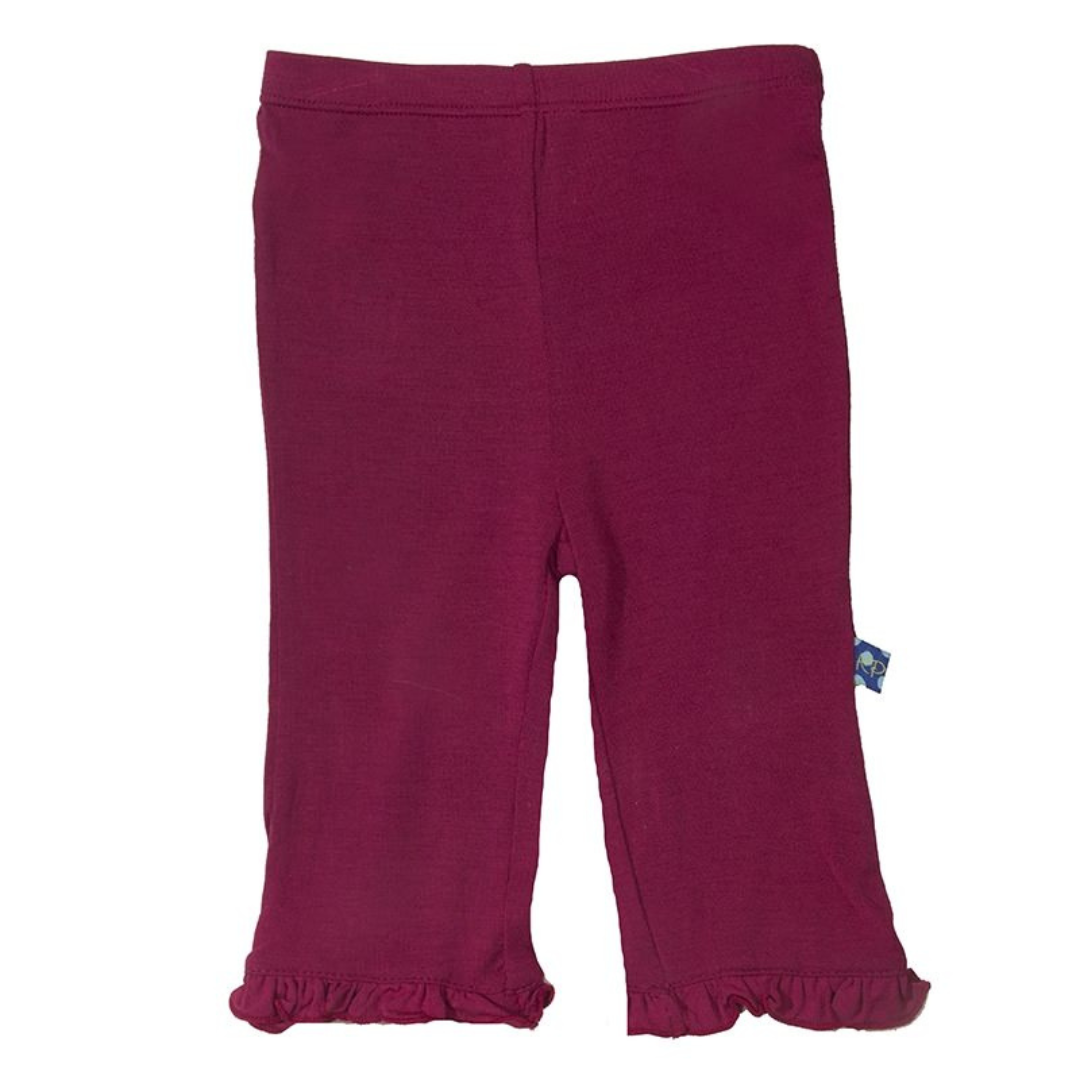
Our Girls Bamboo Ruffle Pants in Berry are tagless and made with a stretch blend, which suits kids who need soft, flexible clothing. Many parents also ask whether tagless clothes actually reduce meltdowns. Our guide Do Tagless Clothes Stop Sensory Meltdowns? explains what to expect.
Planning for Growth Spurts and Second-Hand Sizing
Children often grow out of pants before they wear them out, and the pants that survive to be handed down or resold are exactly the ones parents need to size without a reliable tag. This section covers both problems: buying for room to grow without sacrificing current fit, and measuring second-hand pants when the label is faded, missing, or simply wrong for the brand.
Buying for Room to Grow Without a Baggy Fit
The goal is a pant that fits today and still fits after a growth spurt, not a pant the child swims in. A few rules of thumb help:
- Buy one size up only when the waist and length are both between sizes. If the waist fits the current size but the length is short, buy the current waist with a longer inseam rather than jumping a full size.
- Choose an adjustable waist or a hem that can be let down. An internal elastic tab buys roughly 1 to 2 inches of waist room, which is often enough to carry a child through a season.
- Check the rise. A deeper rise lasts longer as a child grows taller, because the waistband does not ride down when the torso lengthens.
Watch out: Buying two sizes up to "get more wear" usually backfires. Pants that are too long trip a running child, and pants that are too loose at the waist slide down during play, which is a safety issue on stairs and playground equipment.
Why Second-Hand Sizing Is Harder Than New
Second-hand pants carry three problems that new pants do not:
- Faded or missing tags. Washing wears away printed size labels, and cut tags leave no size at all.
- Brand inconsistency. A 5T from one maker can measure an inch wider than a 5T from another, and vintage sizing often runs smaller than current charts.
- Shrinkage and stretch. Cotton pants may have shrunk in the dryer, while elastic waistbands may have stretched out with wear.
Because of these, the tag on a second-hand pair is a starting hint, not a measurement. Measure the pants themselves.
How to Measure Second-Hand Pants Flat
Lay the pants flat on a table and smooth out wrinkles before you measure:
- Waist: Measure straight across the top of the waistband, from one side seam to the other. Double that number to get the full waist circumference. If the waistband is elastic and gathered, stretch it gently flat before measuring, then let it relax and measure again; the relaxed number is what the child will feel.
- Inseam: Measure from the crotch seam down the inside of the leg to the hem.
- Rise: Measure from the crotch seam up to the top of the front waistband. Compare this to a pair that already fits, since rise varies more than most parents expect.
Write the numbers down and compare them to a pair of pants your child currently wears and likes. That comparison is more reliable than any tag, because it accounts for how the brand actually cuts.
Checking Second-Hand Pants for Wear That Affects Fit
Before you buy, check the spots where wear changes fit:
- Waistband elastic: Stretch it and let it snap back. If it stays stretched, the pants will slide down.
- Knees and seat: Thin or stretched fabric at the knees and seat changes how the pant hangs and can make the leg look longer than it measures.
- Hems: A hem that has been let down and re-sewn may be shorter than the original inseam, and a hem that is coming loose will not survive many washes.
For more on choosing clothes that grow with your child, read How to Choose Bamboo Clothes for Growth Spurts and How to Choose Sensory Playmats for Tactile-Sensitive Kids.
Booking Your Next Pair: Checking Fit Before You Order
Before you click buy, run through this checklist:
- Waist measured over thin clothing, with half an inch of ease
- Inseam measured from the crotch to the ankle
- Size chart checked for pants, not pajamas
If you are unsure, pick the size that matches the waist and go one length longer. You can always hem a pant, but a too-short pair cannot be fixed.
Find soft, tagless pants made for sensitive kids at Doodlebug's Children's Boutique. Browse our collection to find a pair that fits your child's measurements and comfort needs.
Frequently Asked Questions
How do I find my child's pant size?
Start with the waist and inseam rather than age. Measure the natural waist with a soft tape while your child stands relaxed, then measure the inseam from the crotch to the ankle. Compare both numbers against the brand's size chart, since sizing varies between manufacturers. If your child falls between sizes, choose the larger size for growth and use an adjustable waist to dial in the fit.
Is a kids size 10-12 medium or large?
It depends on the brand. Many children's clothing lines label 10-12 as medium, but some treat it as large. Check the specific chart for the item you are buying and match the waist and height measurements rather than the label. Measurements give a more reliable result than the size name.
Should I size up when buying pants for a growing child?
Sizing up can help, but only by a modest amount. A pant that is too long or too loose at the waist can slip, bunch and cause tripping. Choosing adjustable waist pants lets you size up for length and growth while keeping the waist secure, which is often the most practical approach for active kids.
How do I know if sensory-friendly kids pants will fit well?
Look for tagless construction, flat seams, and a stretchy, breathable fabric that moves with your child. Check that the waistband is soft and does not dig in, and confirm the inseam length so the hem does not rub at the ankle.
