
Last Updated: November 16, 2026
Quick Summary
Pick a milestone blanket by starting with your photo setup, then choosing a size that leaves at least a third of the blanket as margin around a growing baby. Choose matte, washable cotton or a cotton blend with readable high-contrast month markers, and treat the blanket as a photo prop only, never a sleep surface.
- Measure your shooting floor area and leave at least a third of the blanket as margin.
- Matte cotton and cotton blends photograph flat and even without glare.
- Sublimation prints stay soft, while vinyl lettering can crack and peel.
- Markers placed around the perimeter stay visible when a baby covers the center.
- Wash cold on a gentle cycle and air-dry or tumble low to protect the print.
Table of Contents
- Start With the Photo, Then Choose the Milestone Blanket
- Getting the Milestone Blanket Size Right for Your Space
- Fabric and Safety: What to Look for in a Blanket for Monthly Photos
- Choosing Milestone Blanket Patterns That Photograph Well
- Monthly Baby Photo Ideas at Home That Work With Any Blanket
- Personalization, Props, and Readable Month Markers
- Build Your Milestone Photo Kit at Doodlebug's Children's Boutique
- Frequently Asked Questions
Start With the Photo, Then Choose the Milestone Blanket
Most parents buy a milestone blanket because it looks cute in the listing, then discover three months in that the print is unreadable in photos or the fabric curls at the edges. The smarter order is reversed: decide how you'll shoot the photos first, then buy the blanket that fits that setup.
A milestone blanket is a soft fabric backdrop printed with month, week, or age markers, used to document a baby's growth in a consistent frame across the first year. The blanket is the stage; the photo is the point. Get the stage wrong and you'll fight it every month.
Below, we'll walk through the decisions in the order that actually matters: photo setup, size, fabric and safety, pattern, styling, and personalization. Keep reading because the buying checklist in the middle of this article will save you from the one purchase mistake we see most often.
Consumer Product Safety Commission guidance on infant products
Getting the Milestone Blanket Size Right for Your Space
The right milestone blanket size depends on two things: how much floor space you have and how long you plan to use it. A blanket that fills your whole frame leaves no room for a growing baby.
Here's the practical math. Newborns need very little space. By six months, a baby is rolling and stretching out. By twelve months, many are sitting and reaching for props. A blanket that looked generous at one month can feel cramped at ten.
- Small blankets suit close-up shots of face and hands, but crowd a sitting baby
- Large blankets give you room to pull back and include the whole body plus props
- Square formats are easiest to crop consistently for a monthly series
- Rectangular formats work well if you shoot overhead in a portrait orientation
Watch out: buying a blanket sized to your current living room rather than your baby's eventual sprawl. Measure the floor area you'll actually shoot in, then leave at least a third of the blanket as margin.
American Academy of Pediatrics safe sleep guidance
Fabric and Safety: What to Look for in a Blanket for Monthly Photos
Fabric choice affects three things: how the blanket photographs, how it feels against a baby's skin, and how it survives repeated washing. For monthly photos, prioritize a matte finish and a soft hand feel, but treat fabric and safety as one decision, because the same material that photographs well can still be the wrong thing to leave under a baby unattended.
Shiny fabrics bounce light and create glare that ruins an overhead shot. Matte cotton and cotton blends photograph flat and even, which is exactly what you want. Softness matters because babies spend real time lying on the blanket during a shoot, sometimes longer than planned.
Safety note: a milestone blanket is a photo prop, not a sleep surface. The AAP recommends a firm, flat sleep surface with no soft bedding for infants, so use the blanket for photos and then put it away.
How to Assess Fabric and Print Quality Before You Buy
You can judge most of a blanket's quality from the listing and the return policy, without guessing:
- Fabric content: look for a named fiber (cotton, cotton-poly blend, bamboo) rather than "soft material." A blend with a little stretch resists curling at the edges.
- Print method: sublimation and dye-sublimation prints sit in the fiber and stay soft; thick screen-printed or vinyl lettering can crack and peel after repeated washing.
- Backing: a smooth, low-nap backing slides less on hardwood and photographs without a shadow line.
- Edges: finished, soft binding holds up better than stiff serging that curls after the first wash.
- Washability: confirm machine-washable instructions and a colorfast claim before you commit, because spit-up happens and monthly shoots mean repeated laundering.
Care and Longevity
Wash cold on a gentle cycle and air-dry or tumble low. Store the blanket folded flat rather than crammed into a bin, and keep it out of direct sun between shoots so the print does not fade before the twelve-month photo. A blanket that survives a year of monthly washes is the one that still looks right in the final frame.
- Choose washable fabric, because spit-up happens
- Check for a smooth backing that won't slide on hardwood
- Avoid heavy embellishments near a baby's face
- Look for soft, finished edges rather than stiff binding
American Academy of Pediatrics safe sleep guidance
Judge a blanket's fabric and print quality from the listing before you buy.
| Feature | What to look for | Why it matters |
|---|---|---|
| Fabric content | Named fiber like cotton, cotton-poly blend, bamboo | A little stretch resists curling at edges |
| Print method | Sublimation or dye-sublimation prints | Stays soft; vinyl lettering can crack and peel |
| Backing | Smooth, low-nap backing | Slides less on hardwood, no shadow line |
| Edges | Finished, soft binding | Holds up better than stiff serging that curls |
| Washability | Machine-washable, colorfast claim | Monthly shoots mean repeated laundering |
| Care | Wash cold, gentle cycle, air-dry or tumble low | Print survives a year of monthly washes |
Choosing Milestone Blanket Patterns That Photograph Well
Pattern selection is where most buying decisions go wrong. A design that looks charming in a product photo can disappear behind a baby in real light. The fix is to judge a pattern by how it reads in an overhead photo at phone size, not by how it looks in the listing.
The core rule: contrast wins. A busy botanical print competes with a patterned onesie. A soft color palette with one clear focal point keeps attention on the baby. If you plan to use props, choose a quieter background so the props read clearly.
Think about your home's light, too. North-facing rooms run cool; warm afternoon light shifts colors. A neutral background survives both. Bold seasonal themes are fun for one or two months but can date a series.
Readable Milestone Markers and Accessible Design
What most guides miss is readability at thumbnail size. You'll share these photos on a phone screen, so the month marker needs to be legible when the image is small. Test this before you buy: view the product photo zoomed out and see whether you can still read the numbers.
- Contrast: dark markers on a light ground (or the reverse) read best; low-contrast pastel-on-pastel disappears in overhead light.
- Font size and weight: high-contrast block numbers photograph cleanly; thin script fonts blur at small sizes and at a distance.
- Marker placement: markers placed around the perimeter rather than under the baby stay visible when a growing baby covers the center of the blanket.
- Accessible design: large, simple numerals and clear color contrast also help family members with low vision read the photos, and they survive printing and framing better than delicate lettering.
- Personalization legibility: if a name is part of the design, check that the lettering is large enough to read in an overhead shot, not just in a close-up.
Match the Pattern to Your Setup and Your Baby's Age
The same blanket reads differently depending on how you shoot it.
Props should support the photo, not crowd it. A favorite toy, a wooden month marker, or a small frame works well. Rotate one prop per month rather than piling on several.
Monthly Baby Photo Ideas at Home That Work With Any Blanket
You don't need a studio. A blanket, a window, and a few minutes is enough for a consistent monthly series.
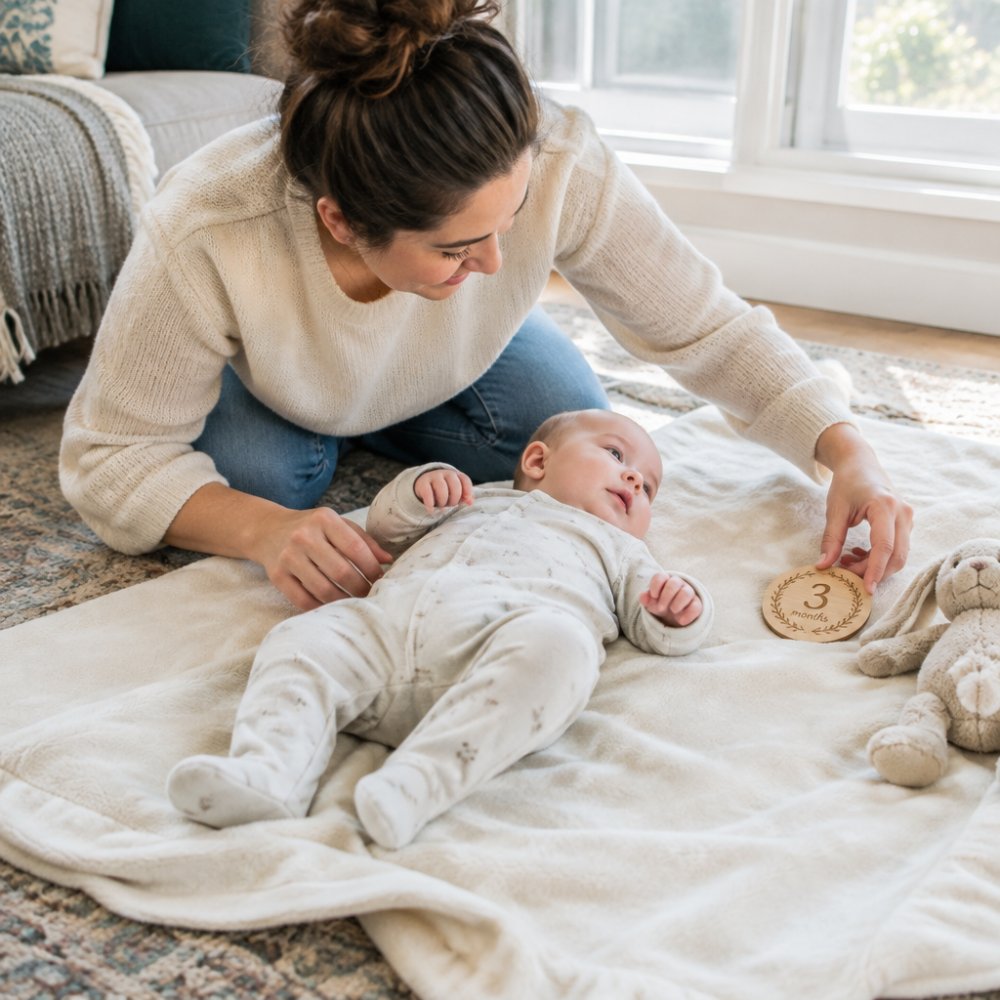
Set up in the same spot every month for a consistent series.
- Overhead shot: stand directly above the baby for a clean, flat layout
- Natural light only: turn off overheads and use window light from one side
- Same spot monthly: mark the floor with tape so your framing repeats
- Include a marker: place the month card or wooden number beside the baby
- Shoot early: babies are happiest right after a nap and a feed
Take ten frames, not one. Babies move, blink, and look away. A common mistake is shooting a single photo and settling for it.
Personalization, Props, and Readable Month Markers
Personalization turns a generic blanket into a keepsake. A name, birth date, weight, and length printed into the design means the blanket still means something in twenty years.
Readable markers matter more than most parents expect. Thin script fonts blur at small sizes. High-contrast block numbers photograph cleanly and stay legible on a phone. If a name is part of the design, check that the lettering is large enough to read in an overhead shot.
Props should support the photo, not crowd it. A favorite toy, a wooden month marker, or a small frame works well. Rotate one prop per month rather than piling on several.
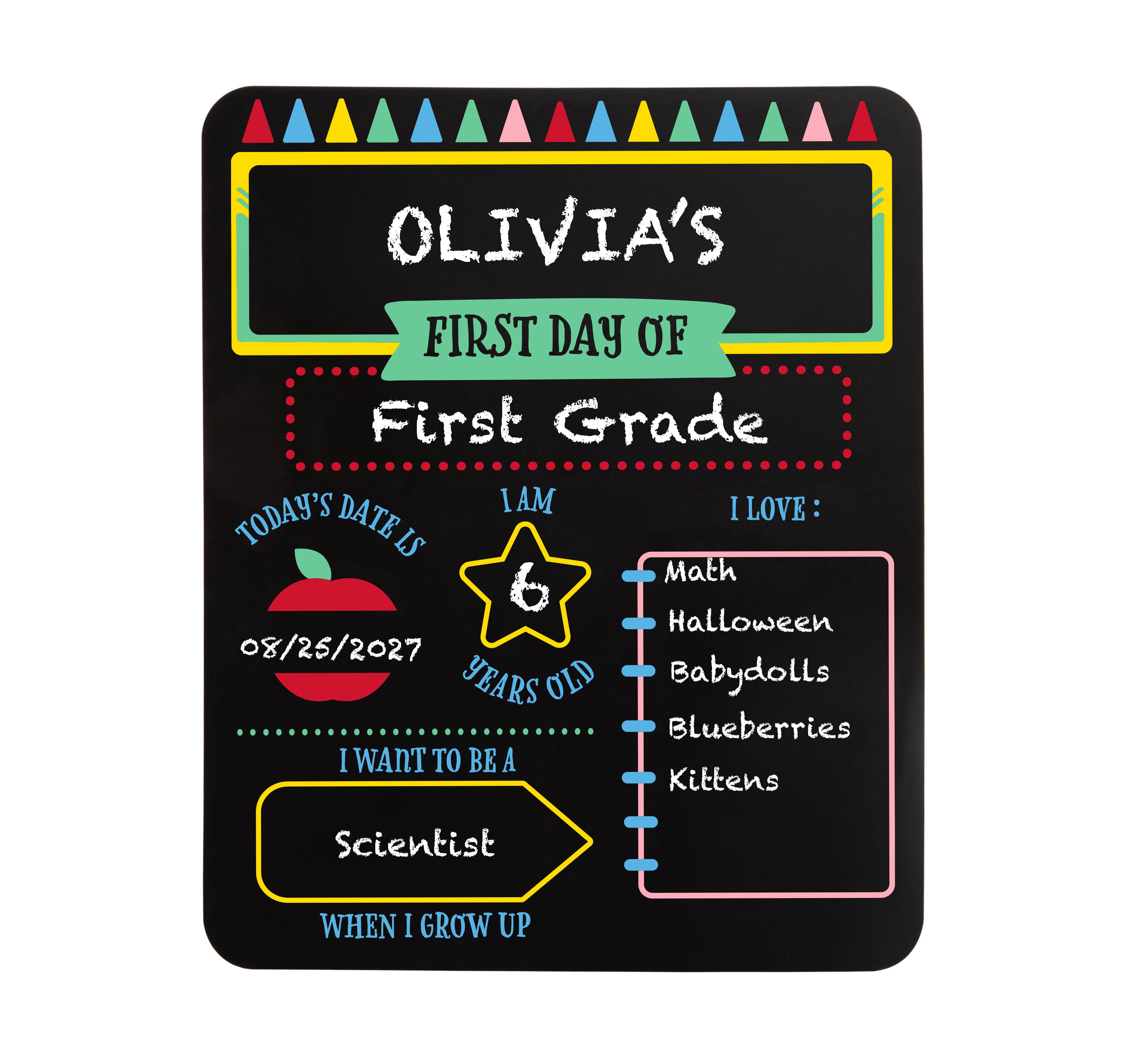
If you're building a photo prop collection, a reusable first and last day of school chalkboard sign pairs naturally with a milestone blanket for older siblings and extends the tradition past the first year.
For a deeper walkthrough of choosing a personalized design, our guide to choosing personalized baby milestone blankets covers fabric, sizing, and personalization in more detail.
Build Your Milestone Photo Kit at Doodlebug's Children's Boutique
A milestone photo kit doesn't need to be complicated. Start with one washable blanket in a neutral palette, one readable month marker, one prop, and a consistent shooting spot. That's the whole setup.
Here's the checklist we'd use before buying any milestone blanket:
- Blanket is large enough that a sitting baby still has margin
- Fabric is matte, washable, and soft against skin
- Month markers are readable at thumbnail size
- Design has contrast against your baby's usual outfits
- Personalization includes name and birth details if desired
- Blanket is stored away after photos, never used as sleep bedding
At Doodlebug's Children's Boutique, we carry sensory-conscious pieces for little ones, including tag-less apparel and soft, comfortable fabrics for sensitive skin. A milestone blanket should feel as gentle as the clothes your baby wears against it. Browse our collection and build a first-year photo tradition your family will keep.
Frequently Asked Questions
What size milestone blanket should I get?
A larger blanket gives a newborn room and still fits a sitting or crawling baby through the first year. Measure your photo spot first: the blanket should lie flat with a few inches of background visible on each side. A larger blanket leaves room for a month marker, a prop, and a growing baby without anyone touching the edges.
Can I use a regular blanket for monthly baby milestone photos?
Yes, a plain blanket works if it lies flat and has a solid, light color that contrasts with your baby's clothing. The trade-off is that you add your own month marker, such as a wooden number or a small chalkboard, and you keep the framing consistent yourself. A dedicated milestone blanket simply prints the markers into the design, which saves setup time each month.
How can I keep the milestone numbers clear in photos?
Choose a blanket where the month markers are large, high-contrast, and printed away from the center where the baby lies. Position the baby beside the marker rather than on top of it, and shoot from directly overhead so the number stays legible and undistorted. Natural light from a window, with no flash, keeps printed numbers sharp instead of washing them out.
What should I look for in milestone blanket fabric and care?
Look for soft cotton or a cotton-polyester blend that feels smooth against a baby's skin, and check that the care label allows machine washing, since monthly photos mean repeated floor time. Avoid heavy prints or scratchy backing, and wash the blanket before the first photo so it softens and any excess dye rinses out. A washable blanket holds up across all twelve monthly sessions.
