
Table of Contents
- What Fair Trade Clothing Actually Means
- How to Identify Fair Trade Clothing by Certification Labels
- Evaluating Transparent Supply Chains in Fashion
- How to Spot Greenwashing in Fashion
- Five Practical Steps to Verify Fair Trade Claims
- Fair Trade vs. Ethical Fashion: What's the Real Difference?
- Why Fair Trade Matters for Garment Workers and Cotton Farmers
- Conclusion
Last Updated: August 29, 2026
What Fair Trade Clothing Actually Means
Fair trade clothing means garments produced under conditions that prioritize worker welfare, environmental responsibility, and transparent supply chains. It's a commitment to ensuring that the people who make children's clothes earn livable wages, work in safe conditions, and have their rights protected throughout production.
The distinction matters because "ethical" and "fair trade" are not interchangeable terms. Ethical fashion is a broader umbrella covering environmental impact, labor practices, and social responsibility. Fair trade has specific third-party certification standards that verify these claims. Understanding this difference helps you make informed choices aligned with your family's values.
At Doodlebug's Children's Boutique, we prioritize fair trade practices because sensory-friendly clothing for children with autism and sensory processing disorders requires the same care in production as it does in design. Children with sensitive skin deserve apparel made not just with comfortable materials, but with integrity throughout the supply chain. Fair trade ensures that garment workers producing tag-less, organic cotton pieces are treated fairly and work in safe environments.
Most clothing production happens in countries where labor protections are weaker than in the United States (ilo.org). Without third-party oversight, garment workers, many of them women in developing nations, can face exploitation. Fair trade certification closes this gap by requiring independent audits, worker interviews, and ongoing compliance monitoring.
How to Identify Fair Trade Clothing by Certification Labels
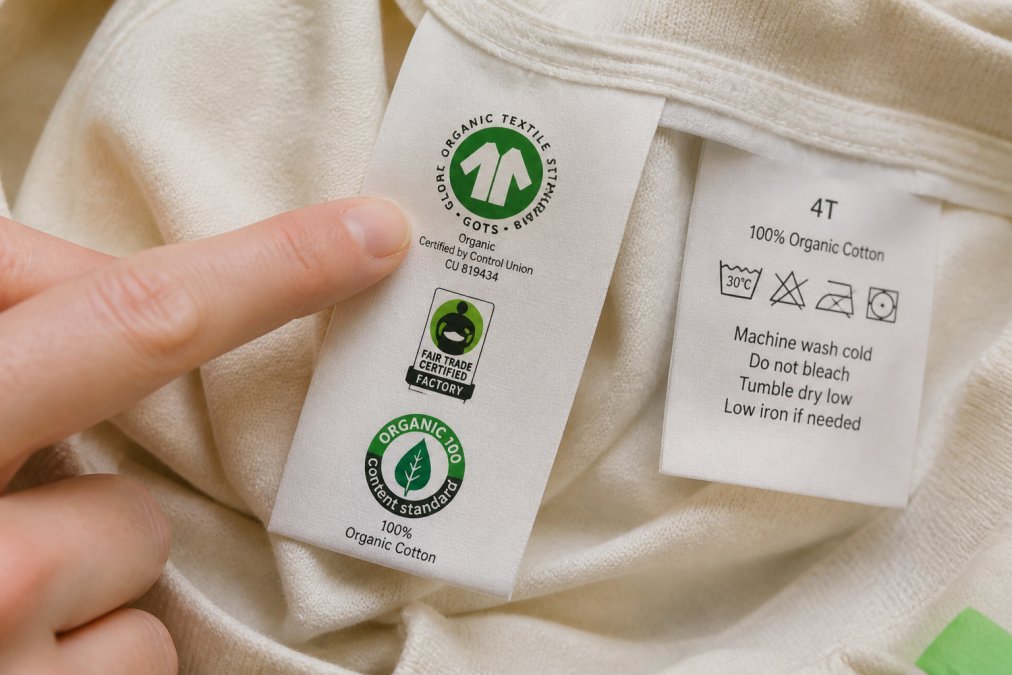
The most reliable way to identify fair trade clothing is to look for third-party certification marks on labels and product tags. These certifications are verified by independent organizations that audit factories and supply chains, not by the brands themselves. This independent verification separates legitimate fair trade claims from greenwashing.
Several major certification standards exist, each with its own focus and requirements.
GOTS (Global Organic Textile Standard)
GOTS is the world's leading certification for organic textiles. It verifies that fabrics are made from organic fibers grown without synthetic pesticides or genetically modified seeds, and that the entire production process meets strict environmental and social criteria. For children with sensitive skin, GOTS certification eliminates exposure to harmful chemical residues.
GOTS certification requires at least 70% organic fiber content and covers everything from raw material sourcing through dyeing, weaving, and finishing (peer-reviewed research). Manufacturers must meet labor standards including fair wages, safe working conditions, and freedom of association. The GOTS logo appears as a green rectangle with white text and is one of the most recognizable fair trade marks in the apparel industry.
Fair Trade Certified
Fair Trade Certified marks indicate that a product meets Fair Trade USA or Fair Trade International standards. These certifications focus heavily on worker welfare, requiring fair wages, safe working conditions, and the right to organize. Fair Trade Certified also mandates community development funds, a percentage of sales goes back to worker communities for education, healthcare, or infrastructure projects.
Fair Trade Certified labels feature the distinctive black and white yin-yang symbol. This mark signals that garment workers earned fair compensation and worked in verified safe conditions. The certification includes supply chain traceability, allowing you to often trace the product back to specific factories or cooperatives.
SA8000 and Other Worker-Focused Certifications
SA8000 (Social Accountability 8000) is an international certification standard focused specifically on labor practices (sa-intl.org). It covers wages, working hours, health and safety, freedom of association, child labor prevention, and management systems. Audits happen both announced and unannounced to catch compliance issues.
Other relevant certifications include Bluesign, which focuses on reducing chemical use in textile production, and WRAP (Worldwide Responsible Accredited Production), which certifies facility compliance with labor laws and safe environments. Brands carrying multiple certifications demonstrate comprehensive commitment to fair trade and sustainable practices.
Evaluating Transparent Supply Chains in Fashion
Transparency is the foundation of fair trade. A brand that can't or won't explain where materials come from, which factories produce their clothing, or how workers are treated is hiding something. Legitimate fair trade brands publish supply chain information because they're proud of their practices.
Look for brands that disclose factory locations by name, provide worker testimonials, and publish third-party audit reports. Some brands allow factory visits or publish photos and videos from production facilities. This openness demonstrates confidence in ethical practices and respect for consumer accountability.
Doodlebug's Children's Boutique curates fair trade options because we understand that parents need confidence in what they're buying. Supply chain transparency also helps you spot inconsistencies. If a brand claims fair trade certification but provides no factory details, no audit reports, and no worker information, that's a red flag.
How to Spot Greenwashing in Fashion
Greenwashing happens when a brand uses vague language, unverified claims, or misleading marketing to appear more ethical than it actually is. In children's clothing, greenwashing is particularly frustrating because parents make purchasing decisions based on health and values.
Common tactics include using terms like "eco-friendly," "sustainable," or "ethical" without any certification to back them up. A brand might use green colors, leaf logos, or nature imagery to suggest environmental responsibility while having no actual fair trade credentials. Other greenwashing highlights one small positive practice while ignoring major supply chain issues.
Watch for vague sourcing claims like "responsibly sourced" or "ethically made" without specifying what that means. Ask yourself: Who verified this claim? Is there a third-party certification? Can I find the factory location? If the answer is no, you're likely looking at greenwashing.
Another red flag is when a brand claims fair trade but only applies it to a small portion of their product line. Legitimate fair trade brands work to certify their entire production or clearly disclose which specific products carry certification.
Five Practical Steps to Verify Fair Trade Claims
Verifying fair trade claims takes a few minutes but gives you confidence in your purchase.
Step 1: Check the Brand's Website for Certification Details
Start by visiting the brand's website and looking for a dedicated page about fair trade practices or certifications. Legitimate fair trade brands prominently display their certifications and explain what each one means. Look for links to certification bodies, downloadable audit reports, or third-party verification documents.
Pay attention to how the brand talks about fair trade. Do they explain specific standards they meet? Do they mention factory locations, worker wages, or supply chain practices? Brands with genuine commitments provide detailed information.

Step 2: Look for Third-Party Auditing Information
Fair trade certification requires independent audits. On the brand's website, look for references to audit reports, compliance statements, or verification documents from third parties. Search for phrases like "third-party audited," "independently verified," or "annual audit results." If a brand claims fair trade but provides no audit information, that's a warning sign.
Step 3: Search Brand Names on Certification Databases
Most major certifications maintain public databases where you can verify whether a brand is actually certified. Fair Trade USA, Fair Trade International, and GOTS all provide searchable databases on their websites. This step takes two minutes but eliminates the possibility of a brand falsely claiming certification.
Step 4: Review Product Tags and Labels
Examine the actual product tags and labels on the clothing. Legitimate certifications appear as official logos with specific colors, fonts, and designs. Compare what you see on the tag to the official certification logo on the certifying organization's website. Some modern certifications include scannable QR codes that confirm the product's certification status.
Step 5: Contact the Brand Directly
If you're still uncertain, email or call the brand's customer service and ask specific questions: Which certifications do they hold? Which factories produce their clothing? Can they provide audit reports? Legitimate fair trade brands respond promptly with detailed information. Those that give vague answers are likely greenwashing.
Fair Trade vs. Ethical Fashion: What's the Real Difference?
The terms "fair trade" and "ethical fashion" are often used interchangeably, but they mean different things.
Fair trade clothing has a specific definition backed by third-party certification standards. Fair trade means independent organizations have audited the supply chain, verified wages meet living standards, confirmed safe working conditions, and monitored ongoing compliance. Fair trade is measurable, verifiable, and legally defined.
Ethical fashion is a broader concept that can include fair trade but isn't limited to it. Ethical fashion encompasses environmental responsibility, labor practices, animal welfare, and social impact. A brand might be ethical in some ways but not fair trade certified.
The key difference is verification. Fair trade requires third-party certification and auditing. Ethical fashion is a general commitment that may or may not be independently verified. When you see "ethical" or "sustainable" without certification marks, you're relying on the brand's word. When you see a fair trade certification, you have independent verification.
Why Fair Trade Matters for Garment Workers and Cotton Farmers
The human impact of fair trade directly affects the lives of the people who produce your child's clothing. Cotton farmers in developing nations often live in poverty despite producing a commodity that generates billions in global trade. Fair trade certification ensures these farmers receive prices that cover production costs and provide livable income.
Garment workers, predominantly women, face challenging labor conditions in global manufacturing. Factory wages in many developing nations fall far below what workers need to cover basic expenses. Fair trade certification mandates living wages and safe working conditions with the right to organize. Independent audits verify these conditions are met.
Community development funds embedded in fair trade certification create lasting change, supporting schools, healthcare clinics, and water systems in cotton-growing and textile-producing regions. When you buy fair trade clothing for your child, a portion of your purchase directly funds education and health programs for garment worker families.
Identifying fair trade clothing requires knowing what certification marks look like, understanding which standards matter, and taking a few minutes to verify claims. Start by checking for third-party certifications, verify claims through official databases, and don't hesitate to contact brands directly about their fair trade practices. When you shop for sensory-friendly apparel at Doodlebug's Children's Boutique, you're choosing clothing designed with your child's comfort in mind and produced with respect for the garment workers who made it.
Frequently Asked Questions
Q: What does the fair trade symbol look like, and where should I find it on clothing?
A: Fair trade symbols vary by certifying organization. The most recognizable is the Fair Trade Certified mark: a black and white yin-yang style logo with 'Fair Trade Certified' text. GOTS (Global Organic Textile Standard) displays a green leaf label. These marks typically appear on product tags, hang tags, or sewn labels inside garments. Always verify the symbol matches the certifying body's official design by checking their website, as counterfeit labels exist. Legitimate fair trade clothing will have clear, professionally printed certification marks, not blurry or handwritten versions.
Q: How can I verify a brand's fair trade claims if I don't see a third-party certification label?
A: Start by visiting the brand's website and looking for a dedicated sustainability or fair trade page that details their supply chain, factory locations, and labor practices. Legitimate brands provide specific information about where garments are made, worker wages, and auditing processes. Search the brand name on certification databases like Fair Trade USA or GOTS to confirm their status. Contact the brand directly with questions, authentic fair trade companies respond with detailed answers about their supply chain auditing and labor standards. Be cautious of vague claims like 'ethically made' without supporting documentation or third-party verification.
Q: Is organic cotton the same as fair trade clothing?
A: No. Organic cotton means the raw material is grown without synthetic pesticides or fertilizers, but it doesn't guarantee fair wages or safe working conditions for garment workers. Fair trade certification focuses on labor practices, living wages, and worker rights throughout the supply chain. Many fair trade clothing items use organic cotton, but organic cotton alone doesn't ensure fair trade practices. Look for certifications that address both: GOTS combines organic standards with social responsibility requirements, while Fair Trade Certified focuses on worker compensation and factory conditions. Always check for explicit fair trade or labor-focused certifications, not just organic labeling.
Q: What should I watch for to avoid greenwashing when shopping for fair trade children's clothing?
A: Red flags include vague terms like 'eco-friendly,' 'conscious,' or 'ethical' without specific certifications or documentation. Greenwashing brands make broad sustainability claims but provide no verifiable details about supply chains, factory audits, or worker wages. Avoid brands that use nature-themed imagery or green packaging as their main sustainability message without backing it up. Legitimate fair trade brands clearly display third-party certification marks, explain their supply chain transparently, and share specific information about where and how garments are made. If a brand can't answer direct questions about certifications or factory practices, that's a strong warning sign of greenwashing.
This article was written using GrandRanker