Last Updated: October 23, 2026
Quick Summary
Eco-friendly baby clothing is made from organic cotton or bamboo viscose without synthetic pesticides, harsh chemical dyes, or flame retardants, making it gentler on newborn skin while reducing environmental impact. Brands like Doodlebug's Children's Boutique offer GOTS-certified pieces and bamboo options starting at $12.99 that prioritize breathability, softness, and durability through multiple washes.
- Organic cotton uses 16% of the world's insecticides despite occupying only 2.5% of global farmland, making organic alternatives significantly safer for newborns.
- GOTS certification requires at least 70% organic fiber content, no synthetic dyes, safe chemical processing, and fair labor practices verified by independent audits.
- Bamboo viscose is naturally hypoallergenic, moisture-wicking, and grows without pesticides or significant water inputs compared to conventional cotton.
- Tagless construction and two-way zippers on eco-friendly pieces like the Powder Pink Bamboo Convertible Footie ($38.99) prevent irritation and enable quick diaper changes.
- Washing eco-friendly baby clothes in cold water on gentle cycles and air-drying preserves softness and extends garment life through dozens of washes.
Table of Contents
- Why Eco-Friendly Baby Clothing Matters for Newborns
- Organic Baby Clothes: What Makes Them Different
- Bamboo Baby Clothes: Softness and Sustainability Combined
- GOTS-Certified Baby Clothes: Understanding Textile Certification
- Baby Clothes for Sensitive Skin: What Parents Need to Know
-
Top Eco-Friendly Baby Clothing Picks and Price Comparison
- Bamboo Convertible Footies: Versatile Sleepwear That Grows With Baby
- All Tied Up Bamboo Bubble Romper: Daywear Comfort and Style
- Girls Bamboo Ruffle Pants: Everyday Wear for Active Play
- Orchid Garden Gift Set: Essential Newborn Accessories
- Star & Stripes Dress: Organic Cotton With Recycled Materials
- Newborn Sizing and Age-Appropriate Fit
- Care, Washing, and Durability: Making Eco-Friendly Clothes Last
- Frequently Asked Questions
Why Eco-Friendly Baby Clothing Matters for Newborns
Newborns arrive with skin that's incredibly delicate and sensitive. Their bodies regulate temperature differently than older children, and their immune systems are still developing. This is why the American Academy of Pediatrics guidance on infant care emphasizes the importance of gentle, breathable clothing materials from day one.
Conventional baby clothes are often treated with chemical dyes, flame retardants, and synthetic finishes designed for durability and appearance, not wellbeing. Eco-friendly baby clothing strips those away and focuses on softness, breathability, and safety.
There's also a sustainability angle: babies grow fast, and outfits worn three months become landfill waste. Eco-friendly brands design for durability and use materials that can be passed down or composted.
Organic Baby Clothes: What Makes Them Different
Organic baby clothes are made from cotton grown without synthetic pesticides, fertilizers, or genetically modified seeds. This distinction matters more than many parents realize.
Organic cotton means healthier soil, fewer chemical exposures for workers, and no pesticide residue, fewer irritants for a newborn's developing skin barrier.
Organic baby clothes also feel different: without chemical processing, fibers stay naturally soft through dozens of washes, something conventional baby clothes often fail to do.
The trade-off?
Bamboo Baby Clothes: Softness and Sustainability Combined
Bamboo viscose has become a favorite among parents seeking eco-friendly baby clothing. It's softer than most organic cotton, naturally breathable, and sustainable when produced responsibly.
Bamboo grows rapidly without pesticides, fertilizers, or significant water inputs compared to cotton, and regenerates after harvesting, a renewable resource that doesn't sacrifice comfort.
The Dreamiere bamboo convertible footies at Doodlebug's Children's Boutique exemplify this balance. The Powder Pink Bamboo Convertible Footie ($38.99) is 95% viscose from bamboo and 5% spandex, stretchy, tagless, and free from harsh chemical treatments.

One consideration: bamboo viscose production involves chemical processing. Responsible manufacturers use closed-loop systems that recycle solvents, so look for brands that specify their methods or carry certifications.
GOTS-Certified Baby Clothes: Understanding Textile Certification
GOTS certification requires:
- At least 70% organic fiber content (or 95% for "organic" label)
- No synthetic dyes or heavy metals
- Safe chemical processing with closed-loop systems
GOTS-certified baby clothes offer transparency: independent third parties audit the certification, and manufacturers must maintain detailed supply-chain records, accountability that matters for newborn skin.
The Star & Stripes Dress ($44.00) from Doodlebug's Children's Boutique represents another eco-friendly approach: it combines 80% organic cotton with 20% recycled polyester made from plastic bottles.
Other certifications include OEKO-TEX (tests for harmful substances) and Fair Trade Certified (verifies worker wages and conditions).
Baby Clothes for Sensitive Skin: What Parents Need to Know
Newborns with eczema, allergies, or general skin sensitivity need clothing that won't trigger reactions, and eco-friendly materials eliminate many common irritants by design.
Sensitive skin reacts to:
- Chemical dyes and finishes used in conventional manufacturing
- Synthetic fibers that trap moisture and heat
- Rough seams and tags that create friction
Eco-friendly baby clothes address all of these: organic cotton and bamboo are naturally hypoallergenic, responsible manufacturers skip chemical treatments, and many pieces at Doodlebug's Children's Boutique feature tagless construction.
The All Tied Up Bamboo Bubble Romper ($38.99) demonstrates this approach: soft, stretchy viscose from bamboo with snap closures for easy diaper changes, tagless construction, and breathable fabric for all-day comfort.
Parents often worry "sensitive skin" clothing limits style. Modern eco-friendly brands prove otherwise, beautiful colors and playful prints without compromising comfort or safety.
Top Eco-Friendly Baby Clothing Picks and Price Comparison
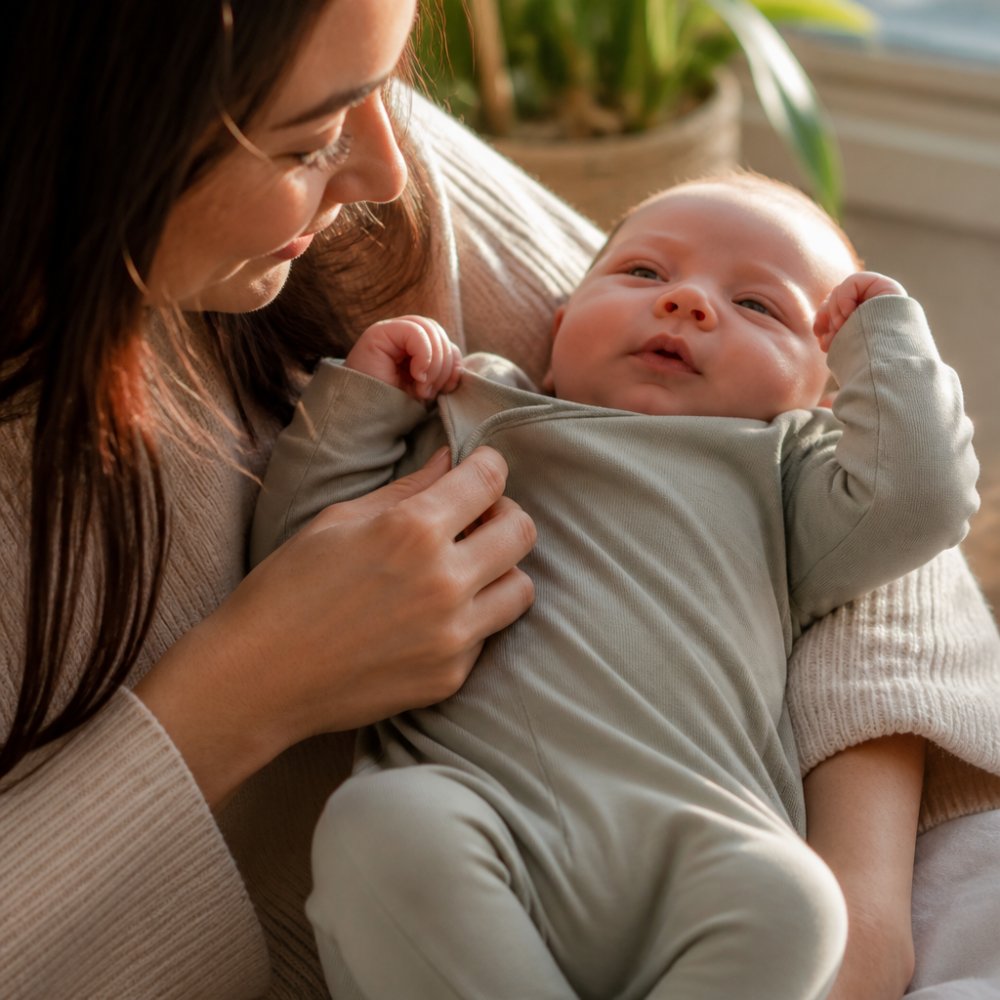
We've selected five standout pieces from Doodlebug's Children's Boutique combining comfort, sustainability, and practical design for newborns.
Bamboo Convertible Footies: Versatile Sleepwear That Grows With Baby
The convertible footie design solves a real problem: babies outgrow sleepers constantly. Flexible sizing and convertible feet extend the wear window.
The Powder Pink Bamboo Convertible Footie ($38.99) offers versatility in a soft, neutral color. Fold the ankle cuffs over for a cozy footie, or flip them open as a footless romper.
If you prefer a playful print, the Dream Weaver Orange Bamboo Convertible Footie ($38.99) offers the same comfort in a warm, festive design. The A Good Knight's Sleep Bamboo Convertible Footie ($38.99) features a castle design, while The Mane Event Bamboo Convertible Footie ($38.99) brings a lion print to bedtime.


All four are priced identically, so your choice comes down to print.
All Tied Up Bamboo Bubble Romper: Daywear Comfort and Style
Unlike sleepwear, a bubble romper works for daytime adventures, playdates, and photos. The All Tied Up Bamboo Bubble Romper ($38.99) delivers adorable style without sacrificing comfort.
Powder Pink Bamboo Convertible Footie →
Made from the same soft, breathable bamboo blend as the footies, it features pink bows and playful black dots.
The fun bubble silhouette is a favorite for photos and special moments, while breathable bamboo and a stretchy fit keep your baby comfortable through warm weather and growth spurts.
Girls Bamboo Ruffle Pants: Everyday Wear for Active Play
For babies who need flexibility in their wardrobe, the Girls Bamboo Ruffle Pants in Berry ($12.99) offer affordable comfort for everyday wear.
At under $13, these pants are genuine value. Made from 95% viscose from bamboo and 5% spandex, they're naturally hypoallergenic and breathable, with a ruffle detail that adds sweetness.
They include UPF 50+ sun protection and moisture-wicking properties to keep your baby dry during active movement.
Orchid Garden Gift Set: Essential Newborn Accessories
The Orchid Garden Gift Set ($33.99) pairs a baby hat with a swaddle blanket, both made from soft, breathable fabric designed for sensitive skin.
The generously sized swaddle works as a stroller cover, nursing wrap, car seat canopy, burp cloth, or play mat.
This set works as both a practical newborn essential and a thoughtful gift: buttery-soft fabric suits eczema-prone skin, the seasonless material comforts year-round, and the versatile swaddle earns its place in the diaper bag for months.
Star & Stripes Dress: Organic Cotton With Recycled Materials
The Star & Stripes Dress ($44.00) represents a different eco-friendly approach: combining organic cotton with recycled materials.
Made from 80% organic cotton and 20% recycled polyester (sourced from plastic bottles), this dress includes 100% recycled PET sequins and chain-stitch embroidery. Every purchase diverts one pound of plastic from landfills, and the playful design suits photos, special occasions, or everyday wear.
The organic cotton base provides softness and breathability while recycled materials reduce environmental impact.
| Product | Price | Material | Best For | Key Feature |
|---|---|---|---|---|
| Powder Pink Bamboo Convertible Footie | $38.99 | 95% bamboo viscose, 5% spandex | Newborn sleep | Convertible feet + two-way zipper |
| All Tied Up Bamboo Bubble Romper | $38.99 | 95% bamboo viscose, 5% spandex | Daytime wear | Snap closure + adorable print |
| Girls Bamboo Ruffle Pants | $12.99 | 95% bamboo viscose, 5% spandex | Everyday play | UPF 50+ sun protection |
| Orchid Garden Gift Set | $33.99 | Soft breathable blend | Newborn essentials | Versatile swaddle + matching hat |
| Star & Stripes Dress | $44.00 | 80% organic cotton, 20% recycled polyester | Special occasions | Recycled materials + organic fibers |
Newborn Sizing and Age-Appropriate Fit
Newborns come in different sizes, some 6 pounds, others 9 or 10. Understanding how eco-friendly baby clothes fit across that range helps you buy smart.
Most eco-friendly brands size from newborn (0-3 months) through 6-12 months. The convertible footies and bubble romper from Doodlebug's Children's Boutique are designed for this growth window, with extra length and stretchy fabric for more wear per piece.
A common mistake is buying only newborn-sized clothes.
Bamboo's stretch works in your favor: a 0-3M piece often fits comfortably through 6 months with proper care.
Check each product description for sizing guidance. Doodlebug's Children's Boutique includes detailed sizing for every piece, and the bamboo collection is designed for generous fit and growth room.
Care, Washing, and Durability: Making Eco-Friendly Clothes Last
Eco-friendly baby clothes need gentle care to maintain softness and longevity, the investment pays off only if pieces survive repeated washing.
Here's how to care for bamboo and organic cotton baby clothes:
- Wash in cold water on a gentle cycle with mild detergent. Hot water breaks down the fibers and fades colors.
- Use gentle detergent or baby-specific soap. Avoid bleach, fabric softener, and dryer sheets, they leave residue and reduce breathability.
- Lay flat to dry whenever possible. Machine drying on high heat damages the elastic and weakens the fabric. If you must use a dryer, select low heat.
Bamboo is surprisingly durable when treated gently. Learn the specific techniques for how to wash bamboo fabric to preserve its softness and extend garment life.
The FTC's guidance on sustainable textiles and care instructions emphasizes that proper care extends garment life significantly.
Bamboo and organic cotton hold their shape and softness through dozens of washes, tagless construction means nothing frays or separates, and the two-way zippers keep working smoothly.
Choosing eco-friendly baby clothing for your newborn is about more than comfort, it's about confidence. At Doodlebug's Children's Boutique, we've curated a collection of eco-friendly baby clothing specifically for parents who prioritize both their baby's wellbeing and sustainable practices.
Frequently Asked Questions
What makes eco-friendly baby clothing better for newborns with sensitive skin?
Eco-friendly baby clothing is typically made without harsh chemicals, synthetic dyes, or pesticides used in conventional fabric production. Bamboo and organic cotton fabrics are naturally hypoallergenic and breathable, reducing irritation for newborns with eczema or sensitive skin. Tagless designs eliminate another common irritant. These materials allow skin to breathe, regulate temperature, and stay dry, which prevents rashes and discomfort during sleep and play.
What does GOTS-certified mean for baby clothes?
GOTS (Global Organic Textile Standard) certification ensures that organic baby clothes meet strict environmental and social standards from farm to finished product. It verifies that fabrics are made from certified organic fibers, processed without harmful chemicals, and produced under fair labor conditions. When you see GOTS-certified baby clothes, you know the material is genuinely organic and the production meets rigorous safety and ethical standards, not just marketing claims.
How do bamboo baby clothes compare to organic cotton for newborns?
Bamboo viscose fabric is softer, more breathable, and stays cooler than organic cotton, making it ideal for hot sleepers and warm weather. It's naturally hypoallergenic and moisture-wicking. Organic cotton is also gentle on sensitive skin but slightly less breathable. Bamboo clothes typically have more stretch and durability through repeated washing. Both are chemical-free options; the choice depends on your baby's temperature sensitivity and your climate. Many parents choose bamboo for sleepwear and organic cotton for everyday wear.
How do I care for eco-friendly baby clothes to make them last longer?
Wash eco-friendly baby clothes in cold water on a gentle cycle with mild detergent, avoid bleach and fabric softeners that can damage fibers and irritate skin. Lay flat or hang to dry rather than using high heat in the dryer, which breaks down the fabric. Turn items inside-out before washing to protect prints and colors. Bamboo and organic cotton actually become softer with proper washing over time. Following care instructions extends garment life significantly.
Why is the price of eco-friendly baby clothes higher than conventional options?
Eco-friendly baby clothing costs more because of certified organic farming practices, chemical-free processing, fair-trade labor standards, and stricter quality controls. Conventional baby clothes cut costs by using pesticides, synthetic dyes, and lower labor standards. When you buy eco-friendly options, you're paying for transparency, safety, and durability. Many families find the investment worthwhile because these clothes last longer through multiple children and hold up better in washing.
