
Last Updated: November 19, 2026
Quick Summary
Choosing comfortable underwear for special needs children starts with fabric, so pick soft bamboo rayon or cotton modal over scratchy polyester blends. Buy a single pair first, test it for a short stretch, and watch for scratching, tugging, or complaints before buying more.
- Tagless designs help children sensitive to labels, but check inside seams and waistbands before buying.
- Build tolerance slowly by letting your child wear new underwear for five minutes, then ten.
- Measure waist and hip with a soft tape and compare both to the brand's size chart.
- Waterproof trainers give the wetness signal that supports daytime potty training.
- Wash new underwear before first wear and use the lowest dryer heat to protect elastic.
Table of Contents
- Start With Fabric: What Feels Good Against Sensitive Skin
- Seamless Underwear for Children: Why Seams, Tags, and Waistbands Cause Meltdowns
- Sensory Underwear for Autism: Helping Kids Tolerate and Wear Underwear
- Getting the Fit Right: Sizing, Trying a Larger Size, and a Child-Led Trial
- Special Needs Underwear for Daytime Accidents and Potty Training
- The Best Incontinence Underwear for Kids: A Neutral Feature Comparison
- Washing, Durability, and Skin Health: Making Pairs Last
- Building a Comfortable Underwear Drawer at Doodlebug's Children's Boutique
- Frequently Asked Questions
Start With Fabric: What Feels Good Against Sensitive Skin
Choosing comfortable underwear for special needs children starts with the fabric, because the material touching the skin all day drives most comfort complaints. At Doodlebug's Children's Boutique, we hear the same story from families again and again: a child who tolerates a soft shirt but melts down over scratchy underwear.
Softness matters more than almost any other feature. Bamboo rayon and cotton modal feel smooth and cool, while rough polyester and stiff cotton blends can feel prickly against sensitive skin.
Here is how the common fabrics compare for sensory comfort:
| Fabric | Feel | Breathability | Best For |
|---|---|---|---|
| Bamboo rayon | Silky, cool | High | Daily wear, sensitive skin |
| Organic cotton | Soft, familiar | Medium-high | Kids who dislike synthetic textures |
| Cotton modal | Smooth, stretchy | Medium | Movement and active play |
| Polyester blends | Can feel slick or scratchy | Low | Rarely the first choice |
A common mistake is buying a full pack before your child has worn one pair. Buy a single pair, let your child wear it for a short stretch, and watch for scratching, tugging, or complaints. That one test tells you more than any label ever will.
Seamless Underwear for Children: Why Seams, Tags, and Waistbands Cause Meltdowns
Seams, tags, and tight waistbands can cause sensory discomfort for some children. A tag that brushes the lower back or a seam that rubs the hip can ruin an entire morning.
Tagless designs are a common option for children sensitive to labels, so look for garments that leave the label off or print it directly on the fabric. For a closer look, read our tagless shirts vs regular shirts for sensitive skin comparison.
Waistbands deserve equal attention. A wide, soft waistband tends to sit more gently on the belly than a narrow one. If your child complains about tags on other garments too, our guide on how to remove clothing tags without damaging fabric walks through safe methods step by step.
Watch out: a "tagless" label does not always mean a truly smooth garment. Check the inside seams and the waistband before you buy, because a printed label can still sit on a rough patch of fabric.
Sensory Underwear for Autism: Helping Kids Tolerate and Wear Underwear
Sensory-friendly underwear is designed with comfort in mind for children who are sensitive to touch, and the right pair can make getting dressed feel calmer.
Start with a child-led approach. Let your child feel the fabric before wearing it, and talk about what it feels like. Some kids do better when they choose the color or pattern themselves, because a sense of control lowers resistance.
Build tolerance in small steps:
- Let your child hold or carry the underwear around the house first
- Try wearing it for five minutes, then ten
- Pair it with a familiar, comfortable routine like dressing after breakfast
- Praise effort, not just success
A common mistake is forcing a full day of wear on the first try. Slow exposure works better than pressure. If your child struggles with clothing more broadly, our complete guide to clothing for children with autism covers sensory-friendly strategies beyond underwear.
Getting the Fit Right: Sizing, Trying a Larger Size, and a Child-Led Trial
Fit decides whether a pair gets worn or rejected, so sizing deserves as much attention as fabric. Underwear that is too tight digs into the waist and legs, while a pair that is too loose bunches, shifts, and creates its own sensory noise.
Start with two measurements rather than the size on the label. Use a soft tape to measure your child's waist at the natural waistline and their hip at the fullest point, then compare both to the brand's size chart. If your child sits between two sizes, or if the waist measurement lands in one size and the hip in another, size up for the waist and look for a style with a covered, adjustable waistband.
When in doubt, try one size larger. A slightly roomier pair often feels calmer against the skin, and kids grow fast anyway. A larger size also gives you room to add a thin absorbent liner without turning the fit tight.
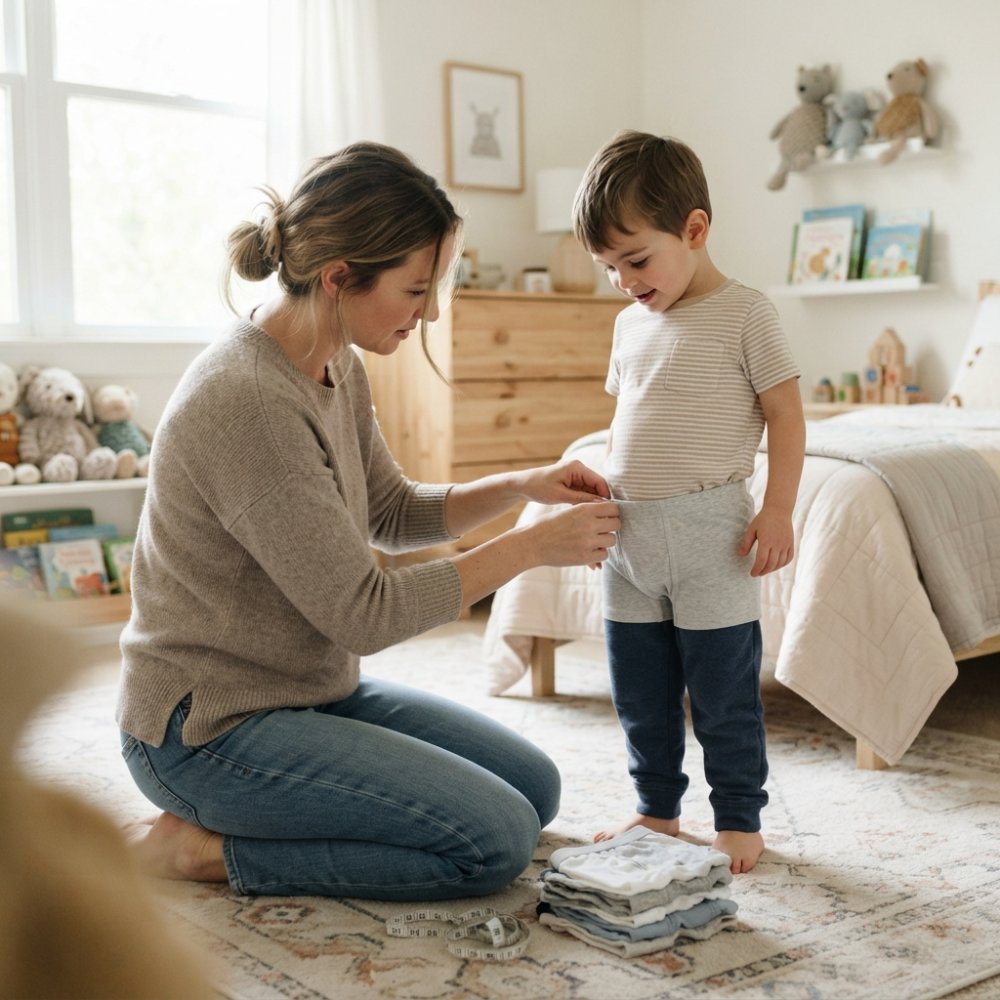
A child-led trial works best when you turn it into a short, repeatable routine rather than a single make-or-break moment:
- Pick one new pair and one familiar pair, and lay both out where your child can see and touch them.
- Let your child choose which to try first, and let them handle the fabric before it goes on.
- Set a short timer, such as ten minutes, and check in at the halfway point and at the end.
- Watch for tugging at the waist, pulling at the leg openings, scratching, or repeated adjusting, and note where on the body it happens.
- Ask one simple question, such as "Does this feel okay on your tummy?" rather than a yes-or-no about the whole garment.
- Keep the pair only if your child stays comfortable through the full timer, then repeat on a second day before buying more.
This process takes a little patience up front and helps you find pairs your child will actually wear.
Fit also changes with dressing ability and body type.
Watch out: a pair that fits perfectly standing still can fail the moment your child sits, squats, or climbs. Test each candidate pair through a few minutes of normal movement, not just a stand-and-look check in front of the mirror.
Special Needs Underwear for Daytime Accidents and Potty Training
Special needs underwear supports children who are delayed in potty training or who have daytime accidents, and the right design makes accidents manageable without shame. For many families, the goal is underwear that feels like real underwear while still offering protection.
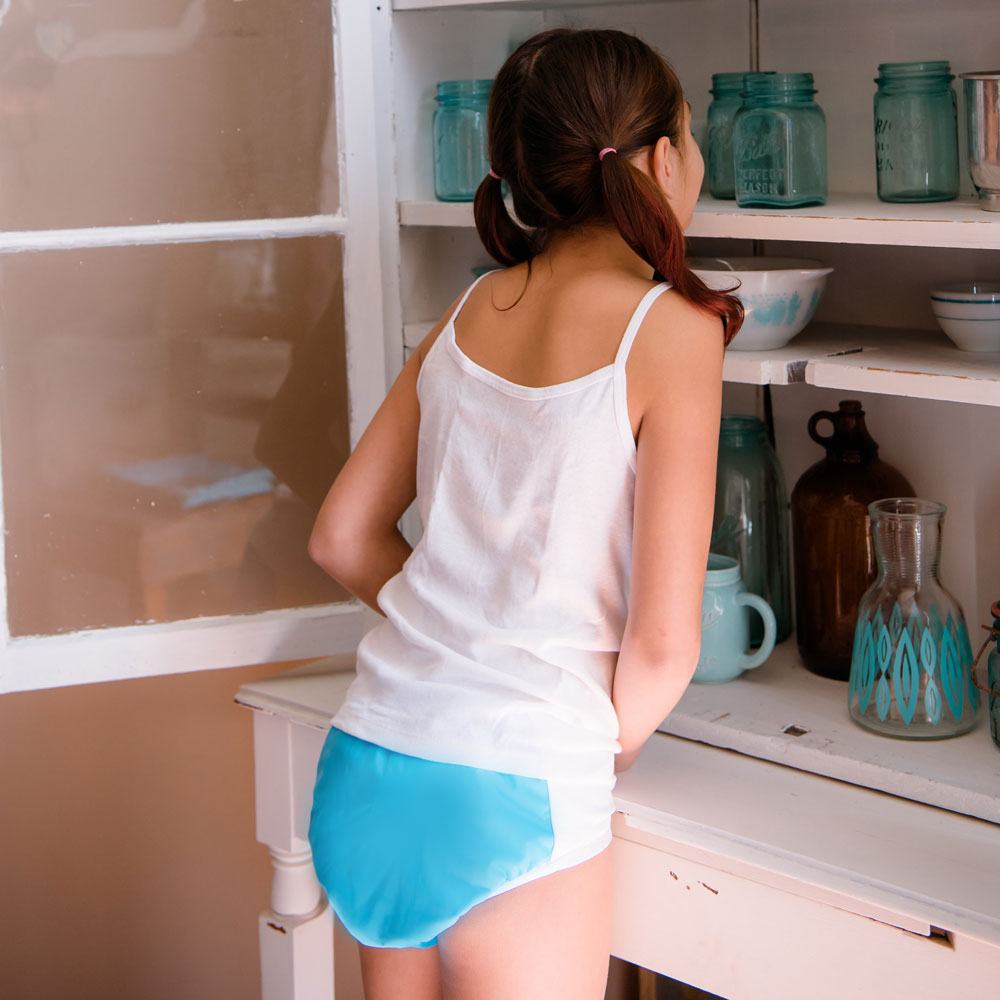
Waterproof underwear with built-in absorbency is one option for daytime accidents, and an internal pocket can accommodate extra absorbency when needed.
Our special needs waterproof underwear is built for exactly this stage, with a slim, trim look, a soft boxer-brief style waistband for discretion, and two layers of built-in microfiber absorbency. The internal pocket accepts extra absorbency for heavier days.
A common mistake is treating accidents as failure. Keep spare pairs in the backpack, stay calm during changes, and celebrate the small wins. Progress with potty training is rarely a straight line.
The Best Incontinence Underwear for Kids: A Neutral Feature Comparison
The best incontinence underwear for kids is the pair that matches your child's wetness level, comfort needs, and daily routine, so compare features rather than brands. Here is a neutral look at the main options.
| Feature | Pull-up style | Waterproof trainers | Overnight sensory underwear |
|---|---|---|---|
| Wetness feel | Low | High | High |
| Absorbency | Fixed | Adjustable with liners | Adjustable with extra liner |
| Discretion | Moderate | Slim, trim | Bulkier for night |
| Reusability | Disposable | Washable | Washable |
| Best for | Travel and backup | Daytime accidents | Bedwetting |
For daytime accidents, waterproof trainers give the wetness signal that supports training. For nights, our overnight sensory underwear for bedwetting adds outrageous absorbency, leg-locking gussets that redirect wetness to the absorbent core, and a changeable liner to match your child's wetting pattern.
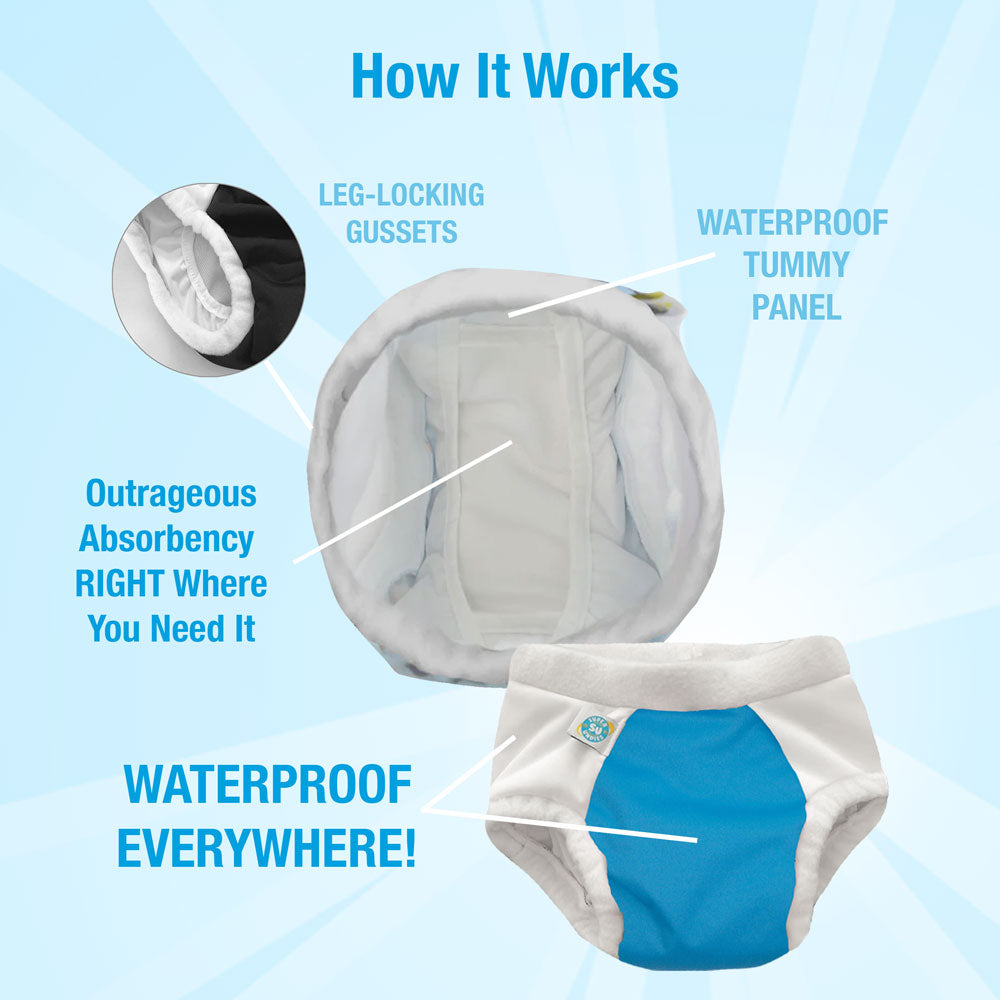
Best for: daytime accidents and potty training, waterproof trainers. Skip if: your child needs overnight coverage, in which case start with overnight sensory underwear.
Washing, Durability, and Skin Health: Making Pairs Last
Washing and durability decide whether comfortable underwear stays comfortable, and a few simple habits keep pairs soft for years.
Turn printed pairs inside out to protect the pattern, and wash new underwear before the first wear to remove any manufacturing residue. If you must use a dryer, choose the lowest heat setting and pull pairs out while slightly damp.
For waterproof and absorbent pairs, care is a little different. Rinse heavily soiled pairs promptly, wash on a gentle cycle with a mild detergent, and avoid bleach, which degrades waterproof layers and elastic. Check the care label before washing a whole load, because absorbent liners and waterproof gussets often have their own limits.
Durability tips that actually help:
- Keep a few pairs per style so each gets a rest between wears
- Check waistbands and seams after each wash for wear
- Keep a small rotation for home and a separate set for school
- Retire a pair when the waistband stops snapping back, the leg bands stay stretched, or the fabric pills in the crotch or seat
A common mistake is tossing everything in a hot dryer. High heat breaks down elastic and shrinks soft fabrics, so a lower setting protects your investment.
Skin health deserves its own attention. Changing out of damp underwear promptly is a general good habit for keeping skin comfortable. Choose tagless, seam-free construction for kids prone to friction, and avoid tight leg bands that leave red marks.
Watch out: a fragrance-free detergent is not automatically the gentlest choice. Some "free and clear" formulas still leave residue on thick fabrics, so run an extra rinse cycle if your child's skin is reactive.
Building a Comfortable Underwear Drawer at Doodlebug's Children's Boutique
Building a comfortable underwear drawer starts with a small, tested rotation rather than a big one-time haul. Buy one or two pairs in your child's preferred fabric, test them over a week, then add more of what works.
At Doodlebug's Children's Boutique, we stock tagless, sensory-friendly options made from organic and bamboo materials, including our girls' bamboo underwear 7-pack with a super soft waistband and Oeko-Tex certified fabric. For kids who want fun prints, our Minecraft girls' underwear 7-pack features bamboo fabric with character prints.
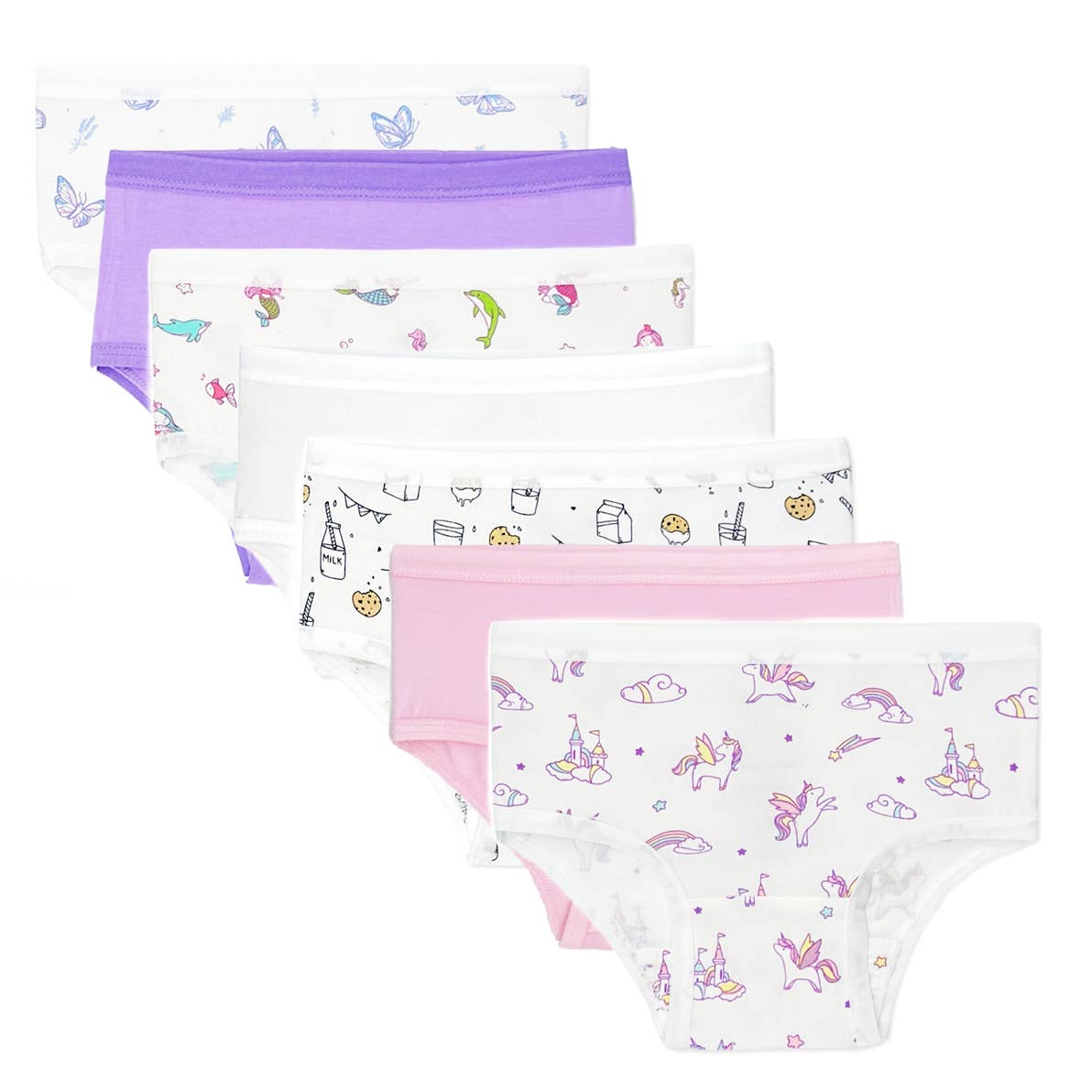
Start with a single pair to test comfort, then build your rotation from there.
Finding underwear your child will actually wear takes patience, but the payoff is a calmer morning and a more confident kid. Doodlebug's Children's Boutique can help with tagless bamboo underwear, waterproof trainers, and overnight options designed around sensory needs. Explore our sensory-friendly clothing and build a drawer your child will love.
Frequently Asked Questions
What is the best underwear for an autistic child?
There is no single best pair, but the features that help most are soft fabric, flat seams, a tagless label, and a waistband that does not dig in. Bamboo and cotton blends are common choices because they breathe and feel smooth. For daytime accidents, waterproof special needs underwear with built-in absorbency keeps wetness contained. Buy one or two pairs first, let your child wear them for short stretches, and keep the ones they stop noticing.
How do I help a child who refuses to wear underwear?
Start with fabric they already tolerate, such as a soft pajama material, and let them handle the underwear before wearing it. Offer choices between two pairs rather than insisting on one. Try short wearing windows at home, not on school mornings. If seams or tags are the trigger, switch to seamless underwear for children and cut out any remaining labels. Progress can be slow, so reward any attempt to try a pair on.
What is the difference between regular and incontinence underwear for kids?
Regular underwear is a single layer of fabric. The best incontinence underwear for kids adds a waterproof layer through the wet zone plus absorbent layers, often with an internal pocket for extra liners. That design holds wetness against the body long enough for a child to feel it, which supports body awareness and potty training.
Should children with sensory sensitivities wear seamless underwear?
Seamless underwear for children removes the bulky side seams and tag that cause scratching and rubbing, so it is often a good first step. Look for a wide, soft waistband and a tagless design. If your child still complains, check sizing: a pair that is slightly too small pulls and twists. Trying one size larger often solves the problem before you change brands.
