
Table of Contents
- Sensory Processing Disorder vs ADHD: Core Differences
- What Sensory Processing Disorder Symptoms in Children Look Like
- ADHD Symptoms in Kids: Attention, Impulsivity, and Restlessness
- How Symptoms Overlap: When a Child Has Both Conditions
- Sensory Processing Disorder Diagnosis: What Parents Should Know
- Occupational Therapy for Sensory Processing Issues and Self-Regulation
- Tools and Products That Support Focus and Sensory Regulation
- When to Seek Evaluation and Next Steps
- Frequently Asked Questions
Last Updated: October 19, 2026
Sensory Processing Disorder vs ADHD: Core Differences
Understanding the difference between sensory processing disorder ADHD in kids matters because the symptoms look similar but the underlying causes are different, and treatment approaches diverge significantly.
Sensory processing disorder (SPD) is a neurological condition where the brain has difficulty organizing and responding to sensory input like sound, touch, movement, or light. ADHD (attention-deficit/hyperactivity disorder) is a neurodevelopmental condition affecting attention, impulse control, and activity regulation.
The key difference lies in where the struggle originates. A child with SPD might cover their ears at a birthday party because the noise physically overwhelms their nervous system.
Quick Comparison Table
| Aspect | Sensory Processing Disorder | ADHD |
|---|---|---|
| Primary Issue | Difficulty organizing sensory input | Difficulty with attention and impulse control |
| Sound Response | Often sensitive; may cover ears or avoid loud spaces | May not notice background noise; easily distracted |
| Movement Needs | Seeks or avoids specific movements; sensory-driven | Restless; needs to move to regulate attention |
| Touch Sensitivity | Often strong reactions to textures, tags, seams | May not notice tactile input; seeks rough play |
| Focus Difficulty | May focus well once environment is calm | Struggles with sustained attention regardless of setting |
| Triggers | Specific sensory stimuli (sound, light, texture) | Lack of structure, boring tasks, novelty-seeking |
| Response to Fidgeting | Fidgets to manage sensory input | Fidgets to maintain focus and regulate energy |
What Sensory Processing Disorder Symptoms in Children Look Like
Sensory processing disorder symptoms in children often emerge early and cluster around how kids respond to everyday sensory input.
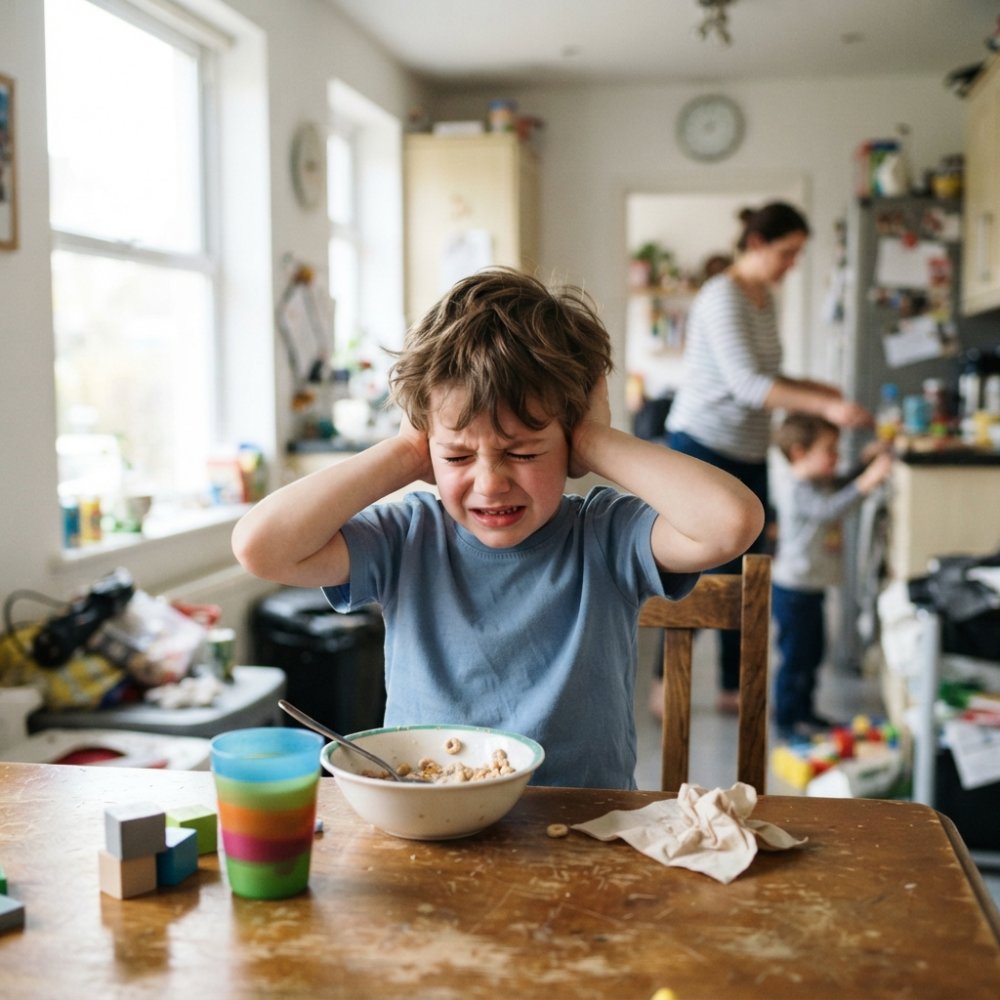
Common signs include extreme reactions to clothing (refusing to wear anything with visible seams or tags), difficulty with grooming tasks like haircuts or nail trimming, strong food preferences based on texture rather than taste, and avoidance of certain environments like crowded stores or gyms.
Sensory Avoidance and Sensory Seeking
Children with SPD typically fall into two patterns: sensory avoiders and sensory seekers. Avoiders react strongly to sensory input and work hard to escape or prevent it. They might refuse to wear anything but soft, tag-less clothing, avoid messy play, or become anxious in crowded spaces.
Many children display both patterns depending on the sense involved. A child might be a sound avoider (covers ears at loud events) but a movement seeker (constantly spinning or jumping). Understanding your child's specific sensory profile helps explain behavior that otherwise looks like defiance or anxiety.
Age-Specific Examples
In toddlers and preschoolers, sensory processing disorder symptoms in children often show up as clothing resistance, difficulty with transitions, and strong reactions to unexpected sensory input. A 3-year-old might have a complete meltdown when a tag touches their neck or when they step in a puddle unexpectedly.
By early elementary school, the picture expands. A 6-year-old with SPD might excel academically in a quiet room but completely fall apart in the cafeteria.
Tweens with sensory processing difficulties often develop workarounds and may seem to "grow out of" SPD, but the underlying sensitivity remains.
ADHD Symptoms in Kids: Attention, Impulsivity, and Restlessness
ADHD symptoms in kids cluster around three core areas: inattention, hyperactivity, and impulsivity. Unlike sensory processing disorder, which is about how the nervous system processes external input, ADHD is about how the brain regulates attention, impulse control, and activity level. A child with ADHD doesn't necessarily have trouble with specific sensory stimuli, they have trouble focusing, waiting their turn, or sitting still.
Inattention and Distractibility
Inattention in ADHD shows up as difficulty sustaining focus, especially on tasks that aren't inherently interesting. A child with ADHD might start homework, get distracted by a thought, and 20 minutes later realize they've written one sentence. They lose track of instructions, forget what they were supposed to do, and struggle to organize multi-step tasks.
The key distinction from sensory processing disorder ADHD: a child with inattention struggles to focus even in a perfectly calm, quiet environment. A child with SPD might focus beautifully once the sensory environment is managed.
Hyperactivity and Impulsivity
Hyperactivity in ADHD appears as constant motion, fidgeting, restlessness, and difficulty waiting. Impulsivity shows up as blurting out answers, interrupting, acting without thinking through consequences, and difficulty delaying gratification. These aren't willful misbehaviors, they reflect genuine difficulty with self-regulation.
A child with ADHD might need to move to focus. They fidget during lessons, tap their pencil, bounce their leg, or ask to stand at the back of the classroom. Interestingly, some children with ADHD actually focus better when they have an outlet for movement, the fidgeting helps regulate their attention rather than distracting from it.
How Symptoms Overlap: When a Child Has Both Conditions
Many children have both sensory processing disorder and ADHD, and when they do, the picture becomes more complex. A child might struggle with sensory input (SPD) AND have difficulty sustaining attention (ADHD). They might avoid the cafeteria because it's sensorily overwhelming and also struggle to sit through lunch because they can't focus or stay still.
The overlap happens because both conditions affect self-regulation. SPD affects how the nervous system processes and responds to sensory information. ADHD affects executive function and impulse control. A child dealing with both is managing two separate neurological challenges simultaneously, which compounds the difficulty.
Sensory Processing Disorder Diagnosis: What Parents Should Know
Getting an accurate diagnosis matters because treatment approaches differ. Sensory processing disorder is typically identified through occupational therapy evaluation, while ADHD is usually diagnosed by a pediatrician, psychiatrist, or psychologist. Some professionals recognize both; others specialize in one or the other.
Screening Tools and Assessment
Occupational therapists use standardized assessments to evaluate sensory processing. These might include the Sensory Profile, which asks detailed questions about how your child responds to different sensory experiences, or direct observation of how your child handles various sensory tasks.
For ADHD, pediatricians and psychologists typically use rating scales like the Vanderbilt Assessment or Conners Rating Scale, along with behavioral observations and developmental history. The diagnostic process often includes input from parents and teachers because ADHD symptoms show up across different environments.
Sit & Twist Active Seat Cushion by Bouncyband® →
Occupational Therapy for Sensory Processing Issues and Self-Regulation
Occupational therapy is the primary evidence-based treatment for sensory processing difficulties. An occupational therapist helps children develop strategies to manage sensory input, improve self-regulation, and participate more fully in daily activities. Therapy might include sensory activities designed to help the nervous system organize input more effectively.
Sensory Strategies and Sensory Diet at Home
A "sensory diet" is a personalized plan of sensory activities designed to help your child's nervous system stay regulated throughout the day.
For a child who's a sensory avoider, strategies might include offering quiet spaces, providing noise-canceling headphones, choosing soft tag-less clothing, and warning them before transitions.
Tools like the Sit & Twist Active Seat Cushion by Bouncyband ($29.99) give kids movement while sitting, helping them release pent-up fidgety energy so they can focus. The rotating disc spins smoothly, providing continuous sensory input without disrupting others.

For children who need tactile input, the Calming Stretchy Band Fidget Toy by Bouncyband ($14.99) provides quiet sensory relief.
School Accommodations and Environmental Support
Schools can implement accommodations for both sensory processing disorder and ADHD. For sensory issues, this might mean preferential seating away from the cafeteria, permission to use noise-canceling headphones during transitions, or allowing the child to take breaks in a quiet space when overwhelmed.
For ADHD, accommodations might include movement breaks, fidget tools at the desk, preferential seating near the teacher, or extended time on tests. Many children benefit from a combination of both types of support.
Tools and Products That Support Focus and Sensory Regulation
Beyond seating solutions, several products help children manage sensory input and improve focus. The Comfy Cozy Peapod Inflatable Chair for Kids ($89.99) provides deep pressure through its soft embrace, offering a calming sense of security that helps children relax and concentrate.
For children who respond to weighted input, the Happy Hugs Weighted Plush Bulldog ($49.99) offers gentle deep pressure comfort.

These tools work best as part of a broader sensory strategy, not as standalone solutions. They're most effective when paired with professional guidance and environmental modifications tailored to your specific child.
When to Seek Evaluation and Next Steps
If your child shows persistent patterns of sensory sensitivity, difficulty with attention, or both, seeking evaluation is a reasonable next step.
An occupational therapist can evaluate sensory processing concerns. A developmental pediatrician, child psychiatrist, or psychologist can assess for ADHD.
Keep detailed notes about when symptoms occur, what triggers them, and how your child responds. This information helps professionals understand your child's specific profile and develop targeted support.
Remember that a diagnosis, or the lack of one, doesn't define your child.
Understanding whether your child's challenges stem from sensory processing disorder, ADHD, or both opens the door to more effective support.
Frequently Asked Questions
What are the main differences between sensory processing disorder and ADHD symptoms in kids?
Sensory processing disorder (SPD) centers on how the nervous system processes sensory input like sound, touch, and movement. Children with SPD may avoid loud noises or certain textures, or they may seek intense sensory experiences. ADHD involves difficulties with attention, impulse control, and activity regulation. While a child with ADHD might struggle to focus during a lesson, a child with SPD might struggle because the classroom sounds, lighting, or textures are overwhelming. Many children have both conditions, which can make symptoms harder to identify.
Can a child have both ADHD and sensory processing disorder?
Yes. Research shows that children can experience both ADHD and sensory processing difficulties at the same time. When a child has both conditions, attention problems may be worsened by sensory overload, and hyperactivity may include sensory-seeking behaviors. For example, a child might fidget excessively both because of restless ADHD energy and because they crave movement input. Identifying both conditions helps parents and teachers provide the right support through occupational therapy, environmental modifications, and sometimes medication for ADHD.
How is sensory processing disorder diagnosed in children?
Sensory processing disorder diagnosis typically involves an evaluation by an occupational therapist or developmental psychologist. They use standardized screening tools and observation to assess how a child responds to sensory input across different environments. Parents provide detailed history about the child's reactions to sounds, textures, movement, and other stimuli. Diagnosis requires evidence that sensory difficulties interfere with daily functioning at home, school, or in social situations. Assessment is thorough and considers the child's age and developmental stage.
What role does occupational therapy play for sensory processing issues?
Occupational therapy helps children improve self-regulation and sensory modulation through targeted activities and strategies. A therapist works with the child to strengthen responses to sensory input, build coping skills, and develop a sensory diet, a personalized plan of activities that provide the right amount of sensory input throughout the day. At home and school, occupational therapists recommend environmental changes, fidget tools, and movement breaks. These interventions help children focus, reduce meltdowns, and improve participation in daily activities.
What sensory tools and products help kids with focus and emotional regulation?
Many children benefit from fidget toys and active seating options. The Sit & Twist Active Seat Cushion ($29.99) lets kids rotate and shift while sitting, releasing restless energy and improving focus. The Balance Cushion Sensory Seat ($32.99) offers gentle bounce and rock motion for calm, continuous movement. The Calming Stretchy Band Fidget Toy ($14.99) provides quiet sensory relief and stress reduction. For deeper pressure input, the Happy Hugs Weighted Plush Bulldog ($49.99) offers comforting weight and tactile input. The Comfy Cozy Peapod Inflatable Chair ($89.99) provides a secure, pressure-filled space for calming and concentration. These tools support both children with ADHD and sensory processing disorder.