Table of Contents
- What Bamboo Fabric Actually Is and Why It Matters for Sensory Needs
- Best Fabrics for Sensory Processing Disorder: Why Bamboo Stands Out
- Bamboo vs. Cotton for Sensitive Skin: What the Evidence Shows
- Sensory-Friendly Pajamas for Kids: Beyond Just Soft Fabric
- Bamboo Fabric Care Instructions: Keeping Comfort Lasting
- How to Choose and Test Bamboo Clothing for Your Child
- Frequently Asked Questions
Last Updated: October 18, 2026
What Bamboo Fabric Actually Is and Why It Matters for Sensory Needs
When your child with sensory processing disorder struggles to wear clothes without complaint, the problem often isn't attitude, it's fabric.
The difference between a child who resists getting dressed and one who reaches for their favorite shirt often comes down to how the fabric feels against skin that processes sensations differently.
Bamboo Viscose, Rayon, and Lyocell: Understanding the Processing
Bamboo fabric starts as bamboo pulp, but the journey to wearable textile varies. Bamboo viscose is the most common form: manufacturers dissolve bamboo pulp in chemicals, then extrude it through spinnerets to create fibers.
Bamboo rayon is technically the same as viscose, the terms are often used interchangeably, though "viscose" is the more precise chemical name.
Bamboo lyocell (often marketed as Tencel) uses a closed-loop solvent process that recycles solvents rather than releasing them, making it more environmentally responsible.
How Processing Affects Softness and Safety
The viscose process creates that buttery-soft texture parents rave about. Fibers emerge smooth and uniform, with minimal surface irregularities that might trigger tactile defensiveness.
Safety matters too. Quality bamboo fabric is tested for harmful chemicals and dyes. Look for certifications like Oeko-Tex, which verifies the fabric is free from substances that could irritate sensitive skin. Closed-loop lyocell production reduces chemical exposure compared to conventional viscose, though both can be produced safely when manufacturers follow proper standards.
Best Fabrics for Sensory Processing Disorder: Why Bamboo Stands Out
Bamboo fabric delivers specific properties that address the core sensory challenges children with sensory processing disorder face. It's not magic, it's engineering: the fiber characteristics address multiple sensory triggers simultaneously, which is why parents often see immediate results when switching from conventional fabrics.
Softness and Smooth Texture
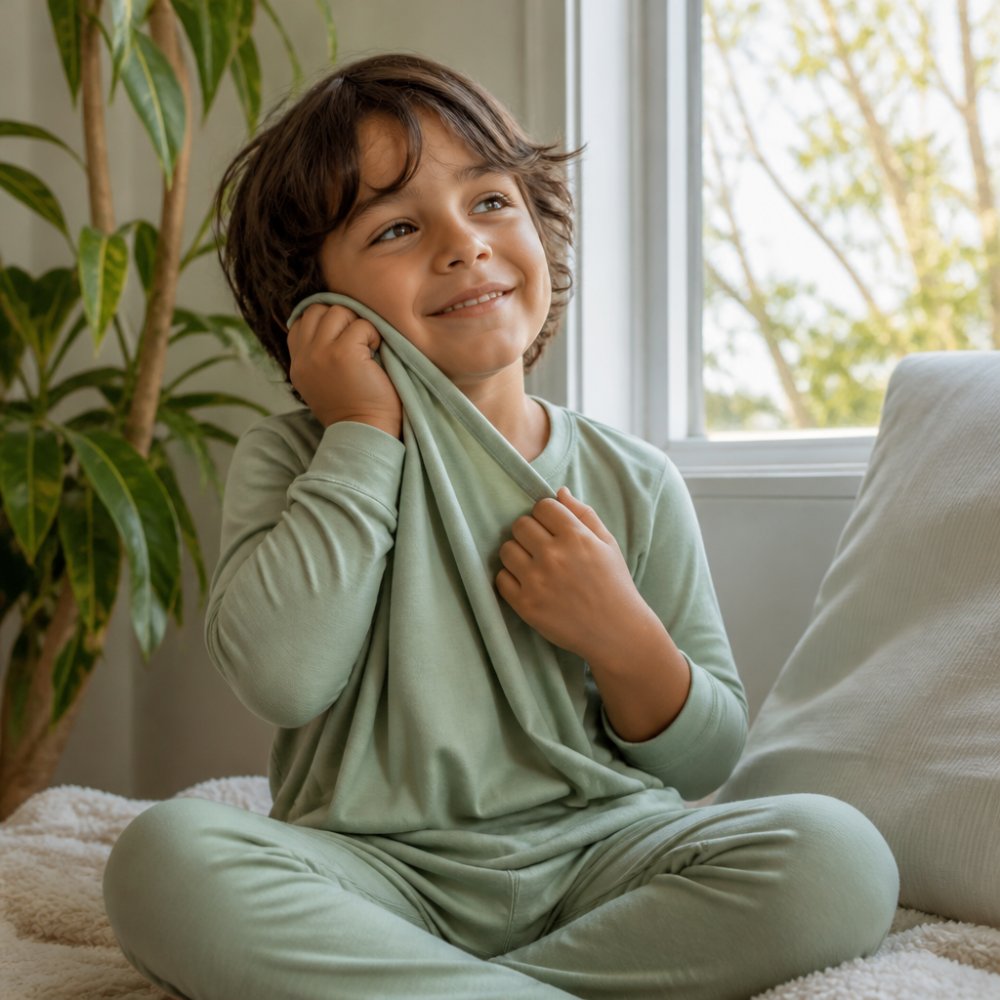
The silky-smooth surface of bamboo fabric is its defining characteristic for sensory-sensitive children. The fiber structure creates minimal friction against skin, reducing the constant low-level irritation that can trigger sensory defensiveness.
This smoothness persists through multiple wash cycles when cared for properly. For kids with tactile sensitivities, that shift can eliminate daily resistance to getting dressed.
Breathability and Airflow
Bamboo fabric breathes exceptionally well. The fiber structure allows air to circulate, preventing the trapped-heat feeling that can overwhelm sensory-sensitive children. This breathability matters during sleep, overheating disrupts rest and can intensify sensory irritability the following day.
The fabric's natural airflow also reduces moisture accumulation against skin.
Moisture-Wicking and Sweat Management
Bamboo fibers naturally absorb and move moisture away from the skin, preventing the clammy sensation that can cause sensory distress. Unlike synthetics that trap sweat, bamboo allows moisture to evaporate, maintaining a neutral microclimate against skin.
For children who experience heightened awareness of bodily sensations, this dry feel is genuinely calming.
Temperature Regulation and Cooling Comfort
Bamboo fabric naturally regulates temperature, staying cool in warm conditions and gently warm in cooler ones. A fabric that adapts to body temperature feels more predictable.
Hypoallergenic Properties and Skin Safety
Bamboo fabric is naturally hypoallergenic and resists dust mites and mold growth, making it safer for children with eczema or other skin sensitivities. The smooth fiber minimizes mechanical irritation, while moisture management prevents the damp environment where irritation-causing microorganisms thrive.
For children whose sensory processing disorder overlaps with atopic dermatitis or other skin conditions, bamboo's gentleness and hypoallergenic properties can support their needs.
Bamboo vs. Cotton for Sensitive Skin: What the Evidence Shows
Cotton is often presented as the gold standard for sensitive skin: breathable, widely available, and generally safe. But for children with sensory processing disorder, bamboo often addresses sensory preferences more directly.
Softness and Durability Comparison
High-quality bamboo viscose is noticeably softer than cotton from the first wear. Cotton fibers have a slightly rougher surface; bamboo's are naturally smoother, a tactile difference that's significant for children with sensory sensitivities.
Durability depends on care. Bamboo requires gentler washing (cold water, gentle cycle), while cotton tolerates hotter water and more aggressive washing. Cared for properly, bamboo maintains its softness through many wash cycles while cotton may develop a slightly stiffer hand-feel.
| Fabric | Softness | Breathability | Moisture-Wicking | Durability with Proper Care | Best For |
|---|---|---|---|---|---|
| Bamboo Viscose | Silky-smooth, exceptional | Excellent | Strong | Excellent | Sensory sensitivities, eczema-prone skin |
| Cotton | Soft, improves with washing | Good | Moderate | Excellent | General use, less sensory-sensitive children |
| Bamboo Lyocell | Soft with structure | Excellent | Strong | Excellent | Sensory needs, environmentally conscious families |
Environmental and Processing Trade-Offs
Bamboo viscose production uses chemical solvents that, in poorly regulated facilities, can harm workers and ecosystems.
Conventional cotton requires significant pesticide use, though organic cotton eliminates this concern, and its water consumption is substantial, roughly 1,800 gallons per pound of fabric.
The trade-off is real: responsibly processed bamboo is more sustainable than conventional cotton, but conventional viscose carries environmental costs. Prioritize certifications like Oeko-Tex or GOTS (Global Organic Textile Standard) that verify responsible production.
Girls Bamboo Ruffle Pants in Berry – Ultra Soft Sensory-Friendly Baby Bottoms →
Sensory-Friendly Pajamas for Kids: Beyond Just Soft Fabric
Fabric alone doesn't create sensory-friendly clothing. Design details, seams, fasteners, fit, matter as much as material. The best sensory pajamas combine soft bamboo fabric with construction features that eliminate common triggers.
Tagless Design and Flat Seams
Tags are among the most common sensory triggers. A scratchy label rubbing against the back of the neck can ruin an entire night's sleep.
Flat seams are equally important. Traditional seams create raised ridges that children with tactile defensiveness find irritating. Flat-seam construction keeps seams smooth and unobtrusive. Many children don't consciously notice flat seams.
Fit, Flexibility, and Freedom of Movement
Sensory-friendly pajamas fit differently than standard sleepwear. They're typically roomier through the torso and limbs, allowing unrestricted movement without the clingy feeling that can overwhelm sensory-sensitive children. The fabric stretches comfortably, accommodating fidgeting and position changes without resistance.
Waistbands matter significantly. Tight elastic digs into skin and creates constant pressure awareness. Quality sensory pajamas use soft, wide waistbands that distribute pressure evenly without noticeable sensation. Some children prefer drawstring waists; others find drawstrings themselves triggering. Options matter.
Fastener Choices and Sensory Triggers
Zippers, buttons, and snaps are common sensory flashpoints. A stuck zipper or rough button edge can derail bedtime entirely. Many sensory-friendly pajamas eliminate fasteners entirely, using pullover designs or elastic waistbands. When closures are necessary, quality matters: smooth zippers with protective tape, soft snaps, or magnetic fasteners that eliminate the tactile feedback of traditional hardware.
Bamboo Fabric Care Instructions: Keeping Comfort Lasting
Bamboo fabric requires different care than cotton. Improper washing damages the fibers, reducing softness and shortening garment lifespan. Following care instructions is essential to maintaining the sensory benefits that make bamboo worthwhile.
Washing and Drying Best Practices
Machine wash in cold water on a gentle or delicate cycle. Hot water weakens bamboo fibers and can cause shrinking. Use mild detergent; heavy-duty or enzyme-based detergents are too harsh.
Dry on low heat or air-dry when possible. High heat damages fibers and accelerates wear. Many parents find air-drying extends garment life significantly. If using a dryer, remove items while slightly damp to prevent over-drying.
Durability and Performance Over Time
Bamboo maintained properly lasts through dozens of wash cycles while retaining softness. Neglected bamboo, washed hot, dried hot, or treated with harsh chemicals, becomes stiff and loses its sensory appeal within a few washes.
Pilling can occur with bamboo, especially if washed with rough fabrics or dried on high heat. Gentle care minimizes this. A fabric shaver removes pills without damaging the garment if they do appear.
How to Choose and Test Bamboo Clothing for Your Child
Not all bamboo clothing is created equal. Price, brand reputation, and construction details vary widely. Testing before committing to a full wardrobe prevents expensive mistakes.
Fabric Testing and Shopping Checklist
Before purchasing multiple items, buy a single piece to test. Have your child wear it for a full day and night. Notice whether they reach for it again or resist wearing it. Specific feedback like "It's too loose" or "The waistband feels tight" tells you what to adjust in future purchases.
When evaluating bamboo clothing:
- Feel the fabric, silky-smooth, not stiff or rough
- Check for tags or labels; confirm they're tagless or soft-printed
- Run fingers along all seams; they should be flat and unobtrusive
- Inspect waistbands and cuffs for raised edges or rough texture
- Confirm fasteners (if any) are smooth and secure
- Check the garment's stretch; it should move with the body
- Read care instructions; ensure you can follow them consistently
- Verify sizing; sensory clothing typically runs generous
- Ask about return policies before ordering if buying online
What to Avoid: Common Sensory Irritants
Stiff fabric, visible seams, scratchy tags, tight waistbands, and rough fasteners are universal sensory triggers.
Many children also dislike long sleeves or high necklines that create sensation around the neck and wrists.
Doodlebug's Children's Boutique offers carefully curated bamboo options designed specifically for sensory needs. The Girls Bamboo Ruffle Pants in Berry ($12.99) feature tagless construction, flat seams, and a relaxed fit that accommodates sensory preferences while still looking age-appropriate. The Kickee Pants Falcon Snow Kids Bamboo Pajama Set ($19.99) combines premium bamboo viscose with snug-fit design that meets safety standards without restrictive sensation. For tweens seeking character-themed options, the Minecraft Chicken Jockey Bamboo Kids Pajama sets (long sleeve $39.99, short sleeve $29.99) deliver style and sensory comfort simultaneously.


Sensory processing differences don't disappear, but the right clothing makes daily life measurably easier. Bamboo fabric sensory processing benefits address multiple triggers, softness, breathability, temperature regulation, and hypoallergenic properties, in a single material.
Frequently Asked Questions
Is bamboo fabric good for kids with sensory processing disorder?
Yes. Bamboo fabric offers multiple sensory benefits: it's naturally soft and smooth, reducing tactile irritation; breathable to prevent overheating; moisture-wicking to manage sweat; and hypoallergenic for sensitive skin. Many children with sensory processing disorder experience fewer complaints about discomfort when wearing bamboo clothing, especially when combined with tagless designs and flat seams. Results vary by child, so testing a single item first helps you confirm whether bamboo works for your child's specific sensory needs.
What's the difference between bamboo viscose, rayon, and lyocell?
All three are made from bamboo pulp but differ in processing. Viscose and rayon are chemically similar terms (rayon is the generic fiber name; viscose is the production method). Lyocell uses a closed-loop process that recycles solvents, making it more environmentally friendly. All three produce soft fabric; lyocell is often marketed as more sustainable. For sensory purposes, the softness and feel are comparable, so the choice often comes down to care instructions and environmental values.
How does bamboo fabric care affect its sensory properties?
Proper care preserves softness and prevents pilling or stiffness. Machine wash cold on a gentle cycle, tumble dry low, and avoid fabric softener (which can coat fibers and reduce breathability). Following these steps helps bamboo clothing maintain its smooth feel and moisture-wicking ability wash after wash. Poor care, hot water, high heat, or harsh cycles, can damage fibers and reduce comfort over time, making durability directly tied to how you wash and dry.
Is bamboo fabric softer than cotton?
Bamboo fabric is generally softer and silkier than standard cotton due to its smoother fiber structure. However, organic cotton can be quite soft. The key difference is consistency: bamboo fabric tends to feel uniformly smooth, while cotton's texture varies by quality and processing. For children with sensory sensitivities, bamboo's predictable silky feel often feels less irritating than cotton, which may have slight texture variations that trigger discomfort.