
Table of Contents
- What Makes a Sensory Friendly Bedroom Work
- Step 1: Choose Calming, Adjustable Lighting for Your Sensory Friendly Bedroom
- Step 2: Reduce Noise and Create a Quieter Environment
- Step 3: Select Sensory-Friendly Bedding for Kids
- Step 4: Use Soft Textures and Tactile Elements
- Step 5: Organize Storage and Reduce Visual Clutter
- Sensory Bedroom Ideas for Kids on a Budget
- Step 6: Add Sensory Tools and Deep Pressure Items
- Frequently Asked Questions
Last Updated: October 21, 2026
What Makes a Sensory Friendly Bedroom Work
A sensory friendly bedroom minimizes overwhelming stimuli and supports a child's nervous system.
Most bedrooms assault the senses unintentionally: bright overhead lights, background noise, scratchy fabrics, visual clutter, and competing textures. For sensory-sensitive kids, this constant input creates exhaustion and sleep resistance.
You don't need to overhaul everything at once. Start with lighting and bedding, the two biggest factors, then layer in texture, storage, and sensory tools as budget allows.
Step 1: Choose Calming, Adjustable Lighting for Your Sensory Friendly Bedroom
Harsh overhead lights trigger overstimulation and make bedtime jarring; soft, adjustable lighting signals that sleep is coming.
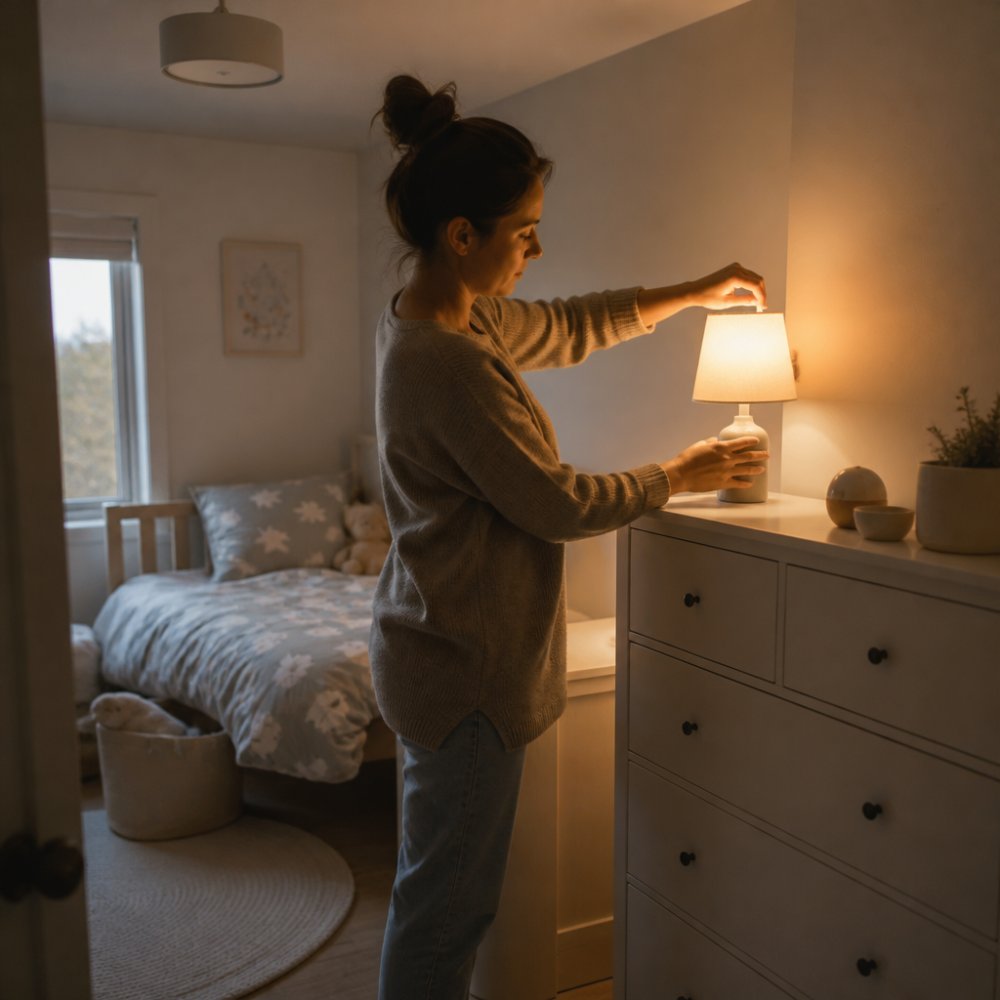
Replace bright overhead fixtures with dimmable warm-white bulbs (2700K feels most relaxing) and add a bedside lamp with a soft, non-reflective shade. A plug-in dimmer switch costs under $15 and transforms the space instantly.
Consider these lighting options:
- Dimmable warm-white bulbs - Adjust brightness as bedtime approaches
- Bedside lamp with fabric shade - Filters light softly without glare
- Salt lamp or Himalayan light - Emits gentle amber glow (aesthetic and calming)
Avoid LED strips, neon, or anything with a blue tint, these stimulate alertness instead of calm.
Step 2: Reduce Noise and Create a Quieter Environment
Sound sensitivity is one of the most common sensory triggers. Even "normal" household noise, doors closing, siblings talking, traffic outside, can keep a sensory-sensitive child wired and unable to sleep.
Start by identifying noise sources in and around the bedroom. Then block or muffle them:
- White noise machine - Masks unpredictable sounds with consistent background noise
- Earplugs or noise-canceling headphones - Gives your child control over input
- Door draft stoppers - Block sound from hallways and other rooms
A white noise machine running all night often becomes part of the bedtime ritual; your child's brain learns to associate that sound with sleep.
If your child is sensitive to white noise itself, try nature sounds, rainfall, ocean waves, or forest ambience instead.
Step 3: Select Sensory-Friendly Bedding for Kids
Bedding is where your child spends 8+ hours every night. Scratchy, stiff, or textured fabrics create constant irritation.
Bamboo and organic cotton bedding outperform standard cotton. Bamboo feels silky against skin, naturally temperature-regulates, and breathes well, all critical for kids who overheat or get night sweats.
The Minecraft: Chicken Jockey Bamboo Bed Sheet Set ($99.99) from Doodlebug's Children's Boutique offers exactly what sensory-sensitive kids need.

Why Bamboo Bedding Works Best
Bamboo bedding isn't just softer, it's physiologically better for sensory kids. It's naturally hypoallergenic, reducing skin irritation and itching that disrupt sleep, and it breathes better than cotton so your child won't wake up sweaty or overheated.
Look for bedding labeled as Oeko-Tex certified. This means it's free from harmful chemicals and dyes, important for kids with sensitive skin or chemical sensitivities.
Step 4: Use Soft Textures and Tactile Elements
Beyond bedding, layer in textures that match how your child actually processes touch. The right texture depends on whether your child seeks tactile input or avoids it, get that wrong and a cozy throw becomes a nightly battle.
First, read your child's sensory profile
You don't need a formal assessment, watch for these clues over a week:
Tactile seekers tend to:
- Touch everything in a store, rub fabrics, or drag their hands along walls
- Prefer tight hugs, heavy blankets, and rough-and-tumble play
- Chew on sleeves or collars, or seek out crunchy foods
Tactile avoiders tend to:
- Recoil from tags, seams, socks, or certain fabrics
- Dislike being touched unexpectedly or getting hands messy
- Prefer loose, smooth clothing and complain about "scratchy" anything
Most kids are a mix, a seeker in one context, an avoider in another. Match the room to the pattern you see, not a universal checklist.
Match the texture to the profile
| If your child is a... | Lean into... | Go easy on... |
|---|---|---|
| Tactile seeker | Minky, fleece, sherpa, ribbed knits, a plush rug, a weighted lap pad, a textured throw | Ultra-slick fabrics that offer no feedback |
| Tactile avoider | Smooth bamboo, high-thread-count cotton, seamless or tagless items, one soft throw | Sherpa, sequins, appliqués, rough wool, busy quilting |
| Mixed profile | A reversible blanket (smooth on one side, plush on the other) so the child chooses | Forcing one texture all night |
A reversible option is one of the most useful purchases for a mixed-profile kid: the Minecraft: Time to Mine Bamboo Blanket ($59.99) from Doodlebug's Children's Boutique is silky bamboo on one side and plush sherpa on the other, so a child can flip to the side that feels right that night. The 45" x 60" size works for toddlers through tweens.

Build the tactile layer in order
- Fix the sleep surface first. Sheets and pajamas touch skin for 8+ hours. If your child avoids texture, start with smooth bamboo or organic cotton and tagless sleepwear before adding anything else.
- Add one throw or blanket at the foot of the bed, easy to kick off if it feels wrong.
- Add a rug underfoot. A plush rug absorbs sound and gives seekers a satisfying surface; avoiders often prefer a low-pile rug that doesn't catch socks.
- Add decorative pillows last. Velvet, fleece, and minky work for seekers; smooth cotton or linen works for avoiders. Skip anything scratchy, stiff, or heavily embellished.
What to avoid regardless of profile
- Tags and rough seams, cut them out or choose tagless. This is the single most common complaint from tactile-avoidant kids.
- Synthetic fabrics that feel plastic-like, they trap heat and often trigger complaints.
- Embellishments near the pillow, sequins, appliqués, and rough embroidery can scratch a face during sleep.
Every fabric your child encounters should feel intentional and soothing, and matched to their profile, not to a generic "cozy" ideal.
Minecraft: Chicken Jockey Bamboo Bed Sheet Set →
Step 5: Organize Storage and Reduce Visual Clutter
Visual clutter creates mental noise.
Start by removing items that don't serve sleep or calming:
- Keep only essential furniture - Bed, dresser, maybe a chair (nothing more)
- Store toys out of sight - Use closed bins, not open shelves
- Organize by category - Group similar items so the eye isn't scanning chaos
Reducing visible items by 50% often creates an immediate shift in how calm the room feels; with less to process, your child winds down easier and sleeps better.
Choose neutral or soft colors for storage containers and walls. Avoid bright primary colors or busy patterns, save those for clothes or toys that get put away.
Sensory Bedroom Ideas for Kids on a Budget
Creating a sensory friendly bedroom doesn't require thousands, start with the highest-impact changes and build from there.
Phase 2 ($100-200): Upgrade to bamboo sheets and add a soft throw blanket.
Phase 3 ($200-400): Add blackout curtains, a weighted blanket, and a few soft pillows or a cozy rug.
Phase 4 ($400+): Consider a weighted blanket from a specialty brand, acoustic panels, or sensory-specific furniture.
The Kickee Pants Falcon Snow Long Sleeve Bamboo Pajama Set ($19.99) from Doodlebug's Children's Boutique is an affordable entry point into sensory-friendly sleepwear: tag-less, ultra-soft bamboo fabric, snug fit for safety, everything sensory kids need at a budget-friendly price.

| Budget Phase | Key Items | Estimated Cost | Impact |
|---|---|---|---|
| Phase 1 | Dimmable bulbs, lamp, white noise | $50-100 | Lighting + sound control |
| Phase 2 | Bamboo sheets, throw blanket, storage bins | $100-200 | Comfort + organization |
| Phase 3 | Blackout curtains, weighted blanket, pillows | $200-400 | Full sensory optimization |
| Phase 4 | Specialty bedding, acoustic panels | $400+ | Premium comfort layer |
Start with lighting and bedding, these create the biggest sensory impact for the least money. You can add texture and storage later as budget allows.
Step 6: Add Sensory Tools and Deep Pressure Items
Sensory tools give your child active calming strategies when anxiety or overstimulation hits. But because many involve weight, cords, small parts, or climbing, safety comes first, a step most roundups skip.
Deep pressure, done safely
Deep pressure items, weighted blankets, pillows, lap pads, and plush, activate the parasympathetic nervous system, signaling the body to relax. Many kids fall asleep faster and sleep more deeply with this support, but weight and heat are not risk-free.
A common guideline is to start light and size up gradually rather than buying the heaviest option. Practical rules most occupational therapists and pediatric sleep specialists repeat:
- Never cover the head or face. Weight should rest on the torso and legs, not the neck or chest.
- A child must be able to remove the item independently. If your child cannot push it off without help, it is too heavy or the wrong design.
- Skip weighted products for infants and toddlers. Most manufacturers advise against weighted blankets under age 2, and many recommend waiting until a child is older and can communicate discomfort.
Weighted blankets are not a universal sleep aid, and they are not recommended for every child. If your child cannot safely remove the blanket, has breathing concerns, or is under 2, talk to a pediatrician before use. Never use a weighted blanket as a restraint or to keep a child in bed.
The rest of the toolkit
Beyond deep pressure, build a small, reachable kit:
- Weighted lap pad or pillow, Portable deep pressure that is easier to remove than a full blanket.
- Fidget toys, Keeps hands busy during wind-down; choose ones with no small detachable parts for kids who mouth objects.
- Soft weighted plush, Combines comfort with deep pressure; check the weight and seams the same way you would a blanket.
Troubleshooting overstimulation
A sensory tool should calm your child, not wind them up. Watch for signs it's backfiring: increased movement, escalating giggles, repetitive fidget spinning, or sudden avoidance. If you see those, remove the tool for a few nights and reintroduce one item at a time.
Deep pressure can be one of the most effective sensory regulation tools, but only when the item fits the child, can be removed independently, and is introduced with a pediatrician's input when there are health concerns. Start light, watch for overheating, and keep the toolkit small and reachable.
Place sensory tools within arm's reach of the bed so your child can grab them without fumbling in the dark, making them more likely to use them when they need calming.
Frequently Asked Questions
What's the difference between a sensory friendly bedroom and a regular bedroom?
A sensory friendly bedroom reduces triggers that overwhelm children with sensory processing differences or autism. It controls lighting (soft and adjustable instead of bright overhead), minimizes noise through sound-dampening materials, uses calming colors and textures, removes visual clutter, and includes tactile comfort items like weighted blankets or fidget toys. The goal is to create a calm environment where your child feels safe and in control of their sensory input.
How does sensory-friendly bedding for kids help with sleep?
Sensory-friendly bedding like bamboo sheets and blankets reduces irritation from scratchy fabrics, seams, and tags that can prevent sleep. Bamboo is naturally hypoallergenic, moisture-wicking, and temperature-regulating, which helps kids stay comfortable without overheating or sweating through the night. Soft, breathable textures signal calm to the nervous system, making it easier for children with sensory sensitivities to fall asleep and stay asleep longer.
Can I create a sensory room on a budget?
Yes. Start with essentials: replace harsh overhead lights with one soft lamp ($15-$30), add blackout curtains ($20-$40), and swap pillows and blankets for softer textures. Use storage bins you already own or find affordable ones at discount stores. Add one weighted item like a weighted blanket or plush toy rather than buying many sensory tools at once. Prioritize changes that address your child's biggest sensory triggers first, then build gradually as your budget allows.
What sensory bedroom ideas work best for tweens who don't want a 'babyish' room?
Focus on function over cutesy design. Use neutral, calming wall colors (soft grays, blues, or greens) with minimal decor. Choose age-appropriate bedding with subtle patterns or character themes they actually like. Add mood lighting with dimmable lamps or LED strips in colors they prefer. Include fidget tools that look mature, like stress balls or textured pillows that blend into a cozy seating area. Let them help design the space so it feels like their retreat, not a nursery.
Creating a sensory friendly bedroom takes intention, but the payoff is real. Kids sleep better, wake less often, and feel safer in a space designed for their nervous system. Start with soft lighting and comfortable bedding, like the bamboo options from Doodlebug's Children's Boutique, and build from there. Every sensory-friendly element you add moves your child closer to restful, regulated sleep.