
Table of Contents
- What You'll Need Before You Start
- Step 1: Match the Sensory Tool to the Stress Signal
- Step 2: Build Sensory Coping Skills for Anxiety Into the Daily Routine
- Step 3: Choose the Best Sensory Toys for Stress Relief
- Step 4: Create a Calm-Down Corner at Home
- Step 5: Learn How to Create a Sensory-Friendly Bedroom
- Common Mistakes to Avoid
- Conclusion
- Frequently Asked Questions
Last Updated: September 28, 2026
What You'll Need Before You Start
Sensory tools for stress relief at home work best when you have a few basics ready before big feelings hit. This guide from Doodlebug's Children's Boutique walks you through five simple steps. You will learn how to use sensory tools for stress relief at home in a way that fits your family's real routine.
Here is what to gather first:
- One or two fidget tools your child already likes
- A soft blanket or cushion for a quiet spot
- A small basket to keep tools together
- A timer or phone clock
- A calm-down bottle or weighted plush for deep pressure
Step 1: Match the Sensory Tool to the Stress Signal
The fastest way to help is to match the tool to what your child's body is asking for. Stress shows up in different ways, and each signal points to a different kind of sensory input.
Reading the Body's Cues
Watch for these patterns:
- Restless hands (picking, tapping, nail-biting) call for tactile stimulation like worry stones
- Bouncing legs or rocking call for rhythmic movement like a stretchy band
- Shallow, fast breathing calls for visual calming like a mindfulness ball
- Trouble sitting still calls for proprioceptive feedback like a weighted plush
- Meltdowns at transitions call for deep pressure
Most guides skip this step. They hand a child a fidget spinner and hope for the best. Matching the tool to the signal is the part that actually works.

Step 2: Build Sensory Coping Skills for Anxiety Into the Daily Routine
Sensory coping skills for anxiety work best as a habit, not a rescue. Practicing when your child is calm teaches the brain to reach for the tool before stress takes over.
Try this daily rhythm:
- Morning: two minutes with a stretchy band before school
- After school: five minutes of textured mats for a reset
- Homework: worry stones within reach on the desk
- Bedtime: deep pressure plush and a slow-breathing tool
Timing and Dosage: How Long Is Enough?
Short and often beats long and rare. Most children settle within three to five minutes of steady sensory input. If nothing shifts after ten minutes, switch tools rather than pushing the same one.

Step 3: Choose the Best Sensory Toys for Stress Relief
The best sensory toys for stress relief are the ones your child will actually reach for. That means matching texture, noise level, and portability to your child's needs.
Here are strong options from our own collection:
- Worry Stones (Set of 6), $19.99: soft silicone with six textures, quiet enough for a classroom
- Calming Stretchy Band, $14.99: silent pulling and stretching for restless energy
- Sensory Genius Sensory Mats, $19.99: four textures for hands and feet, great on a desk or floor
- Mindfulness Magic Ball, $21.99: an expanding sphere that makes slow breathing visible
- Happy Hugs Weighted Plush Bulldog, $49.99: 2.5 lb of deep pressure for lap or chest
- Baby Calm Down Bottle, $18.99: sealed, baby-safe visual calming for little ones
- Comfy Cozy Peapod Chair, $89.99: deep pressure seating for ages 4-10
Keeping Tools Clean and Safe
Most guides never mention this, and it matters. Silicone tools can be washed with warm soapy water. The stretchy band is machine washable on gentle and air dries. The weighted plush has a removable inner bag, so the cover goes in the machine. Check seams and closures monthly, and retire anything that cracks.

Step 4: Create a Calm-Down Corner at Home
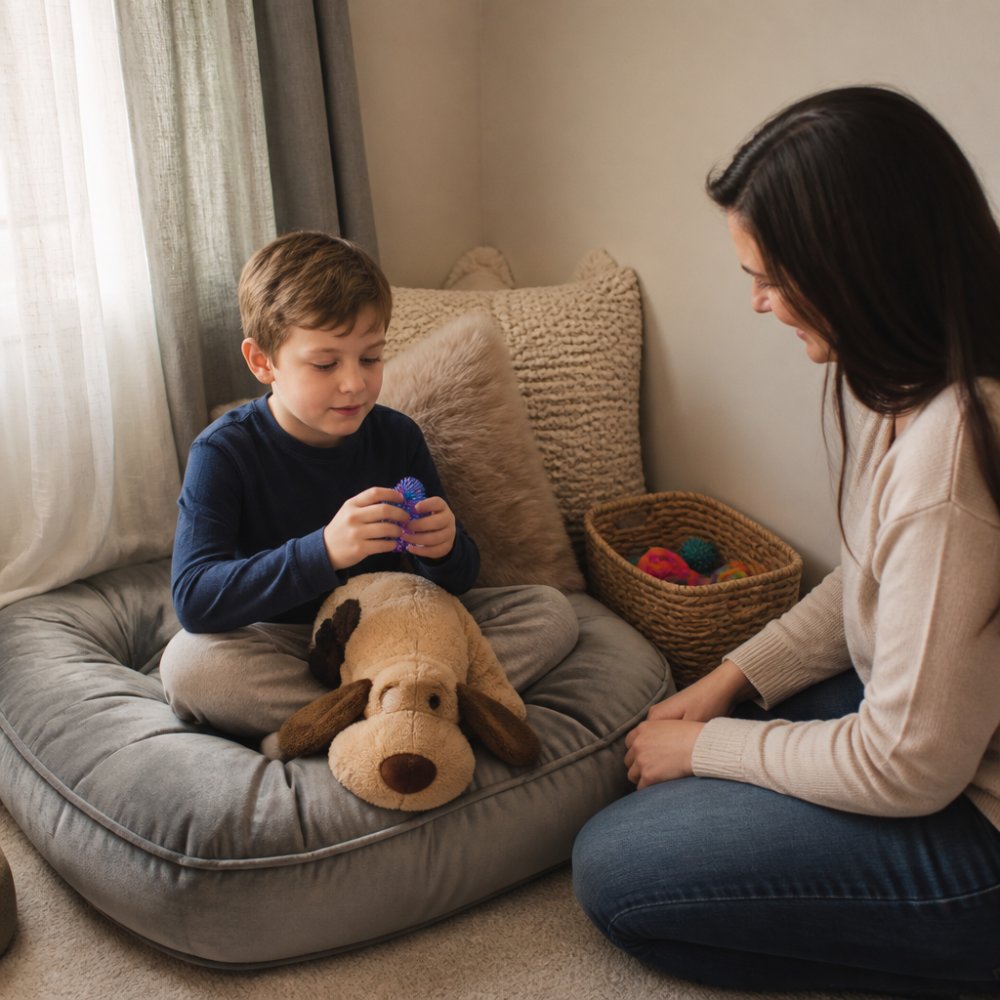
A calm-down corner is a small, low-traffic spot where your child can reset without an audience. It does not need to be a whole room. A corner of a bedroom or a spot beside the couch works.
Build It From What You Already Own
Most guides send you shopping. You do not need to. A calm-down corner works on four sensory channels, touch, sight, sound, and pressure, and every one of them can be filled from a typical kitchen or linen closet:
- Touch: a folded fleece throw, a corduroy pillow, a clean microfiber dish towel, or a bag of dry rice sealed in a zip-top bag and slipped inside a sock
- Pressure: a rolled bath towel laid across the lap, a heavy folded quilt, or a backpack filled with two or three books and rested on the thighs
- Sight: a clear plastic bottle filled with water, a few drops of food coloring, and a spoon of glitter, with the lid hot-glued shut
- Sound: a pair of foam earplugs, a folded knit hat pulled over the ears, or a white-noise app on a phone placed face-down
- Smell: a cotton ball with one drop of vanilla or lavender in an open jar, one drop only, since strong scents can tip a stressed child the other way
Set It Up So It Actually Gets Used
Keep it simple:
- One soft seat or cushion
- A basket with two or three tools, not ten
- Soft lighting or a small lamp
- A calm-down bottle or breathing tool within reach
- Nothing with a screen, and nothing that requires a parent to operate
Place the corner where you can see it but not hover over it. A corner that faces a wall or a bookshelf feels safer than one in the middle of a room. If your child shares a bedroom, a pop-up play tent or a draped blanket over two chairs gives the same enclosure for a fraction of the cost of a dedicated chair.
Step 5: Learn How to Create a Sensory-Friendly Bedroom
Learning how to create a sensory-friendly bedroom comes down to lowering input, not adding more. Bedrooms should signal rest, so every extra texture, light, and sound competes with sleep.
Why Each Change Works
The goal is to reduce the number of things the brain has to filter. A child who is already stressed spends energy tuning out the room; a calm room spends none of it.
- Light: swap bright overhead lights for a warm, dim lamp. Overhead light suppresses melatonin, the hormone that starts sleep, so dimming the room an hour before bed does more than any single product.
- Fabric: choose tag-less pajamas in soft, breathable fabrics. Tags, seams, and scratchy weaves create a low-grade touch signal all night that keeps the nervous system half-alert.
- Pressure: add a weighted plush or deep-pressure item to the bed. Deep pressure is the same input a firm hug provides, and it tends to slow heart rate and breathing. Keep the weight to roughly 10 percent of body weight or less, and never cover the face or chest of a young child.
- Temperature and sound: keep the room cool, quiet, and free of clutter. A cluttered room is a visual to-do list, and a warm room makes it harder to fall asleep.
- Scent: use a consistent scent cue at the same time each night. After two or three weeks, the smell alone starts to trigger drowsiness, the same way a specific song can bring back a memory.
Fading the Tools Out Over Time
Most guides stop at the setup. The real goal is a child who can settle without reaching for an object. Here is how to fade a tool without taking it away:
- Pair it with a body skill. Use the weighted plush while practicing slow breathing, in through the nose for four counts, out through the mouth for six. The tool becomes a reminder of the skill, not the skill itself.
- Shrink the tool. Move from the full-size plush to a small worry stone, then to pressing a thumb into the palm.
- Delay the tool. When your child reaches for it, wait 30 seconds and see if the body settles on its own. If it does not, hand it over without comment.
- Move the cue inward. Replace the object with a phrase your child says to themselves, like "slow hands, slow breath."
Common Mistakes to Avoid
The biggest mistake is treating sensory tools as a cure instead of a support. They lower stress in the moment. They do not replace sleep, routine, or professional guidance.
Other pitfalls to watch:
- Buying too many tools at once
- Using a tool only during crises, never during calm
- Ignoring texture or noise sensitivities
- Skipping cleaning and safety checks
- Expecting instant results on day one
Conclusion
Building a sensory routine takes patience, and some days it will not go the way you planned. That is normal. The families who see the biggest change are the ones who keep the tools consistent and the routine predictable.
Frequently Asked Questions
How can sensory tools help reduce anxiety at home?
Sensory tools give the nervous system a concrete input to focus on, which can interrupt a stress spiral. A stretchy band offers proprioceptive feedback through pulling and resistance, while a weighted plush provides deep pressure that helps children feel grounded. The key is matching the tool to the child's current state: high energy calls for rhythmic movement, while a shutdown state responds better to slow, tactile input like textured worry stones.
What are the best sensory toys for stress relief for kids with ADHD?
For children with ADHD, tools that allow quiet movement while keeping hands or feet busy tend to work well. A Bouncyband for School Desks lets kids bounce their feet without distracting classmates, and an independent Clemson University study found students using them stayed focused 10% longer, about 35 extra minutes per day. Portable options like silicone worry stones or stretchy bands also give restless fingers a productive outlet during homework or transitions.
How do you create a sensory-friendly space for stress relief at home?
Start with one low-traffic corner and keep it simple: a soft seat, dim lighting, and two or three tools within arm's reach. A peapod chair offers deep pressure for kids who need a calming hug, while sensory mats add textured input for hands and feet. Avoid clutter and loud colors, since visual stimulation can work against the calming effect. Let your child help choose what goes in the space so they feel ownership over it.
Are sensory tools effective for adult stress management too?
Yes. The same principles of sensory regulation, such as tactile stimulation, rhythmic movement, and deep pressure, apply to adults. Stretching a resistance band, rolling a textured stone in your palm, or sitting under a weighted blanket can all help lower arousal after a demanding day. The main difference is scale and preference: adults often prefer discreet tools they can use at a desk or keep in a pocket without drawing attention.