
Table of Contents
- Sensory Friendly Character Outfits vs Standard Costumes: A Quick Comparison
- What Makes Clothing Sensory Friendly?
- Tagless Pajamas for Sensitive Skin and Other Comfort-First Basics
- How to Modify Costumes for Sensory Needs
- Sensory-Friendly Halloween Costumes: Retail vs DIY Trade-Offs
- Age-by-Age Sensory Challenges and Social Pressures
- Conclusion
- Frequently Asked Questions
Last Updated: September 27, 2026
Sensory Friendly Character Outfits vs Standard Costumes: A Quick Comparison
Below, we break down the deciding factors, show you how to modify what you own, and compare retail against DIY.
What Makes Clothing Sensory Friendly?
Sensory friendly clothing is designed to reduce tactile, auditory, and visual triggers so a child can wear it without distress: soft materials, no scratchy tags, smooth seams, and fasteners a child can manage alone.
Fabric, Tags, and Fasteners: The Three Deciding Factors
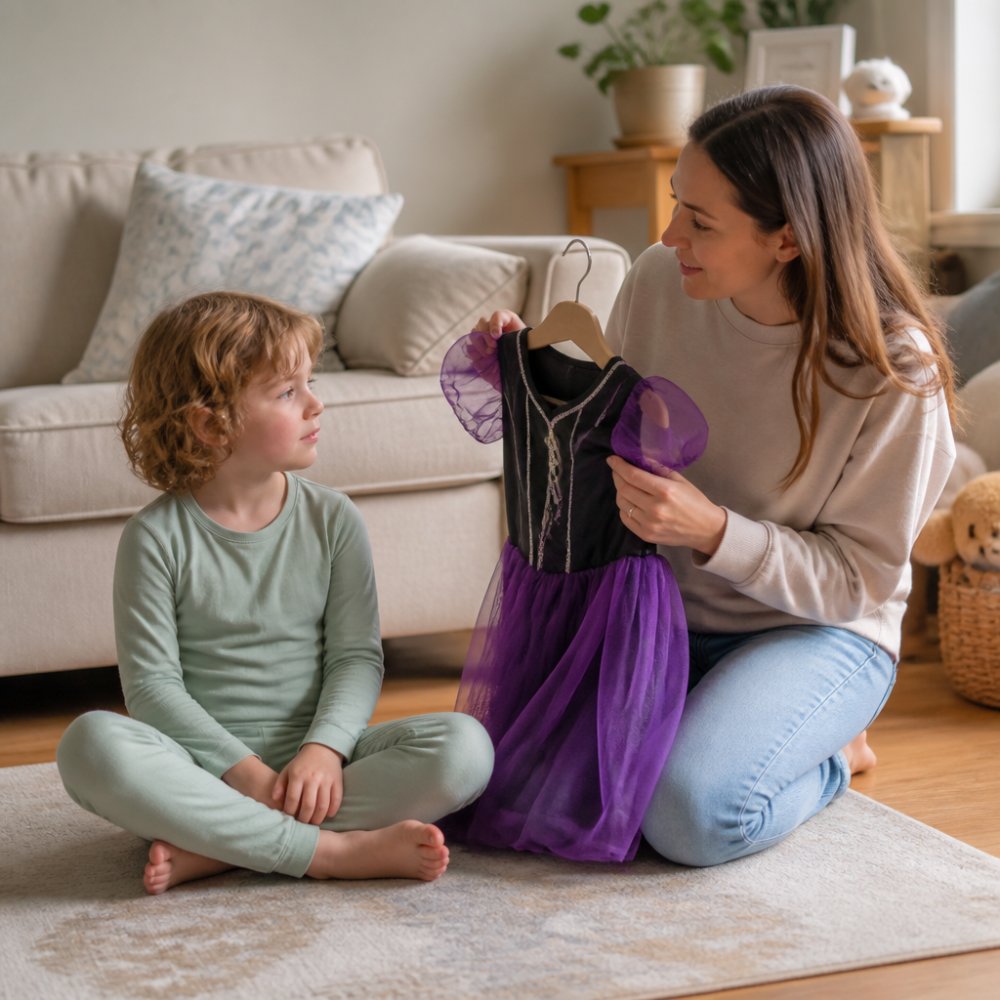
Three things decide whether a costume gets worn or ripped off. Fabric comes first: cotton, bamboo viscose, and fleece sit smoothly against skin, while polyester tulle and metallic lamé scratch and trap heat. Tags rank second, a neck tag rubbing the spine triggers constant scratching, and tagless construction removes the problem at the source. Fasteners finish the job: zippers, buttons, and snaps create pressure points, while elastic waistbands and velcro let a child dress independently.
| Factor | Standard Costume | Sensory Friendly Alternative |
|---|---|---|
| Fabric | Polyester, tulle, lamé | Cotton, bamboo viscose, fleece |
| Tags | Printed or sewn-in neck tags | Tagless construction |
| Fasteners | Zippers, buttons, snaps | Elastic, velcro, magnetic closures |
| Breathability | Limited, traps heat | Moisture-wicking, temperature regulating |
| Range of motion | Restrictive, stiff | Stretch fit, full movement |
| Typical wear time | Under 30 minutes | Several hours |
Tagless Pajamas for Sensitive Skin and Other Comfort-First Basics
Tagless pajamas for sensitive skin solve the most common sensory complaint: the neck tag. Removing that one irritant often turns bedtime from a battle into a routine.
- Girls Bamboo Ruffle Pants in Berry ($12.99): made from 95% viscose from bamboo and 5% spandex, with a tagless design and a relaxed, stretchy fit. The ruffle detail means they work as a costume base or everyday wear.
- Kickee Pants Falcon Snow Bamboo Pajama Set ($19.99): the same bamboo blend in a snug, flame-retardant-free fit with no tags. Parents use these as a costume underlayer for cold trick-or-treat nights.
How to Modify Costumes for Sensory Needs
- Cut out the neck tag. Use small scissors and trim flush to the seam. This single step resolves most complaints.
- Add a soft underlayer. A tagless cotton tee or bamboo pajama top creates a barrier between skin and costume fabric.
- Replace fasteners. Swap buttons and snaps for velcro strips, or add an elastic waistband over an existing closure.
- Cover scratchy seams. Iron-on soft interfacing or a strip of fleece along the inside seam removes the rub.
- Size up for airflow. A slightly loose costume traps less heat and restricts movement less than a snug one.
- Test in short bursts. Ten minutes on, ten minutes off, building up over several days before the event.
A common mistake is waiting until Halloween morning to try the costume on. Give yourself at least a week of short wear tests so you can fix problems in time.


Sensory-Friendly Halloween Costumes: Retail vs DIY Trade-Offs
Sensory-friendly Halloween costumes come from two paths: buying a costume designed for comfort, or building one from pieces your child already wears. Four variables decide the right path: how specific the character request is, how much time you have, how your child reacts to homemade versions, and whether the pieces survive past October 31.
The Four Variables That Decide It
Character specificity. A generic request like "a cat" or "a pirate" is easy to build from comfort basics. A named character with a specific silhouette, logo, or color scheme is much harder to DIY without reading as "off-brand." The more specific the request, the more retail pulls ahead.
What Each Path Actually Costs You
Retail sensory-friendly costumes carry a higher sticker price but arrive ready to wear, with tagless construction and soft materials already in place. You are paying for the design work and the guarantee that it will not need fixing.
| Approach | Upfront Cost | Time Investment | Best For |
|---|---|---|---|
| Retail sensory-friendly | Higher, one purchase | None | Parents short on time, specific characters, kids who reject approximations |
| DIY from comfort basics | Lower, uses existing pieces | One to two hours | Budget-conscious families, flexible kids, generic character requests |
| Hybrid: base layer plus costume | Moderate | Under 30 minutes | Most families, best overall balance |
A Budget-Friendly Modification Path
If retail is out of reach and DIY feels intimidating, start with what you already own. A tagless cotton tee, soft joggers, and one character accessory (a hat, a cape, a set of ears) reads as a costume to a child and their peers, and costs nothing new. Add one purchased element only if the child asks.
Age-by-Age Sensory Challenges and Social Pressures
Sensory challenges change as children grow, and so does the social pressure around costumes. A solution that works at four often fails at ten. Here is what shifts at each stage.
Girls Bamboo Ruffle Pants in Berry →
Toddlers and Preschoolers (Ages 2 to 5)
At this stage, rejection is almost purely physical. A scratchy mask, tight waistband, or stiff collar produces an immediate, non-negotiable no, and there is no social cost to skipping the costume. Young children cannot yet tolerate a distressing sensation in exchange for a future reward, the discomfort is the whole experience.
Early Elementary (Ages 6 to 9)
This is when peer awareness kicks in. A child may insist on a specific character costume even if the fabric bothers them, because matching friends suddenly matters more than comfort. A costume that reads as "different" can produce more distress than a scratchy seam.
Tweens and Teens (Ages 10 and Up)
This is the hardest stage, and the one most guides skip. Tweens want to look older, fit in, and avoid anything babyish, yet tactile sensitivity has not gone away. Clothing is a primary signal of identity at this age, and a costume that signals "little kid" conflicts with the need to signal maturity.
Social Integration: The Part Most Guides Ignore
- Give the child real choice. Not "do you want to wear the costume" but "which of these two versions do you want." Control reduces resistance.
- Build in an exit. Agree in advance on a signal or phrase the child can use to leave the event or remove a piece without negotiation. Knowing an exit exists often makes the child willing to try longer.
- Normalize the modification. If the child is self-conscious about a comfort adjustment, frame it as a practical choice, not a special need. "That fabric itches" is a universal complaint, not a diagnosis.
- Coordinate with the host or teacher in advance. A quiet room, a break space, or permission to step out removes the pressure of managing distress in public.
The through-line across every age is the same: the costume serves the child, not the other way around. When comfort and social fit conflict, find the version that satisfies both, even if it looks nothing like the costume on the package.
Conclusion
The hardest part of costume season is not finding a character your child loves. It is finding a version their nervous system will accept for more than ten minutes. Plan the base layer first, test it early, and treat the costume as an accessory rather than the whole outfit.
Get started with Doodlebug's Children's Boutique.
Frequently Asked Questions
What does it mean for clothing to be sensory friendly?
Sensory friendly clothing is designed to reduce tactile triggers that can cause discomfort or meltdowns in neurodivergent children. Key features include tagless necklines, flat seams, soft materials like cotton or bamboo, and fasteners such as velcro or elastic waistbands instead of buttons and zippers. The goal is comfort-first construction that supports self-regulation. Parents of kids with tactile sensitivity or sensory processing disorder often find that these small design choices make the difference between a child who tolerates getting dressed and one who refuses entirely.
How do sensory-friendly character outfits differ from standard costumes?
Standard costumes often use stiff polyester, scratchy tulle, tight elastic bands, and rough seams that trigger tactile sensitivity. Sensory friendly character outfits prioritize soft materials, tagless designs, and flexible fasteners while still delivering the character look kids want. The difference is not just comfort; it is whether a child can wear the outfit long enough to enjoy the event. Many parents find that layering soft basics underneath a modified costume works better than forcing a standard costume to fit sensory needs.
What are the common sensory triggers in traditional Halloween costumes?
The most common triggers include itchy fabrics like polyester and tulle, interior seams that rub against skin, tags at the neckline, tight elastic bands around wrists and waists, and restrictive masks that cause visual overstimulation or claustrophobia. Face paint can also trigger hypersensitivity in children with tactile defensiveness. Auditory triggers from costume accessories that rattle or squeak add another layer. Identifying which specific trigger affects your child helps you decide whether to modify a costume or choose a sensory-friendly alternative from the start.
Are there sensory-friendly alternatives to itchy character masks?
Yes. Many families swap masks for mask-free options such as face paint alternatives, headbands with character ears, or hooded costumes that leave the face open. For children who tolerate headgear, soft fabric hats without elastic chin straps work well. The key is preserving range of motion and avoiding anything that blocks peripheral vision or presses on the face. A character outfit that skips the mask entirely often lets a child stay in costume longer without meltdown.
How can I modify a store-bought costume for sensory needs?
Start by cutting out the tag and any interior labels. Turn the costume inside out and trim or cover rough seams with soft fabric tape. Replace buttons or zippers with velcro strips or magnetic closures. If the fabric is itchy, layer a tagless cotton or bamboo base layer underneath so the costume never touches skin directly. Elastic bands that dig in can be loosened or replaced. These modifications take 15 to 30 minutes and cost very little, making DIY adjustments a budget-friendly path to a wearable costume.