
Table of Contents
- Start With Your Child's Sensory Profile
- The Benefits of Fidget Toys for ADHD Focus and Self-Regulation
- Silent Fidget Toys for Classroom Use
- How to Introduce Fidget Toys to Children
- What to Avoid When Buying Fidget Toys for ADHD Kids
- Hygiene, Durability, and Age-Appropriate Progression
- Conclusion
- Frequently Asked Questions
Last Updated: September 26, 2026
Start With Your Child's Sensory Profile
The best way to choose fidget toys for ADHD kids is to match the toy to how your child's brain seeks input. Every child fidgets for a different reason, so the right pick starts with watching, not shopping.
Occupational therapists often describe this as a sensory diet: a planned mix of movement and touch that helps a child stay regulated. Some kids crave touch. Others need motion. A few need something to look at or listen to.
At Doodlebug's Children's Boutique, we hear from parents every week who bought a popular fidget that flopped. The toy wasn't bad. It just didn't match the child.
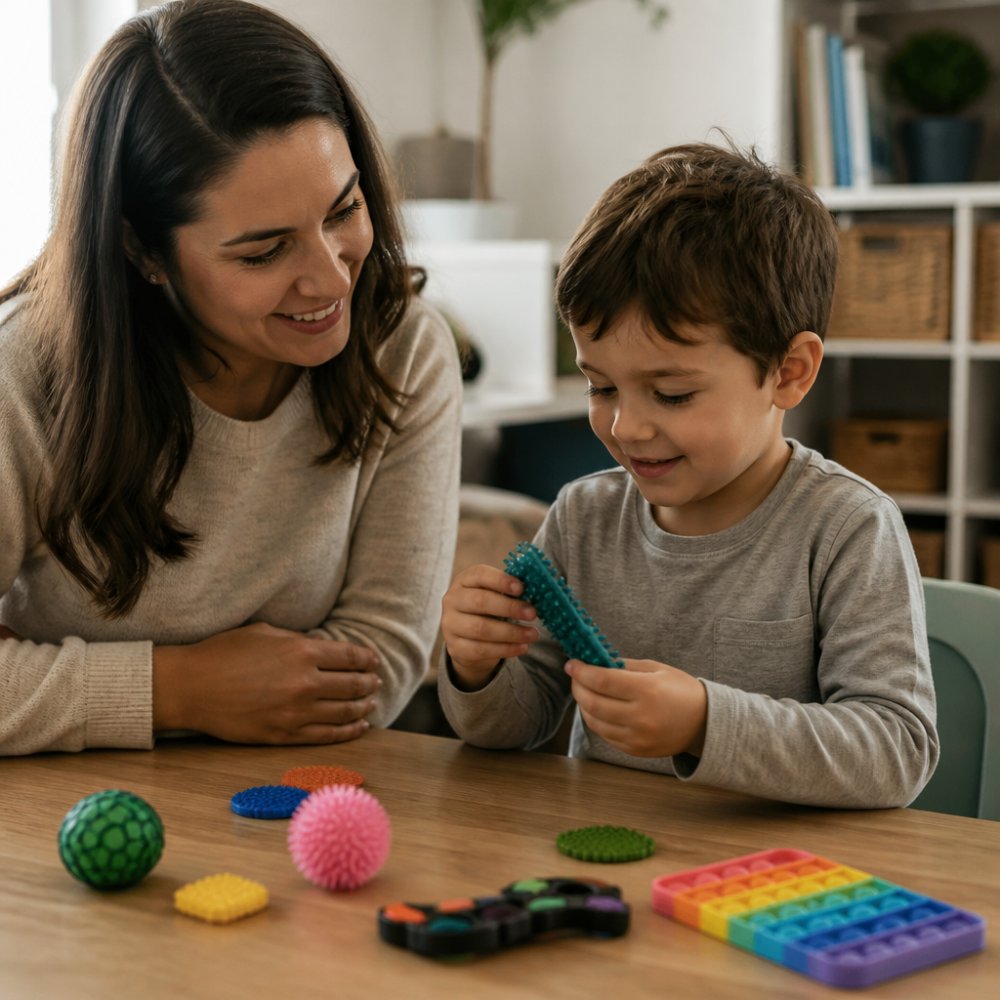
Tactile, Visual, and Auditory Stimulation
Tactile stimulation is input through the skin. Think squishy balls, textured bands, or smooth stones your child rubs with a thumb.
Visual stimulation comes through the eyes. Spinning tops, liquid timers, and expandable spheres fall here.
Auditory stimulation is sound-based. Clickers and poppers appeal to kids who need a little noise, though these rarely belong in a quiet classroom.
Watch your child for a day before you buy anything. Note what their hands reach for when they're restless. That tells you which category to start with.
The Benefits of Fidget Toys for ADHD Focus and Self-Regulation
Fidget toys help children with ADHD by giving restless hands a quiet job, which frees up attention for learning. The movement is repetitive and low-effort, so the brain stops hunting for stimulation elsewhere.
The benefits of fidget toys for ADHD go beyond focus:
- Self-regulation: A calm body helps a child manage big feelings
- Stress relief: Repetitive motion soothes the nervous system
- Fine motor skills: Squeezing, stretching, and twisting build hand strength
- Executive function: A settled body makes it easier to plan and follow through
Many parents notice a difference within a week. The key is consistency. A fidget that lives in a backpack and only appears during meltdowns won't do much.
Silent Fidget Toys for Classroom Use
Silent fidget toys for the classroom are tools that move without sound, so your child can self-regulate without distracting anyone nearby. Teachers usually welcome them when they meet two rules: no noise and no flying parts.
The U.S. Department of Education's guidance on supporting students with disabilities notes that behavioral supports should be built into a child's learning plan, not added as an afterthought. A quiet fidget fits that idea well.
Good classroom picks include:
- Stretchy bands kids pull under the desk
- Smooth stones or worry beads
- Seat cushions that allow silent movement
- Bendable, twistable tools with no loose pieces
The Calming Stretchy Band Fidget Toy by Bouncyband® is a strong example. It's silent, machine washable on a gentle cycle, and stretches from 30 inches to over 46 inches before snapping back. Kids pull and twist it while their eyes stay on the board.
Sit & Twist Active Seat Cushion by →

Discreet Options for Older Students
Tweens and teens often refuse anything that looks babyish. That's a real barrier, and it's worth respecting.
Discreet fidgets for older students look like everyday objects.
How to Introduce Fidget Toys to Children
Introduce a fidget toy as a tool, not a reward, and teach it during a calm moment. If you hand a child a new toy mid-meltdown, they'll learn it's a rescue device. That's a harder habit to undo.
Follow these steps:
- Pick a quiet time to show the toy, like a weekend morning
- Explain its job: "This helps your hands stay busy so your brain can listen"
- Model it yourself for a minute or two
- Let your child explore without rules at first
- Practice in a low-stakes setting before school
- Check in after a week and adjust
Setting Ground Rules for School and Home
Ground rules keep a fidget from becoming a distraction. Write them with your child, not for them.
- The fidget stays in the hand or on the chair
- It makes no sound
- It never leaves the desk area
- If it becomes a toy, it takes a break
- Teachers get a heads-up before it arrives
What to Avoid When Buying Fidget Toys for ADHD Kids
Most guides tell you to skip sharp edges and small parts. That's table stakes. The bigger mistakes are subtler, and they're the ones that get fidgets banned, broken, or abandoned within a month.
- Loose or detachable parts: Anything a child can unscrew, unclip, or pop off becomes a projectile, a choking risk for younger siblings, and a distraction. Check that every component is sealed or permanently attached before you buy.
- Loud mechanisms: Clickers, ratchets, and poppers are fine at home. In a quiet classroom, a single click carries. If the fidget makes noise the child can't silence, it will not survive a school day.
- Cheap plastic that cracks at stress points: Look at where the toy flexes. Thin hinges and hollow joints fail first, and a cracked edge cuts hands. A fidget that breaks in a week costs more than one that lasts a year.
- Too many options in one tool: A fidget with six switches, three textures, and a spinner asks the brain to make decisions. For a child who is already dysregulated, choice overload adds load instead of removing it. Simple, single-purpose tools regulate better.
- Screen-based fidgets: Apps and digital spinners don't build the same self-regulation skills because they supply the stimulation for the child rather than letting the child generate it through movement.
- Novelty shapes that read as toys: A fidget that looks like a cartoon character invites play, not regulation. The more it resembles a toy, the harder it is to keep it in the 'tool' category at school.
- Fabric that can't be cleaned: Plush or fabric fidgets that can't be machine washed become germ carriers within weeks. If it can't be laundered or wiped, treat it as disposable.
Hygiene, Durability, and Age-Appropriate Progression
Most guides stop at 'clean it regularly.' That's not a protocol. Fidgets go into mouths, pockets, backpacks, and shared desks, so a real routine matters, and so does knowing when a tool has outgrown your child.
A Weekly Hygiene Routine That Actually Works
Match the cleaning method to the material, because the wrong method destroys the tool:
- Hard plastic and metal: Wipe with a damp cloth and mild soap, then air dry. Avoid soaking anything with internal springs or bearings, since trapped water rusts or molds.
- Silicone and rubber: Wash with warm water and dish soap, rinse, and air dry. Silicone tolerates heat better than most plastics, but check the manufacturer's guidance before boiling or dishwashing.
- Fabric and plush: Machine wash on a gentle cycle in a mesh laundry bag, then air dry. Heat can shrink elastic bands and warp weighted inserts.
- Beaded or strung fidgets: Wipe the beads individually and check the cord for fraying at the same time. A frayed cord is a choking hazard waiting to happen.
How Fidget Needs Change With Age
Fidget needs aren't static. What regulates a five-year-old often embarrasses a twelve-year-old, and the mismatch is a common reason fidgets get abandoned.
- Early childhood (roughly ages 3-6): Bigger, simpler tools with no small parts. Squeeze balls, textured rings, and chunky stretchy bands work well. Supervision matters because mouthing is still common.
- Elementary (roughly ages 7-10): Kids can manage more complexity and start to use fidgets independently. Stretchy bands, smooth stones, and bendable tools fit here, and they're old enough to learn ground rules.
- Middle school (roughly ages 11-13): Peer perception becomes a real barrier. Discreet, wearable, or desk-mounted options win. Anything that looks babyish gets left in the backpack.
- High school (roughly ages 14-18): Teens often prefer tools that double as accessories, like smooth rings, subtle bracelets, or seat cushions that live on the chair. They also benefit from being involved in the choice, since autonomy matters at this stage.
Conclusion
Finding the right fidget takes some trial and error, and that's normal. Start with your child's sensory profile, test one tool at a time, and adjust as they grow.
Frequently Asked Questions
Do fidget toys actually help kids with ADHD?
Yes, for many children. Fidget toys give kids an outlet for restless energy, which can improve focus and concentration during class or homework. The repetitive motion provides calming sensory input that supports self-regulation. They work best when matched to a child's specific sensory needs, so a tactile toy may help one child while a visual or auditory option works better for another.
What is the best fidget toy for kids with ADHD?
There is no single best option because it depends on your child's sensory profile. A stretchy band works well for kids who need tactile stimulation and stress relief. A balance cushion or active seat helps children who need to move while sitting. For classroom use, look for silent fidget toys that will not distract classmates or draw unwanted attention.
What should I avoid when buying fidget toys for ADHD kids?
Skip toys with loud clicks, flashing lights, or strong smells that could trigger sensory overload or disrupt a classroom. Avoid small parts that pose choking risks for younger children. Also steer clear of toys that become a distraction rather than a focusing tool. If your child plays with it instead of listening, it is not the right fit.
How do I introduce a fidget toy without it becoming a distraction?
Start by using the fidget during low-stakes times at home, like watching TV or reading. Explain that it is a tool for helping the brain focus, not a toy for play. Set clear rules: it stays in the hand, it stays silent, and it goes away if it pulls attention from the task. Once your child uses it well at home, talk to their teacher about trying it in class.