
Table of Contents
- What Makes a Fidget Toy Calendar Different From a Standard Advent Calendar
- Fidget Toys for Focus and ADHD: How Countdown Calendars Support Attention
- Benefits of Fidget Toys for Kids: What Parents Should Know
- Top Fidget Toy Calendar Picks for 2026
- How to Choose the Right Fidget Toy Calendar for Your Child
- DIY Fidget Calendar: Build Your Own Countdown
- Frequently Asked Questions
Last Updated: September 29, 2026
What Makes a Fidget Toy Calendar Different From a Standard Advent Calendar
A fidget toy calendar is a countdown calendar where each day reveals a sensory fidget toy instead of candy or a small trinket. The difference sounds small. It changes everything about how the calendar gets used.
Standard advent calendars hand out chocolate. Kids open the flap, eat the treat, and the moment passes. A fidget toy calendar gives them something their hands can keep returning to: a push bubble popper, a squishy, a stretchy string, a tiny puzzle. The toy stays. The countdown becomes a daily ritual built around tactile play rather than sugar.
Here's what most guides miss. The value of a fidget toy calendar isn't the toy itself. It's the routine. Twelve or twenty-four days of "open one box, explore one texture, put it in your pocket" builds a predictable, calming habit. For kids who crave routine, that structure matters as much as the toy.
Fidget Toys for Focus and ADHD: How Countdown Calendars Support Attention
Fidget toys for focus and ADHD work by giving restless hands a low-stakes job, which frees the brain to concentrate on the actual task. A countdown calendar turns that into a daily practice instead of a one-off purchase.
The mechanism is simple. Repetitive motion, squeezing, stretching, popping, provides tactile feedback that helps regulate arousal levels. Many occupational therapists recommend fidget tools for kids who struggle to sit still during homework, car rides, or classroom instruction. The toy absorbs the extra energy so attention can land elsewhere.
A countdown calendar adds two things a single fidget can't:
- Novelty. A new texture every day keeps the interest alive.
- Anticipation. Knowing a surprise is coming builds a small, positive anchor in the day.
For kids with ADHD, that combination can turn a chaotic December into something structured and predictable. The calendar becomes a calm-down tool disguised as a gift.
Benefits of Fidget Toys for Kids: What Parents Should Know
The benefits of fidget toys for kids go beyond keeping hands busy. Used well, they support fine motor skills, self-regulation, and focus, and they give kids a safe outlet for anxious energy.
Fine motor development is the most overlooked benefit. Popping a bubble, pinching a squishy, or stretching a string all work the small muscles in the hands and fingers. Those are the same muscles kids need for handwriting, buttoning coats, and holding utensils.
Stress relief matters too. Many kids, especially those with sensory processing differences, find repetitive motion genuinely calming. A squishy in a pocket can be the difference between a meltdown and a managed moment during a long shopping trip or a noisy family gathering.
What parents should watch for:
- Texture preferences. Some kids love sticky and squishy. Others want smooth and firm. Match the toy to the child.
- Size. A fidget that's too small is a choking risk for younger kids. Check the age recommendation on every item.
- Overstimulation. A toy that lights up or makes noise can add stress instead of reducing it.
Top Fidget Toy Calendar Picks for 2026
The best fidget toy calendar balances variety, durability, and age-appropriate safety. These picks from Doodlebug's Children's Boutique cover a range of ages, sensory needs, and budgets.
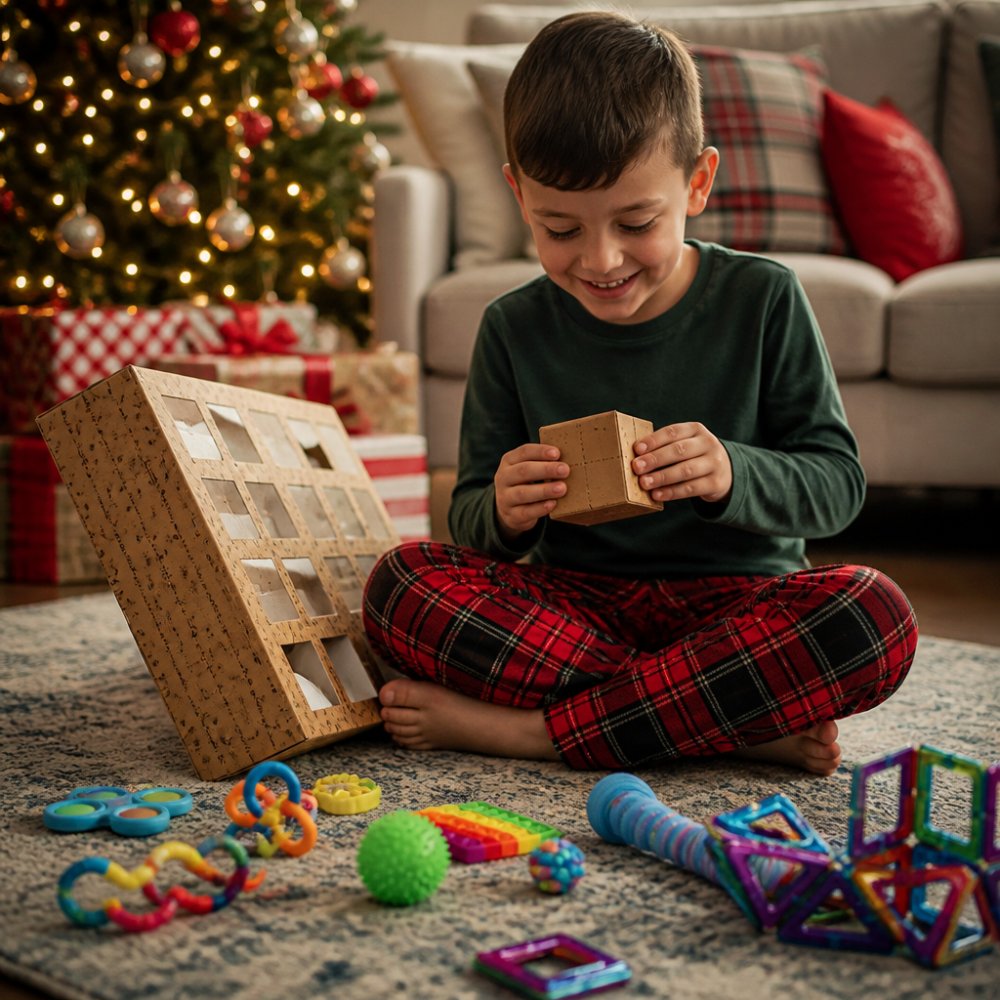
Sensory Genius 12 Days of Fun & Focus Fidget Toy Advent Calendar
The Sensory Genius 12 Days of Fun & Focus Fidget Toy Advent Calendar packs 12 individually boxed sensory surprises into one countdown, each one designed to pop, squish, stretch, or squeeze. It's built for kids, teens, adults, classrooms, and therapy settings.
The real advantage here is the variety. Instead of 12 versions of the same toy, you get a genuine mix of tactile experiences, which keeps interest high and lets kids discover what they actually like. Every toy is reusable long after the countdown ends.
Sensory Genius 12 Days of Fun & Focus →
Where it falls short: 12 days is shorter than a full December countdown. If you want something that runs the whole month, plan to pair it with stocking stuffers.
MAGNA-TILES microMAGS Advent Calendar
For the builder in the family, the MAGNA-TILES microMAGS Advent Calendar swaps squishy textures for magnetic construction. Each day reveals microMAGS tiles, exclusive mix-and-match figures, and the new microChassis for building a custom locomotive. Everything is compatible with the MAGNA-TILES world your child already owns.

This is the pick for kids who fidget by building rather than squeezing.
Stocking Stuffer Fidgets That Pair With Any Calendar
If you already have a calendar, or you want to stretch the countdown further, small fidgets fill the gaps. These are the ones we reach for most:
- Squish Sticky Gingerbread Man ($8.99): a 2.25-inch sticky squishy with a texture kids keep coming back to. Ages 3+.
- Christmas Squish Stretch Fidget Toy ($8.99): smooth silicone outside, shaving-cream-like filling inside. Great for holiday travel.
- 7" Christmas Squish Pen ($7.99): a working pen with a slow-rising foam squishy on top. Useful for homework fidgeting.
- Mystery Christmas Fun Treats Micro Squish ($4.99): a 2-inch mystery squishy. The surprise is half the fun.
| Pick | Price | Best For | Age |
|---|---|---|---|
| Sensory Genius 12 Days Calendar | $36.99 | Variety and daily routine | 5+ |
| MAGNA-TILES microMAGS Calendar | $49.99 | Builders and STEM play | 3+ |
| Squish Sticky Gingerbread Man | $8.99 | Stocking stuffers | 3+ |
| Christmas Squish Stretch Fidget | $8.99 | Travel and quiet time | 3+ |
| Christmas Squish Pen | $7.99 | Homework fidgeting | 3+ |
| Mystery Micro Squish | $4.99 | Collecting and trading | 3+ |
How to Choose the Right Fidget Toy Calendar for Your Child
Choosing the right fidget toy calendar comes down to three things: your child's sensory preferences, their age, and how long you want the countdown to run. Get those right and the rest is easy.


Safety and Material Testing
Safety should be the first filter, not an afterthought. Look for toys labeled non-toxic and free of small parts for younger kids, and check that materials are listed clearly.
A few practical checks:
- Confirm the recommended age on every item.
- Look for non-toxic, durable materials rather than vague descriptions.
- Avoid toys with loose small pieces for kids under 3.
- Check for recalls before you buy.
Matching Fidgets to Sensory Needs
Different kids need different fidgets. Matching the toy to the sensory need is what turns a fun gift into a genuinely useful tool.
- Sensory seekers want strong input: sticky squishies, stretchy strings, pop-it bubbles.
- Sensory avoiders prefer gentle, predictable input: smooth textures, firm squeezes, no surprises.
- Kids who need to move do well with bendy, wiggly, high-elasticity toys they can stretch.
- Kids who need to calm often prefer slow-rising foam and soft squishies.
DIY Fidget Calendar: Build Your Own Countdown
A DIY fidget calendar is a practical option when you want full control over textures, budget, and timing. You buy the fidgets separately, then package them yourself.
Here's how to build one:
- Pick your container. A set of small gift boxes, paper bags, or a hanging shoe organizer works well.
- Choose 12 to 24 fidgets. Mix textures: one squishy, one stretchy, one popper, one slow-rising foam, and so on.
- Number each package. Write the day on each one so the countdown stays clear.
- Match toys to days. Put calmer fidgets on school nights and more exciting ones on weekends.
- Add a small note to each. A one-line prompt like "Squeeze this five times before homework" turns the toy into a routine.
Frequently Asked Questions
Are fidget toy calendars good for kids with ADHD or autism?
Yes. Fidget toy calendars give kids a daily dose of tactile stimulation and repetitive motion, which supports focus and anxiety reduction. The countdown structure adds predictability, which many neurodivergent kids find calming. The Sensory Genius 12 Days of Fun & Focus calendar is designed for ages 5 and up and includes toys that pop, squish, stretch, and squeeze, covering a range of sensory preferences. Parents of kids with ADHD often find that a small daily fidget helps bridge transitions between activities.
What age is a fidget toy calendar appropriate for?
Most fidget toy calendars are recommended for ages 3 and up, though individual toys vary. The Sensory Genius calendar lists a recommended age of 5 years and up. For younger children, check each toy's size and material to rule out choking hazards. The Squish Sticky Gingerbread Man and Christmas Squish Stretch Fidget Toy are both recommended for ages 3 and up and measure 2.25 inches and 3.5 inches respectively, making them easy for small hands to grip.
Can a fidget toy calendar be used year-round, not just at Christmas?
Yes. Many fidget toy calendars are built around a countdown concept rather than a specific holiday. The Sensory Genius 12 Days of Fun & Focus calendar is designed for birthdays, vacations, the first day of school, or any milestone. The reusable toys inside stay useful long after the countdown ends, so kids keep the sensory tools they discovered. This makes a fidget toy calendar a practical option for families who want ongoing sensory play rather than a one-season purchase.
How do I pick the right fidget toy calendar for my child's sensory needs?
Start by identifying what kind of tactile input your child seeks. Kids who crave deep pressure tend to prefer squishy, slow-rising foam toys. Kids who need to keep hands moving often do better with stretchy strings, pop tubes, or magnetic building pieces. The MAGNA-TILES microMAGS Advent Calendar suits builders who want open-ended play, while the Sensory Genius calendar offers variety across 12 days. Matching the fidget type to your child's sensory profile matters more than the calendar's theme.