
Last Updated: November 5, 2026
Quick Summary
Fast fashion pushes cost and deadline pressure down the supply chain, and garment workers absorb it through low wages, unpaid overtime, excessive hours and unsafe conditions. Subcontracted workshops hide the real cost, since the second production tier rarely sees an inspector. Closing the wage gap costs little relative to a garment's retail price but is large against a factory's thin margin.
- Trend cycles that once ran by season now turn over in weeks, pushing quotas higher as deadlines shrink.
- Many garment workers are paid by the piece, so a faster pace is the only way to protect take-home pay.
- The Rana Plaza factory collapse in Bangladesh killed more than 1,100 garment workers.
- Women make up the large majority of garment workers worldwide, facing pay gaps and harassment.
- Buy fewer, more durable pieces and check for third-party audits rather than a sustainability page alone.
Table of Contents
- How Fast Fashion's Business Model Puts Pressure on Garment Workers
- Low Wages and Unpaid Overtime: What Garment Workers Actually Take Home
- Garment Worker Living Wage Statistics and the Gap With Minimum Wage
- Excessive Working Hours and Production Quotas on the Factory Floor
- Unsafe Factories, Chemical Exposure, and Workplace Injuries
- Gender Inequality, Harassment, and the Women Who Make Fast Fashion
- Ethical Fashion vs Fast Fashion: What the Difference Means for Workers
- How to Support Ethical Fashion Without Overspending
- Frequently Asked Questions
How Fast Fashion's Business Model Puts Pressure on Garment Workers
The impact of fast fashion on garment workers starts with a calendar problem. Trend cycles that once ran by season now turn over in weeks, and every new drop pushes production quotas higher while deadlines shrink. Below, we break down what those production pressures mean for the people behind the seams.
From Trend Cycle to Production Quota
When a trend lives for a few weeks, factories cannot plan steady schedules. Orders arrive in small, urgent batches, and managers respond by pushing line workers to hit hourly targets. Many garment workers are paid by the piece rather than the hour, so a faster pace is the only way to protect their take-home pay. The result is a system where speed is rewarded and safety margins quietly erode.
Why Subcontracting Hides the Real Cost
Subcontracting is the practice of passing production from a main factory to smaller, unregistered workshops when deadlines tighten. That second layer is where oversight often disappears. A brand may audit its primary supplier, but the workshop down the street that sews the overflow rarely sees an inspector. U.S. Department of Labor guidance on supply chain labor compliance notes that hidden production tiers are one of the hardest problems in enforcing wage and safety rules.
Low Wages and Unpaid Overtime: What Garment Workers Actually Take Home
Most garment workers earn far less than a living wage, and unpaid overtime is routine. Many factories set base pay near the legal minimum, then rely on mandatory extra hours to reach a take-home amount that covers rent and food.
Watch out: wage theft often hides in piece-rate systems. A worker who is told the rate per garment may never see how the total is calculated, so shortfalls are nearly impossible to challenge.
Garment Worker Living Wage Statistics and the Gap With Minimum Wage
Most coverage of garment wages stops at the phrase "below a living wage" without showing the arithmetic. The gap is easier to understand when you separate three numbers that are routinely conflated: the legal minimum wage, the actual take-home wage after deductions and overtime, and the living-wage estimate for the same region.
Three Numbers, Not One
A legal minimum wage is a floor set by statute. A living wage is an estimate of what a worker needs to cover housing, food, healthcare, education, and a small margin for unexpected costs in a specific place.
That three-layer structure is why a factory can truthfully say it "pays the minimum wage" while its workers still cannot cover rent and food without mandatory overtime.
Why the Gap Is Hard to Measure
Reliable garment worker living wage statistics are difficult to pin down for four reasons:
- Piece-rate pay obscures the hourly rate. A worker paid per garment may not know the effective hourly wage, and shortfalls are hard to challenge without production records.
- Overtime is baked into take-home pay. A wage that looks adequate on a 40-hour week may only be reached by working 60 hours, which means the base rate is lower than it appears.
- Deductions vary by factory and country. Social insurance, attendance bonuses clawed back for sick days, and charges for tools or uniforms can shrink take-home pay by a meaningful margin.
Watch out: a brand that publishes a "living wage" commitment may be benchmarking against a regional average rather than the specific cost of living where its supplier operates, which can make progress look larger than it is.
What the Pattern Looks Like Across Regions
Across garment-exporting economies in Asia, South Asia, and Central America, the same pattern recurs: minimum wages set below living-wage estimates, actual take-home pay dependent on overtime, and a gap that widens when orders slow and hours are cut.
International Labour Organization research on wages in global supply chains has documented this gap across garment-exporting economies for years, and the U.S.
Why the Gap Persists
The gap persists because the cost of closing it is small relative to the retail price of a garment but large relative to a factory's thin margin. Labor is a minority share of the price a shopper pays, yet it is the largest controllable cost for a supplier competing on price. When brands press for lower unit prices and faster turnarounds, the pressure lands on the wage line.
Excessive Working Hours and Production Quotas on the Factory Floor
Long shifts are not an accident of poor management. They are the predictable result of how orders are placed, changed, and priced upstream. Understanding the mechanism matters because it explains why factory-level fixes (more inspectors, more signage) rarely solve the problem on their own.
How Purchasing Practices Become Overtime
A brand's buying decisions reach the factory floor through four channels:
- Short lead times. When a trend is confirmed late and the delivery date is fixed, the factory compresses production into fewer weeks. The only variable it can flex quickly is hours.
- Order changes and re-cuts. Mid-production changes to styles, colors, or quantities force rework, and rework is absorbed by overtime rather than by renegotiating the delivery date.
- Last-minute cancellations and chargebacks. When a brand cancels or discounts an order after production, the factory eats the cost, and the next order is priced and scheduled defensively.
Each channel is a purchasing decision made far from the factory floor, but each one lands as a quota or a deadline on a line worker's station. That is why the most credible factory-level reforms pair inspections with changes to how brands place and price orders.
What Excessive Hours Look Like in Practice
Excessive hours show up in several forms, and not all of them are captured by a time clock:
- Mandatory overtime during peak season. Workers may be told that refusing overtime is not an option, and attendance bonuses or future shift assignments can be tied to compliance.
- Unpaid waiting time. Workers arrive, wait for fabric or instructions, and clock in only when production begins, so hours at the factory exceed paid hours.
- Forced double shifts around shipment dates. When a vessel cutoff approaches, factories run extended shifts to avoid late-delivery penalties.
Watch out: a factory that passes a social audit on hours may still be running excessive overtime in the weeks the auditor does not visit, because audit scheduling is often known in advance and production can be smoothed around it.
The Health and Safety Cost
Excessive hours compound every other risk on this list. Tired workers are more likely to be injured, more likely to make errors that lead to rework, and less able to refuse an unsafe assignment. Repetitive strain injuries accumulate faster on extended shifts, and chemical exposure is worse when ventilation is inadequate and shifts run into the night.
Why Factory-Level Fixes Fall Short
A factory can install a time-clock system, hire more supervisors, and post a working-hours policy, and still run excessive overtime if the orders it receives make the schedule impossible. That is why the most credible reforms pair factory-level monitoring with changes to brand purchasing practices: longer lead times, stable order commitments, and prices that account for the labor required.
What a Shopper Can Realistically Check
A shopper cannot audit a factory, but a shopper can look for brands that publish lead-time commitments, order-stability policies, and third-party audit results rather than a sustainability page alone. Those disclosures are imperfect, but they are the paper trail that connects a purchasing decision to a worker's hours. Buying fewer, more durable pieces and planning ahead reduces the demand signal for compressed production cycles, which is a small but real lever.
Unsafe Factories, Chemical Exposure, and Workplace Injuries
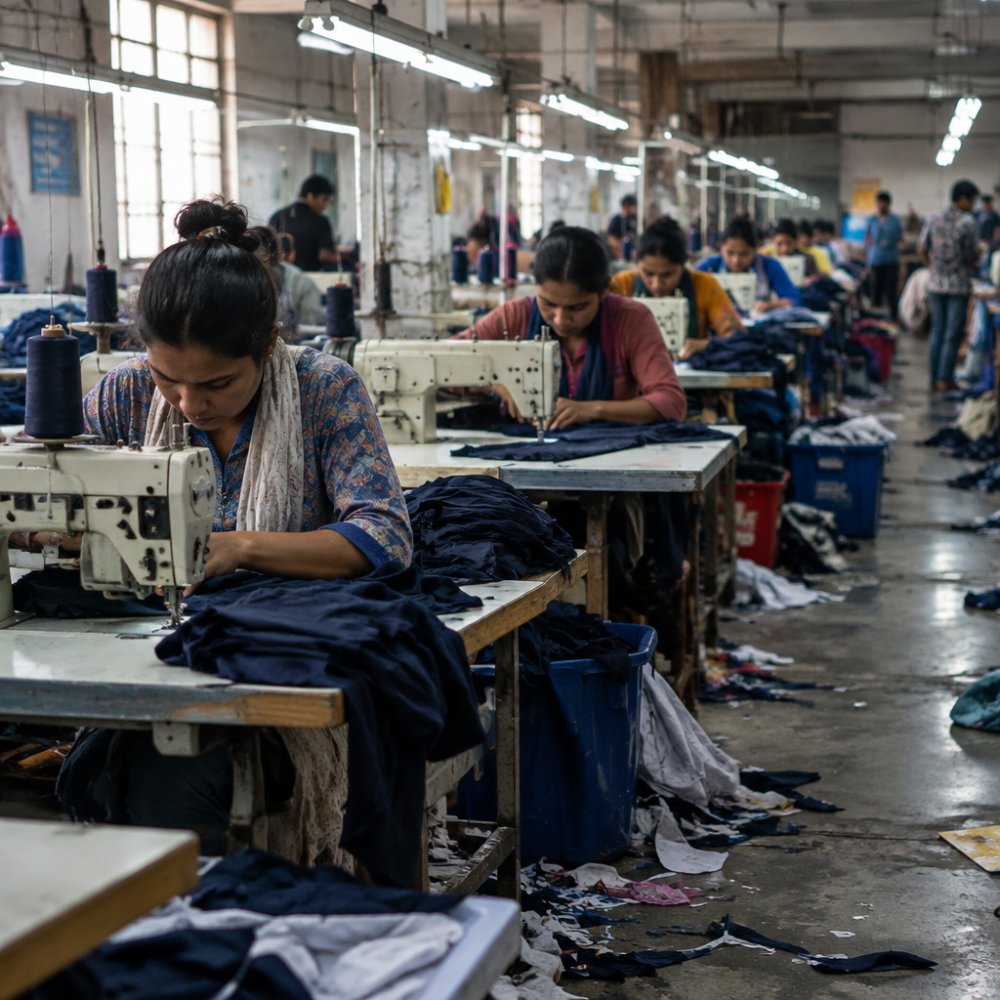
Building safety remains a live concern. The Rana Plaza factory collapse in Bangladesh killed more than 1,100 garment workers and became the reference point for everything that can go wrong when structural inspections are skipped.
Gender Inequality, Harassment, and the Women Who Make Fast Fashion
Women make up the large majority of garment workers worldwide, and that shapes everything about how they experience the job. Gender inequality shows up in pay gaps, in who gets promoted to supervisory roles, and in how complaints are handled. Workplace harassment and gender-based violence are persistent problems, and reporting them can cost a worker her job.
Ethical Fashion vs Fast Fashion: What the Difference Means for Workers
The difference between ethical fashion vs fast fashion comes down to who absorbs the pressure. Fast fashion pushes cost and deadline pressure down the supply chain, and workers absorb it. Ethical fashion approaches the same question from the other direction: pay a living wage, plan realistic production schedules, and verify conditions through independent audits rather than self-reporting.
How to Support Ethical Fashion Without Overspending
You do not need a bigger clothing budget to support better working conditions. You need to buy less, buy better, and make what you own last. Here is how we would approach it:
- Check for a published code of conduct and third-party audit, not just a sustainability page
- Look for fair-trade certification on the label
- Buy fewer, more durable pieces instead of chasing every trend
Caring for clothes is part of the same ethic. A mesh laundry garment bag is designed to protect delicate garments such as pajamas, undies, bamboo, and organic cotton from snags and stretching in the wash.

| Problem | What It Looks Like | What You Can Do |
|---|---|---|
| Hidden subcontracting | No audit trail beyond the main factory | Ask for third-party certification |
| Below-living wages | Pay set near legal minimum | Choose fair-trade certified brands |
| Excessive overtime | Deadlines absorbed by workers | Buy fewer, plan ahead |
| Unsafe conditions | Weak building and chemical oversight | Support brands with published audits |
Frequently Asked Questions
How does fast fashion negatively affect garment workers?
Fast fashion compresses design-to-shelf timelines, and that pressure flows down to the factory floor. Garment workers face production quotas that push excessive working hours, low wages that often fall below a living wage, and unpaid overtime to hit tight deadlines. Safety is often compromised in the rush, and subcontracting can hide these conditions from the brands that order the clothing. The result is a system where the people sewing the clothes absorb most of the cost of cheap, high-volume production.
Do garment workers earn a living wage in the fast fashion industry?
In most major garment-producing countries, minimum wage and living wage are not the same number, and the gap can be substantial. Garment worker living wage statistics consistently show that typical factory pay covers only a portion of what a family needs for food, housing, and healthcare. Wage theft and unpaid overtime make take-home pay even lower. A living wage is calculated against local costs, so the shortfall varies by country and job type, but the pattern of falling short is widespread.
What health risks do garment workers face in the textile industry?
Garment workers face repetitive strain from sewing and cutting, respiratory issues from fabric dust and synthetic chemicals, and injuries from unsafe machinery. Chemical exposure is a particular concern in dyeing and finishing, where workers may handle solvents and dyes without adequate protection. Factory collapses and fires remain a risk where building codes are poorly enforced. Occupational health problems often go unreported because workers fear losing their jobs if they speak up.
How can consumers identify ethical clothing brands?
Look for specific, verifiable claims rather than vague green marketing. Fair-trade certification, transparent supplier lists, and published wage policies are stronger signals than a single 'sustainable' label. Brands that name their factories and allow third-party audits give you something to check. Ask where the fabric is made and whether workers are paid a living wage. If a brand cannot answer basic supply-chain questions, that silence is informative. Supporting brands with clear fair-trade practices is one of the most direct ways to support ethical fashion.
The pressure on garment workers will not ease until shoppers and brands both change how they buy. We built Doodlebug's Children's Boutique around tag-less, sensory-friendly clothing made from organic and bamboo materials, sourced with fair-trade partners we can point to. If you want to dress your kids in pieces that feel good and were made with care, browse our collection and see the difference for yourself.
