
Table of Contents
- What Makes Sensory Clothing Different
- Quick Comparison: Affordable Sensory Clothing for Kids
- Tagless Pajamas for Sensitive Skin: What to Look For
- Sensory Friendly Clothing for Autism: Key Features
- How to Modify Clothes for Sensory Needs
- Budget-Friendly Shopping Tips for Sensory Clothing
- Frequently Asked Questions
Last Updated: September 13, 2026
What Makes Sensory Clothing Different
Sensory clothing is apparel designed to reduce tactile triggers, using soft fabrics, flat seams, and tagless construction so a child can get dressed without a fight. At Doodlebug's Children's Boutique, we hear the same story from parents every week: the shirt that fit fine in March is unbearable by June. Affordable sensory clothing for kids solves that problem at the fiber level, and it does not have to cost a fortune.
The difference shows up in three places: what touches the skin, how the garment closes, and how it moves with the body. A standard cotton tee has a printed neck tag, a bulky shoulder seam, and a slim cut. A sensory-smart version swaps in a tagless neckline, flat-felled seams, and a relaxed fit that never binds. That is the whole game.
Tags, Seams, and Fabrics That Trigger Meltdowns
A neck tag is the number one complaint we hear about. It scratches, it curls, and no amount of cutting it out fully removes the stiff remnant. Flat-felled seams lie flat against the skin instead of rubbing a raised ridge across the shoulder or ribcage. Fabric matters just as much: organic cotton and bamboo viscose feel smooth, breathe well, and wick moisture, which helps kids who run hot or sweat easily. Compression garments and weighted items serve a different purpose entirely, delivering deep pressure and proprioceptive input rather than everyday comfort.
Quick Comparison: Affordable Sensory Clothing for Kids
Here is how our most-loved sensory pieces stack up by price and purpose. Every option below is tagless or non-restrictive, so you can shop by need rather than by guesswork.
| Item | Price | Best For | Key Sensory Feature |
|---|---|---|---|
| Girls Bamboo Ruffle Pants in Berry | $12.99 | Everyday wear, play, lounging | Tagless, 95% bamboo, relaxed stretch fit |
| Sensory Friendly Pajama Subscription | $41.99 | Families wanting monthly rotation | Tagless pajamas, whole-family sizing |
| Brain Training Overnight Underwear | $44.99 | Bedwetting support | Absorbent liners, waterproof guards |
| Comfy Cozy Peapod Inflatable Chair | $89.99 | Fidgety kids who can't sit still | Deep-pressure calming hug |
| Balance Cushion Sensory Seat | $32.99 | Classroom and homework focus | Quiet movement, textured dimples |
| Worry Stones (Set of 6) | $19.99 | School-day jitters, restless hands | Pocket-sized tactile grounding |
| Ollie the Weighted Octopus Toy | $68.99 | Bedtime and transitions | Deep touch pressure |
Tagless Pajamas for Sensitive Skin: What to Look For
Tagless pajamas for sensitive skin should have three things: no printed or sewn neck label, flat interior seams, and a fabric that stays soft after repeated washing. Skip anything with a scratchy waistband elastic or a zipper that sits against bare skin.

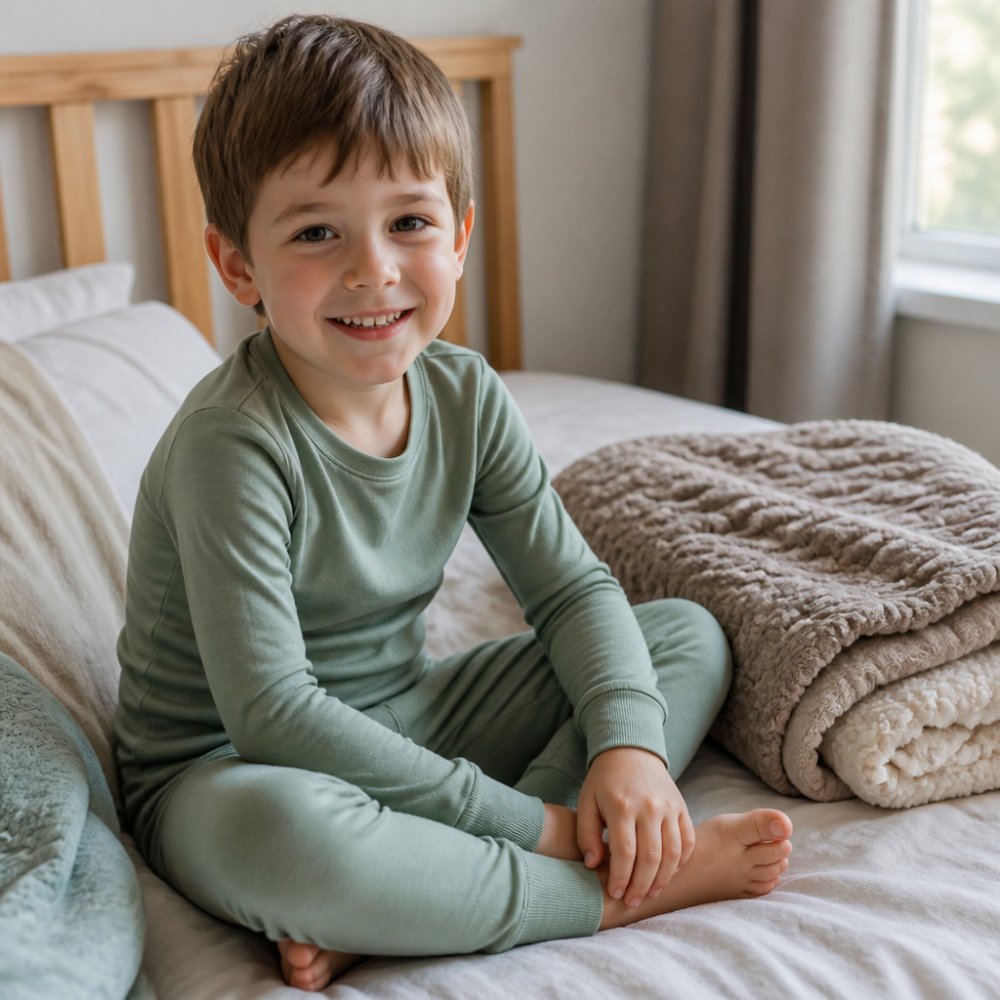
Look for bamboo viscose or organic cotton over polyester blends. Bamboo holds up well wash after wash, which matters when you cannot afford to replace pajamas every few months. A subscription model can help here: instead of buying a full set at once, you rotate in new tagless pajamas monthly and build a stash over time. Check the return policy before you commit to multiples, because what feels soft in the package is not always what your child tolerates at bedtime.
Sensory Friendly Clothing for Autism: Key Features
Sensory friendly clothing for autism prioritizes predictability and low-effort dressing. The features that matter most are easy-on easy-off closures, adjustable waistbands, and fabric that does not surprise the wearer with a sudden texture change.

Ranked by how often parents tell us they help:
- Tagless necklines and printed-on labels
- Flat-felled or seamless construction at shoulders and sides
- Elastic waistbands instead of buttons, snaps, or zippers
- Hook-and-loop closures where a fastener is unavoidable
- Relaxed, non-restrictive cuts that allow movement
- Breathable, moisture-wicking fabrics for thermoregulation
Tactile defensiveness varies from child to child, so treat this as a starting point, not a rulebook. A child with autism spectrum disorder may love a compression garment for the deep pressure it provides while rejecting a loose, flappy sleeve. ADHD often shows up as fidget-friendly needs: kids who need something in their hands or under their feet to stay regulated. A balance cushion or a set of worry stones handles that need without turning clothing into a battleground.
How to Modify Clothes for Sensory Needs
Most ranking guides tell you to buy new. The cheaper, faster move is to fix what is already in the drawer. A few dollars of supplies and twenty minutes at the kitchen table can turn a rejected shirt into a daily favorite, and it lets you test whether a fabric works before you commit to buying multiples.
The Starter Kit
Keep these on hand. Total cost is usually under $15 at a craft or big-box store, and one kit handles dozens of garments:
- Soft iron-on interfacing (the fusible kind, not the stiff sew-in type)
- 1/4-inch grosgrain or satin ribbon in neutral colors
- Hook-and-loop dots and strips (the sew-on version outlasts the adhesive kind)
- Seam ripper, small sharp scissors, and a needle and thread
- Fabric softener or a fragrance-free conditioner for a pre-wear soak
Tag Removal That Actually Works
Cutting a tag flush leaves a stiff stub that keeps scratching. The fix is two steps:
- Cut the tag as close to the seam as you can without nicking the fabric.
- Cover the remaining stub with a small square of soft iron-on interfacing, pressed according to the package directions. The interfacing fuses the stub flat and puts a smooth surface against the neck.
For printed labels that feel scratchy, a light rub with fine sandpaper or a pumice stone softens the ink without removing it. Test on an inside hem first.
Softening Seams and Waistbands
A raised shoulder seam or a rigid waistband is often the real trigger, not the fabric. Options, roughly in order of effort:
- Ribbon overlay. Stitch a strip of soft ribbon over the seam ridge so the skin never touches the stitch line.
- Seam massage. Turn the garment inside out and work a drop of fabric softener into the seam with your fingers, then wash. This relaxes the thread tension slightly.
- Waistband swap. If elastic digs in, open a small slit in the casing, pull the elastic tighter or replace it with a softer knit elastic, then stitch the slit closed.
- Cover the closure. A button or snap against bare skin can be backed with a fabric patch sewn over the inside face.
Fastener Swaps for Low-Effort Dressing
Buttons, snaps, and zippers are fine motor challenges as much as sensory ones. Replacing them lowers the frustration on both fronts:
- Swap shirt buttons for hook-and-loop dots sewn in the same positions.
- Add an elastic loop and button to a waistband so pants pull on without unfastening.
- Replace a metal zipper pull with a fabric tab or a large ring so small hands can grip it.
- For shoes, swap laces for elastic no-tie laces, a five-minute change that removes a daily battle.
Pre-Wash and Break-In
New garments carry sizing, a starch-like finish that makes fabric feel stiff and slightly scratchy. One wash in fragrance-free detergent with a half-cup of white vinegar in the rinse cycle softens most cotton and bamboo blends noticeably. Skip dryer sheets; the waxy coating they leave behind can feel greasy to a tactile-sensitive child.
When Modification Is Not Worth It
Some garments cannot be saved. If the fabric itself has a texture your child rejects, a slick polyester, a nubby fleece, a stiff denim, no amount of seam work will fix it. In that case, donate the item and put the money toward a fabric you have already tested. Modifying is a bridge, not a substitute for finding the right base layer.
A Note on School Uniforms
If your child wears a uniform, modify the compliant pieces rather than fighting the dress code. Remove tags, overlay seams, and swap fasteners on the approved shirt and pants, the uniform still matches the required color and cut, but the inside feels like a sensory-friendly garment. Check the dress code first for any rules about visible alterations, then keep changes on the inside where they will not be seen.
Budget-Friendly Shopping Tips for Sensory Clothing
Smart shopping beats expensive shopping, but "buy on sale" is not a strategy. What actually saves money is testing before scaling, knowing which categories are worth a premium, and treating the whole laundry-to-footwear chain as part of the sensory system.
The Test-First Rule
Buy one piece. Let your child wear it for a full day, including a nap or a car ride if possible. Only then buy multiples in the same fabric and cut. A $14 shirt you buy in triplicate and never wear costs more than a $22 shirt you buy once and replace three times over two years.
Where to Spend and Where to Save
Not every sensory feature is worth a premium:
- Worth it: tagless construction, flat-felled seams, and a fabric your child has already tolerated. These are the features that determine whether the garment gets worn.
- Skip the markup: "sensory" branding on items that are just soft cotton, weighted accessories bought before you know your child likes deep pressure, and multipacks in untested fabrics.
- Buy used when you can. Sensory staples like tagless tees and bamboo pajamas hold up well, and a pre-washed garment is often softer than new. Check resale apps and local swaps for the exact brand and fabric you have already tested.
Build a Rotation, Not a Wardrobe
Most families find that five to seven wearable tops and the same number of bottoms covers a week with one mid-week wash. A small rotation means each piece gets worn often enough to justify its cost, and it makes it obvious which items are not working so you can stop buying them.
The Laundry Half of the Equation
Clothing is only half the battle. The detergent, softener, and dryer sheet you use all leave residue against the skin, and for a sensory-sensitive child that residue can be the trigger, not the fabric.
- Choose a fragrance-free, dye-free detergent. "Free and clear" formulas are widely available and cost about the same as scented versions.
- Skip fabric softener and dryer sheets on sensory garments. Both leave a coating that can feel waxy or slick.
- Add a half-cup of white vinegar to the rinse cycle instead. It softens fabric without leaving a scent.
- Wash new items once before wearing to remove sizing.
- If your child reacts to a detergent you have used for years, switch to a free-and-clear formula before you blame the clothes.
Do Not Forget Socks, Shoes, and Hats
A perfect tagless shirt does nothing if the socks have a scratchy toe seam. The head-to-toe checklist:
- Socks: seamless toe construction, no tight cuff, and a fabric that wicks. Many parents find that a half-size up reduces the pressure line around the ankle.
- Shoes: elastic or hook-and-loop closures instead of laces, a wide toe box, and a removable insole so you can check for ridges. Break them in with short wears before a full school day.
- Hats: soft knit beanies or cotton caps with no interior label and no stiff brim against the forehead. For kids who reject hats entirely, a hooded sweatshirt in a tolerated fabric is often the compromise.
- Underwear: tagless, cotton or bamboo, with a covered waistband. This is the one category where buying the exact tested style in multiples is almost always worth it.
Uniform Compliance Without Compromise
If your child wears a school uniform, start with the dress code, not the catalog. Most codes specify color, cut, and sometimes fabric, they rarely specify seam construction or label placement. That leaves room to buy compliant basics and modify the inside: remove tags, overlay seams, swap fasteners. Confirm with the school office before making visible changes, then keep alterations on the inside where they will not violate the code.
A Note on the "Tagless" Claim
"Tagless" should mean no sewn-in label at all, not a label printed with scratchy ink. Ask before you buy, or check the product photos for a printed neckline. If a listing will not show the inside of the collar, that is your answer.
Frequently Asked Questions
What are some good clothing brands for kids with sensory issues?
Look for brands that prioritize tagless designs, flat seams, and soft fabrics like bamboo or organic cotton. Doodlebug's Children's Boutique offers sensory-friendly options such as the Girls Bamboo Ruffle Pants in Berry for $12.99, which are tagless, hypoallergenic, and made from a breathable bamboo blend. These features help reduce tactile irritation for children with sensory processing disorder or autism.
How can I find affordable sensory-friendly clothing for my child?
Start by focusing on key features rather than brand names: tagless necklines, flat-felled seams, and soft, stretchy fabrics. Doodlebug's Children's Boutique provides budget-friendly choices like the Girls Bamboo Ruffle Pants at $12.99 and a Sensory Friendly Pajama Subscription starting at $41.99, which includes monthly gifts. Shopping sales and choosing multi-use items can also stretch your budget.
Are tagless clothes enough for children with sensory needs?
Tagless clothing removes one common trigger, but seams, fabric texture, and fit also matter. For example, flat-felled seams and soft-touch fabrics like bamboo reduce friction. Doodlebug's Children's Boutique's tagless pajamas and pants combine these features, but you may still need to modify other clothes by cutting tags or adding soft patches to seams for full comfort.
How do I transition my child to sensory-friendly clothing on a budget?
Introduce one piece at a time, starting with items worn close to the skin like underwear or pajamas. Try the Brain Training Overnight Sensory Underwear for $44.99 or a pajama subscription for $41.99 to test fabrics without a large upfront cost. Wash new items with fragrance-free detergent to remove manufacturing residues, and let your child choose colors or styles to build buy-in.