
Table of Contents
- Why Parents Look for a Pikalayers Alternative for Sensory Clothing
- Best Fabrics for Sensory Sensitivity
- Sensory-Friendly Clothing Features That Actually Matter
- Sensory Friendly Clothing Brands for Kids Worth Knowing
- Sensory-Friendly Footwear, Accessories, and DIY Modifications
- How to Transition a Child to Sensory-Friendly Clothes
- Choosing the Right Sensory Clothing: A Practical Decision Guide
- Conclusion
Last Updated: August 20, 2026
Finding the right sensory clothing for a child with tactile defensiveness is genuinely hard. At Doodlebug's Children's Boutique, we hear constantly from families searching for a pikalayers alternative for sensory clothing that delivers the same softness and tagless construction without the limitations of a single source. This guide breaks down the best fabrics, features, and brands worth knowing, plus practical advice for making the switch as smooth as possible.
Sensory clothing is apparel designed to minimize tactile irritation for children and adults with sensory processing disorder, autism, ADHD, or hypersensitivity to texture, temperature, or pressure. The difference between a good sensory garment and a standard one comes down to fabric choice, seam construction, fastener design, and moisture management.
Why Parents Look for a Pikalayers Alternative for Sensory Clothing
The most common reason parents search for alternatives is availability. A child bonds with a specific texture or fit, and when that item sells out or a size is discontinued, the hunt begins. Other parents find that their child's sensory needs evolve as they grow, or that tween-age children refuse prints and silhouettes designed for younger kids. Additional reasons include specific fabric sensitivities, fastener sensitivity requiring elastic waistbands or magnetic closures, durability concerns, and price point. The good news: the sensory-friendly clothing market has expanded considerably, giving families more genuine options than ever before.
Best Fabrics for Sensory Sensitivity
The right fabric is the single most important variable in sensory-friendly clothing.
Fabrics That Feel Good: Bamboo, Cotton, and Modal
Bamboo viscose is widely regarded as the gold standard for sensory-friendly apparel. The fiber produces exceptional softness, natural moisture-wicking properties, and temperature regulation that helps children avoid overheating. Bamboo is also naturally hypoallergenic and antimicrobial. According to the National Eczema Association's guidance on skin-safe textiles, fabric certification programs exist specifically to identify materials free from chemical irritants.
Most bamboo sensory garments use a 95% viscose from bamboo / 5% spandex blend. The spandex adds elasticity for unrestricted movement without binding pressure points.
Organic cotton is the other reliable choice. It breathes well, softens with washing, and suits children who find bamboo's silky texture overstimulating. Modal, derived from beech tree pulp, sits between bamboo and cotton in feel with a smooth drape that many sensory-seeking children find calming.
Fabrics to Avoid for Tactile Defensiveness
Polyester and nylon trap heat, generate static, and have a texture children with tactile defensiveness often describe as "scratchy" or "sticky." Wool, even merino, is problematic for many neurodivergent children due to micro-abrasion. Linen has a coarseness that rarely works for hypersensitivity. Denim and structured fabrics with heavy weight and rigid seams are worth avoiding entirely.
Sensory-Friendly Clothing Features That Actually Matter
Seamless Construction and Flat-Felled Seams
Seam irritation is the most common complaint among families managing sensory processing disorder. Standard seams create a raised ridge that sits directly against skin, registering as constant discomfort for hypersensitive children.
Seamless construction eliminates this entirely by knitting the garment as a single piece. Flat-felled seams are the practical middle ground, folding fabric edges flat and stitching them down to create a smooth surface against skin. Most well-designed sensory clothing uses flat-felled seams where seamless construction isn't possible. The seam on the toe of a sock causes more meltdowns than almost any other clothing feature and should be audited first.
Tagless Design, Fastener Sensitivity, and Temperature Regulation
Tags are the most visible sensory-friendly feature. Printed labels are far less irritating than woven tags, and most quality sensory clothing now uses tagless designs as a baseline.
Fastener sensitivity is less frequently addressed. Zippers, buttons, and snaps create pressure points and require fine motor coordination that can itself be stressful. The best solutions include elastic waistbands with no fasteners, magnetic closures that align without fumbling, and wide, soft waistbands that sit below the navel.
Temperature regulation matters more than most parents expect. Children with sensory processing disorder often have difficulty self-regulating body temperature, and overheating accelerates sensory overload. Bamboo's natural thermoregulating properties help, as does moisture-wicking fabric construction that pulls sweat away from skin.
Sensory Friendly Clothing Brands for Kids Worth Knowing
The right brand depends on your child's specific sensory profile, age, and aesthetic preferences.
What Doodlebug's Children's Boutique Offers
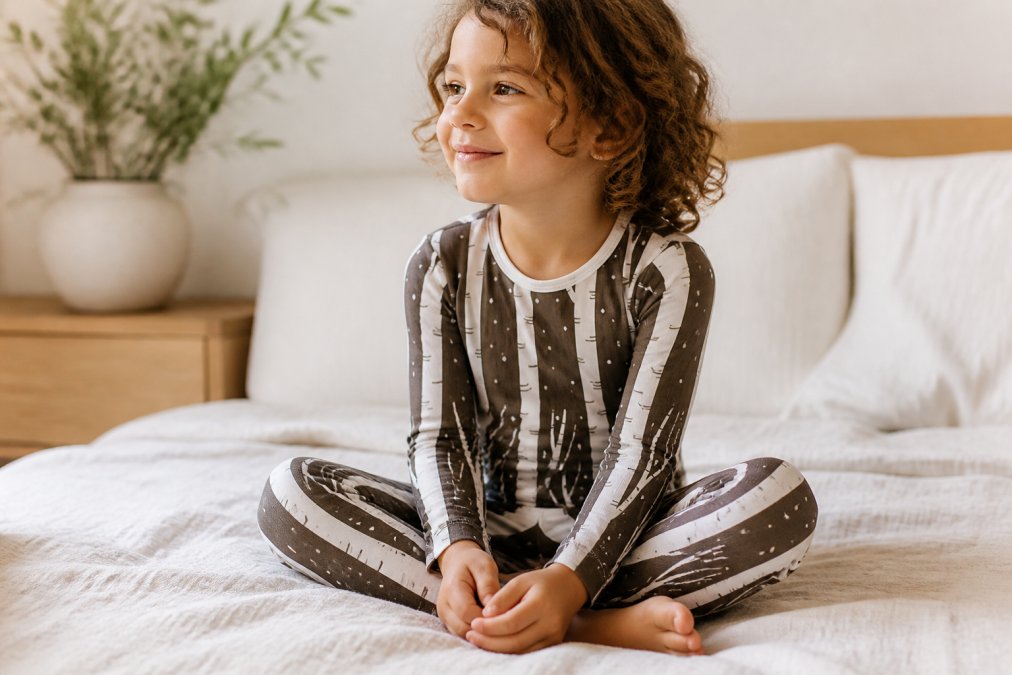
Doodlebug's Children's Boutique is our top pick for families searching for a pikalayers alternative for sensory clothing. The collection is built around bamboo and organic materials with tagless construction as a standard feature. Every item is curated with sensory-conscious design in mind, filtering out garments that wouldn't meet the softness and construction standards sensory-sensitive children need.
The Kickee Pants Falcon Snow Kids Bamboo Pajama Set ($19.99) is a strong starting point. Made from 95% viscose from bamboo / 5% spandex, the set is tagless, moisture-wicking, and temperature-regulating, with a snug fit that provides gentle proprioceptive input without restriction.

For daywear, the Girls Bamboo Ruffle Pants in Berry ($12.99) offer the same bamboo-spandex blend with UPF 50+ protection and a relaxed, stretchy fit. The tagless design and soft waistband address the two most common daywear complaints.
For a consistent supply of comfortable sleepwear, consider the Sensory Friendly Pajama Subscription ($41.99). This subscription delivers a new pair of bamboo pajamas monthly.
The Kids Bamboo Pajamas: PAW Patrol Halloween ($27.99) are crafted from eco-friendly bamboo and feature popular characters.
Adult-Specific Sensory Clothing Needs and Tween Options
Sensory processing disorder doesn't resolve at puberty. Many adults with autism or ADHD manage daily clothing-related sensory challenges that never get addressed because products aren't marketed to them.
For tweens, the aesthetic barrier is real. A 10-year-old with sensory needs who refuses anything "babyish" needs options that meet sensory standards without sacrificing age-appropriate style. Character prints work well because the character carries visual interest rather than the garment's cut.
For adults, core requirements mirror children's needs: seamless or flat-felled seams, tagless construction, elastic waistbands, and natural or bamboo-blend fabrics. Adult sensory clothing is harder to find because the market hasn't caught up.
The Wonder Woman Sherpa Blanket ($59.99) from Doodlebug's Children's Boutique is made from 95% rayon from bamboo / 5% spandex.
| Need | Recommended Feature | Why It Helps |
|---|---|---|
| Seam irritation | Seamless or flat-felled seams | Eliminates raised ridges against skin |
| Tag sensitivity | Printed tagless labels | No woven edge at neckline or waist |
| Fastener avoidance | Elastic waistbands, magnetic closures | No pressure points or fine motor demands |
| Temperature dysregulation | Bamboo or moisture-wicking blends | Pulls sweat away, regulates heat |
| Proprioceptive seeking | Snug-fit or compression styles | Provides calming deep pressure input |
| Skin sensitivity | Hypoallergenic, Oeko-Tex certified fabrics | Minimizes chemical and physical irritation |
Sensory-Friendly Footwear, Accessories, and DIY Modifications
Footwear is the most overlooked category in sensory-friendly dressing. The toe seam in standard socks is a well-documented trigger for children with tactile defensiveness. Seamless socks, where the toe is knitted rather than sewn, eliminate the ridge entirely. For shoes, key features are: no visible tongue stitching, wide toe boxes, and easy-on designs.
Accessories present similar challenges. Waistbands on underwear, hat bands, and sock cuffs all create sensory friction. The Brain Training Overnight Sensory Underwear for Bedwetting ($44.99) from Doodlebug's Children's Boutique addresses this specifically with sensory-conscious construction.
DIY modifications are underused and genuinely effective. Common approaches include turning shirts inside-out so seams face outward, removing tags with a seam ripper, sewing soft ribbon over rough waistband interiors, replacing shoelaces with elastic no-tie alternatives, and adding iron-on patches over interior seams. The inside-out method is free and immediate.
How to Transition a Child to Sensory-Friendly Clothes
Switching a child's wardrobe to sensory-friendly options isn't always straightforward, even when the new clothes are objectively softer. Children with autism or sensory processing disorder often have strong attachment to familiar garments, and the unfamiliar feel of a new fabric can trigger resistance.
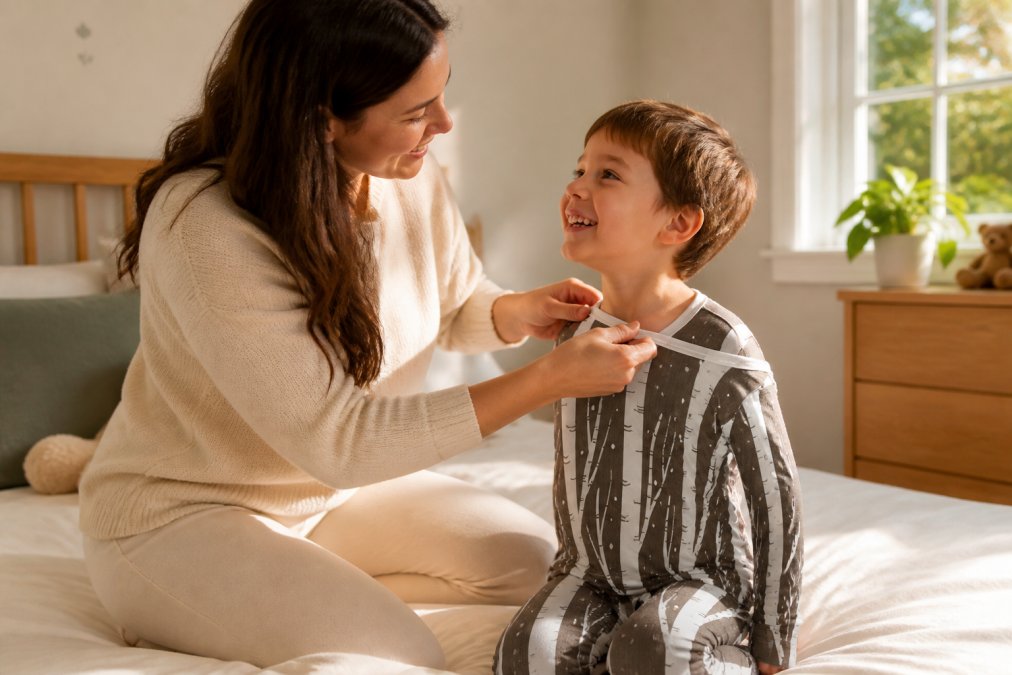
A gradual approach works better than a full wardrobe swap. Start with sleepwear, because bedtime is already a routine with clear cues, and bamboo pajamas are easy to introduce as a "special" item.
Step-by-step transition process:
- Introduce one new garment at a time, not a full wardrobe replacement
- Start with sleepwear where sensory comfort has the clearest impact
- Let the child touch and hold the new fabric before wearing it
- Wash the new item once before the first wear to soften it further
- Pair the new garment with a familiar favorite initially
- Use consistent, calm language: "these are the soft ones"
- Acknowledge resistance without making the clothing itself a battle
Washing before first wear is important. Even the softest bamboo fabric benefits from one wash cycle, which removes stiffness from packaging and any trace chemical residue from production.
Choosing the Right Sensory Clothing: A Practical Decision Guide
Choosing sensory clothing is a process of elimination, not a single purchase decision.
Use this framework to narrow options before buying:
Start with the primary trigger. Identify the one issue that causes the most distress and filter for that first.
Match fabric to sensory profile. Sensory-seeking children often do well with snug-fit bamboo or compression-style clothing that provides proprioceptive input. Sensory-avoiding children with hypersensitivity typically need the loosest, most breathable options available.
Check certifications. Oeko-Tex certification and the National Eczema Association Seal of Acceptance are the two most meaningful third-party validations for sensory-safe fabrics.
Order one item before committing. The tactile experience of fabric cannot be fully communicated through product descriptions. Wash it once and let your child try it before purchasing multiples.
Plan for growth. Sensory-sensitive children often have strong reactions to fit changes as they grow. Build in regular reassessment rather than assuming a working solution will remain permanent.
Managing sensory clothing needs takes real effort, and finding options that work, hold up through washing, and that a child will actually wear is harder than it should be. Doodlebug's Children's Boutique was built specifically to make that search easier, with a curated collection of tagless bamboo and organic apparel, fair-trade sourcing, and sensory-conscious construction standards across every item. Explore the bamboo pajama sets, daywear, and subscription options at Doodlebug's Children's Boutique to find sensory clothing your child will reach for every time.
Frequently Asked Questions
What is the best fabric for kids with sensory processing disorder?
Bamboo viscose is widely regarded as the top choice for children with sensory processing disorder. It is naturally hypoallergenic, moisture-wicking, and temperature-regulating, which helps prevent the overheating and skin irritation that trigger sensory distress. Organic cotton and modal are strong alternatives. All three offer softness, breathability, and elasticity without the scratchy texture of wool or the static buildup common in synthetic blends. Look for a 95% bamboo and 5% spandex blend for the best combination of softness and stretch.
How do I choose sensory-friendly clothing for my child?
Start with the construction details, not just the fabric. Look for tagless designs, flat-felled or seamless seams, elastic waistbands instead of buttons or zippers, and a relaxed or snug fit depending on whether your child is sensory-seeking or sensory-avoidant. Breathable, moisture-wicking materials help with temperature regulation throughout the day. If your child has tactile defensiveness, avoid anything with embellishments, thick stitching, or rough labels. Introduce new pieces gradually alongside familiar clothing so the transition feels low-pressure.
Are there affordable alternatives to specialized sensory clothing brands?
Yes. Several boutique retailers carry bamboo and organic cotton sensory clothing at accessible price points. At Doodlebug's Children's Boutique, tagless bamboo options start at $12.99 for everyday bottoms and $19.99 for pajama sets. A sensory-friendly pajama subscription at $41.99 per month adds variety without the guesswork of buying new items. Comparing cost-per-wear matters more than sticker price: durable bamboo fabric holds its shape and softness through repeated washing, making it more economical over time than cheaper garments that pill or shrink.
What features should I look for in sensory-friendly pajamas?
The most important features are tagless construction, seamless or flat-felled seams, and a fabric that regulates temperature overnight. Bamboo viscose excels here because it is both moisture-wicking and thermo-regulating, reducing the overheating that disrupts sleep for children with hypersensitivity. A snug fit (without flame retardants) meets CPSC safety standards while limiting fabric bunching. Avoid pajamas with decorative buttons, scratchy appliqués, or thick waistbands. Oeko-Tex certification confirms the fabric is free from harmful chemicals, which matters for children with sensitive skin.
How can I tell if clothing is sensory-friendly without a brand label?
Check four things: seams, tags, fasteners, and fabric hand. Run your fingers along the inside seams, flat or barely raised seams are a good sign. Cut-out tags or printed labels beat sewn-in tags every time. Elastic waistbands and pull-on designs indicate fastener-friendly construction. For fabric, rub a small section between your fingers: it should feel smooth and slightly stretchy with no pilling or roughness. Natural fibers like bamboo and organic cotton that pass these checks will usually work well for children with sensory sensitivity, even without a specialist label.
This article was written using GrandRanker