
Table of Contents
- Understanding Sensory Processing Differences and Sleep
- Building a Sensory Bedtime Routine for Kids
- Creating a Sensory-Friendly Bedroom for Kids
- Sensory Strategies for Sleep Success
- Choosing Sensory-Friendly Pajamas for Kids
- Safe Use of Sleep Aids and Weighted Products
- Troubleshooting Common Bedtime Scenarios
- Tracking Progress and Adjusting Your Approach
- Frequently Asked Questions
Last Updated: October 10, 2026
Understanding Sensory Processing Differences and Sleep
Children with sensory processing differences experience the world differently than their peers, and these differences directly impact sensory processing sleep.
Sleep problems in children with sensory processing differences aren't laziness or defiance, they're a mismatch between the child's sensory needs and their sleep environment.
At Doodlebug's Children's Boutique, we offer products to help families navigate these exact challenges every day.
Building a Sensory Bedtime Routine for Kids
A predictable bedtime routine signals to your child's nervous system that sleep is coming. For children with sensory processing differences, consistency reduces uncertainty, which triggers stress and blocks sleep.
The routine should start 30-60 minutes before bed and progress through four steps: wind-down activities, quiet play, sensory tools, and consistent timing.
Step 1: Start Wind-Down Activities 30-60 Minutes Before Bed
Begin winding down well before the target bedtime. This gives your child's nervous system time to shift from alert to calm. Abrupt transitions don't work for sensory-sensitive kids.
Wind-down activities should be low-energy and predictable: dim lights, lower your voice, pause active play or screen time, and move toward the bedroom slowly. A child who goes from running around to lying in bed in five minutes will fight sleep; one who spends 30-45 minutes gradually slowing down will be ready.
Step 2: Transition to Quiet Play and Calming Activities
Move into genuinely calm activities: reading, soft music, gentle coloring, or soothing fidget toys. Avoid video games, competitive play, or discussions about tomorrow's events. A specific sequence, like book, then fidget toy, then pajamas, becomes calming through repetition.
Step 3: Use Sensory Tools and Weighted Products
Sensory tools bridge the gap between wakefulness and sleep. The right tool depends on your child's sensory profile: deep pressure (weighted blankets or toys), proprioceptive input (heavy work), tactile input (soft textures), or minimal stimulation (simple shapes, neutral colors).
The Happy Hugs Weighted Plush Bulldog provides 2.5 pounds of gentle deep pressure with soft texture and wrinkled tactile input. Many children rest it on their lap or chest during wind-down, then keep it nearby during sleep.

Step 4: Complete the Routine With Consistent Timing
Consistency matters more than perfection. Aim for the same start time within 15-30 minutes every night, including weekends; your child's body clock adjusts to predictability, making sleep easier.
Track your routine for one week: note start time, activities in order, sensory tools used, and time to sleep. This data helps you spot what works.
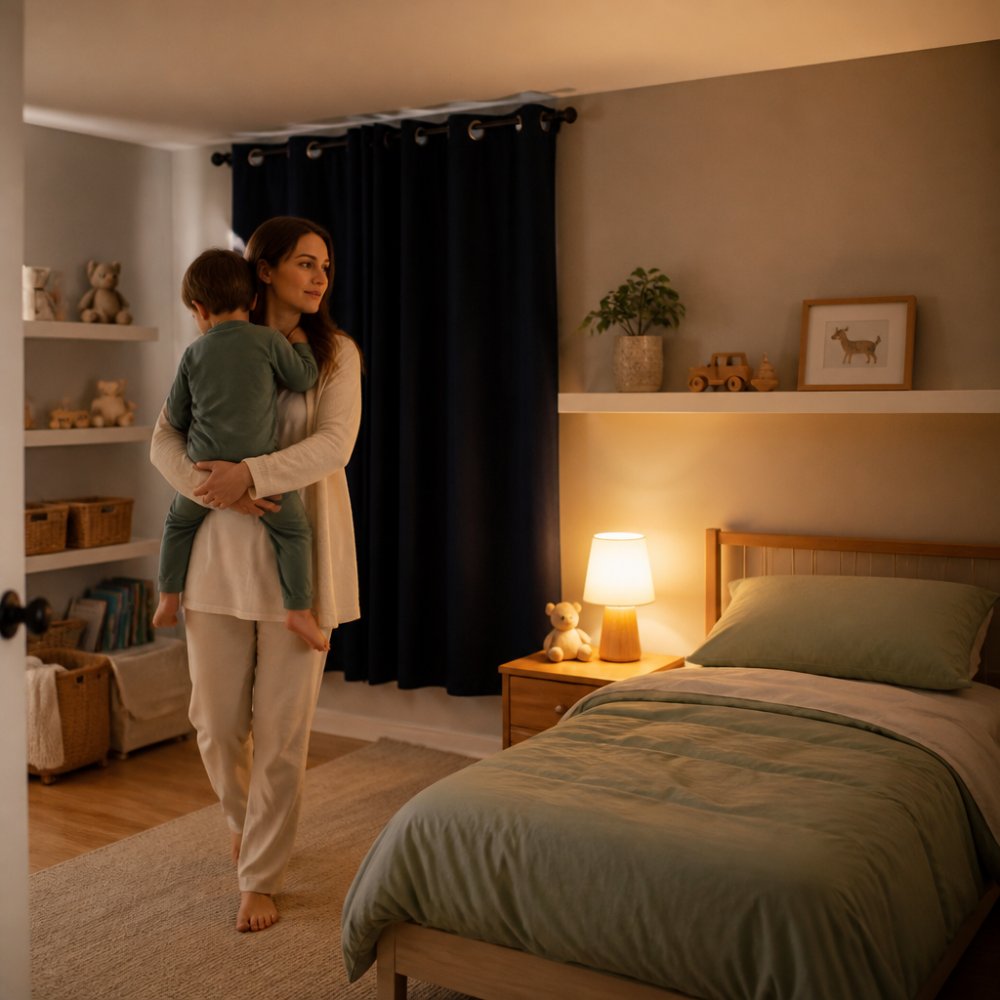
Creating a Sensory-Friendly Bedroom for Kids
The bedroom itself is a sensory tool. A space designed for calm sends a constant signal to your child's nervous system: this place is safe for sleep.
Controlling Light and Darkness
Light is one of the most powerful sleep signals. Most children with sensory processing differences sleep better in complete or near-complete darkness. Blackout curtains block outside light and create a consistent environment.
If your child fears complete darkness, use a single dim light source with warm (not blue) tones. Blue light suppresses melatonin; warm light (orange, amber, red) supports sleep.
Managing Noise and Sound
Sound sensitivity varies widely. Some children need silence; others prefer consistent background sound. Use white noise, soft music, or nature sounds, the key is consistency. The same sound every night becomes part of the routine and stops triggering alertness.
Optimizing Texture and Comfort
Bedding texture directly affects sleep quality for sensory-sensitive children. Soft, breathable fabrics work best: bamboo (naturally hypoallergenic), organic cotton, or high thread count sheets.
The Kickee Pants Falcon Snow Long Sleeve Bamboo Pajama Set pairs soft bamboo fabric with a snug fit, tagless design, and moisture-wicking properties. Avoid rough textures, heavy blankets, and loose threads or seams.

Sensory Strategies for Sleep Success
Beyond the routine and the bedroom, specific sensory strategies support sensory processing sleep by helping your child's nervous system transition to rest.
Heavy Work and Movement During the Day
Heavy work, pushing, pulling, carrying, squeezing, activates the proprioceptive system and helps organize the nervous system. Incorporate 10-15 minutes in the late afternoon: pushing a cart, carrying groceries, climbing, or wrestling. Heavy work too close to bedtime can activate instead of calm.
Deep Pressure and Weighted Comfort
Deep pressure activates the parasympathetic nervous system. Options include weighted blankets (5-10% of body weight), lap pads, plush toys, or compression wraps. The Happy Hugs Weighted Plush Bulldog (2.5 pounds) provides grounding pressure with soft texture. Not every child tolerates weighted products; observe your child's response before investing.
Gentle Rocking and Rhythmic Motion
Rhythmic motion, rocking, swinging, gentle bouncing, calms the nervous system. Incorporate rhythm into your routine: rock while reading, sway while talking, or use a rocking chair. Even 5-10 minutes can shift your child's nervous system state.
Choosing Sensory-Friendly Pajamas for Kids
Pajamas directly contact your child's skin for 8-10 hours. Sensory-friendly pajamas have: tagless design, flat seams, soft fabric (bamboo or organic cotton), snug fit, and no rough textures.
The Kickee Pants Falcon Snow Pajama Set meets all these criteria. The bamboo fabric is naturally soft and hypoallergenic. The tagless design eliminates a common irritation. The snug fit provides gentle compression without feeling restrictive. The breathable fabric prevents overheating, a common sleep disruptor for sensory-sensitive children.
Switching to genuinely sensory-friendly pajamas can help reduce bedtime resistance and improve sleep quality.
Safe Use of Sleep Aids and Weighted Products
Weighted products and sensory tools are helpful, but they require safe use.
Happy Hugs Weighted Plush Bulldog →
Weighted blankets and products:
- Use only with children 3 years and older
- Choose weight at 5-10% of body weight
- Monitor for overheating
- Never use with infants
- Ensure the child can move freely if needed
- Check that seams are secure and won't tear
Aromatherapy and scent:
- Use only products designed for children
- Test for allergic reactions first
- Ensure the scent is subtle, not overwhelming
- The Dream Aromatherapy Spray is specifically formulated for children and combines witch hazel, vetiver, lavender, and Roman chamomile, ingredients chosen for their calming properties without harsh chemicals
Fidget toys and sensory tools:

- Ensure no small parts that could be choking hazards
- Check that toys are age-appropriate
- Monitor use to ensure they calm rather than excite
- Remove toys if they become a distraction rather than a help
When in doubt, consult your pediatrician before introducing new sleep aids.
Troubleshooting Common Bedtime Scenarios
Real bedtime rarely goes perfectly. Here's how to handle common challenges.
Night Wakings and Restlessness
Your child falls asleep but wakes multiple times during the night.
Possible causes:
- Sensory discomfort (scratchy sheets, uncomfortable temperature, unexpected noise)
- Inconsistent routine (bedtime varies; wind-down activities skip some nights)
- Overstimulation during the day (too much input, not enough heavy work)
- Medical issues (sleep apnea, reflux, ear infections)
What to try:
- Review the bedroom environment for sensory irritants
- Ensure the routine is truly consistent
- Add more heavy work or movement during the day
- Check that pajamas and bedding are genuinely comfortable
- Keep a sleep log to spot patterns
If night wakings persist despite these changes, consult your pediatrician.
Resistance to Bedtime and Sleep Onset Struggles
Your child refuses to go to bed or fights sleep for hours.
Possible causes:
- Anxiety about bedtime or sleep
- Sensory environment is uncomfortable
- Routine is unpredictable or too rushed
- Screen time or stimulation too close to bedtime
- Insufficient heavy work during the day
What to try:
- Start the routine 15 minutes earlier
- Add more calming activities
- Increase heavy work in the afternoon
- Review and simplify the sensory environment
- Use visual schedules so the routine is predictable
- Pair bedtime with a comforting sensory tool
Small changes often have big effects. Adding heavy work in the late afternoon can help reduce bedtime resistance.
When to Seek Medical Assessment
Some sleep problems have medical roots that no routine can fix.
Consult your pediatrician if your child:
- Snores loudly or stops breathing during sleep
- Wakes gasping or choking
- Sweats excessively during sleep
- Experiences frequent night terrors
- Sleepwalks or talks in their sleep
- Shows signs of sleep apnea
- Has pain or discomfort that prevents sleep
- Takes medications that affect sleep
Your pediatrician can rule out conditions like sleep apnea, reflux, or ear infections that mimic sensory sleep problems.
Tracking Progress and Adjusting Your Approach
Change takes time. Track what you're doing so you can spot what works.
Use a simple sleep log:
| Date | Bedtime | Wind-Down Start | Activities Used | Tools Used | Sleep Time | Quality Notes |
|---|---|---|---|---|---|---|
| Oct 1 | 8:00 PM | 7:30 PM | Reading, rocking | Weighted toy | 15 min | Restless |
| Oct 2 | 8:00 PM | 7:30 PM | Reading, rocking | Weighted toy | 12 min | Better |
| Oct 3 | 8:15 PM | 7:45 PM | Reading, rocking | Weighted toy | 20 min | Resisted |
Track for at least two weeks. Look for patterns:
- Which activities help most?
- Which sensory tools work?
- What time is most realistic for your family?
- How does heavy work timing affect sleep?
After two weeks, adjust one variable at a time. If you change three things at once, you won't know which one helped. Small, deliberate changes compound into real improvements.
Many families see progress with consistent, sensory-informed routines. Every child is different.
Bedtime struggles with sensory processing differences are real, but they're also solvable. The key is matching your approach to how your child's nervous system actually works, not how you wish it worked.
Frequently Asked Questions
Can sensory processing difficulties affect a child's sleep?
Yes. Children with sensory processing disorder often struggle with sleep because their nervous systems process sensory information differently. Light, sound, textures, and temperature changes can feel overwhelming at bedtime, making it hard to wind down and fall asleep. Many children also experience night wakings when their bodies are hypersensitive to touch or movement. Understanding these differences is the first step to creating a sleep environment and routine that works for your child.
What sensory bedtime routine for kids actually works?
A sensory bedtime routine for kids works best when it's predictable, calming, and tailored to your child's specific sensory needs. Start 30-60 minutes before bed with quiet activities, reduce stimulation gradually, use weighted or rocking tools if they help, and wear comfortable sensory-friendly pajamas. Consistency matters more than perfection, your child's nervous system learns to expect sleep when the routine stays the same each night. Track what works and adjust based on your child's response.
When should I talk to a pediatrician about my child's sleep problems?
Contact your pediatrician if your child has persistent sleep problems despite a consistent sensory routine, if they're excessively tired during the day, if they snore or seem to stop breathing during sleep, or if sleep issues are significantly affecting their behavior or learning. Your pediatrician can rule out medical conditions like sleep apnea or reflux that may mimic sensory sleep struggles. They can also refer you to a sleep specialist or occupational therapist for further evaluation.
What are signs of sensory overload at bedtime?
Signs include resistance to going to bed, excessive fidgeting or restlessness, complaints about clothing texture or tags, sensitivity to light or noise, difficulty calming down, meltdowns or emotional outbursts, and taking a very long time to fall asleep. Some children also show physical signs like clenching fists, covering their ears, or avoiding certain textures. Recognizing these signals helps you identify which sensory triggers affect your child so you can address them in your routine and bedroom setup.