
Table of Contents
- Why Fabric Choice Matters for Eczema-Prone Skin
- Comparing the Best Clothing for Kids with Eczema: Bamboo vs. Organic Cotton
- Top Picks: Tagless Pajamas for Sensitive Skin and All-Day Wear
- Key Features to Look For in Eczema-Friendly Clothing
- How to Wash Clothes for Eczema: A Simple Care Routine
- Layering Strategies for Every Season
- The Bottom Line: Balancing Cost, Comfort, and Care
- Frequently Asked Questions
Last Updated: September 9, 2026
When a child has eczema, getting dressed can feel like a daily negotiation. Rough seams, itchy tags, and heavy synthetic fabrics can trigger the itch-scratch cycle that keeps both of you awake at night. Finding the right clothing for kids with eczema is about choosing materials and designs that protect the skin barrier and allow it to heal. Doodlebug's Children's Boutique specializes in tagless, sensory-friendly apparel made from organic and bamboo materials.
The core of the problem is often textile sensitivity. Many parents focus on lotions and creams, but what sits against the skin for 24 hours a day matters just as much. Rough wool, stiff denim, and non-breathable synthetics trap heat and moisture, which are known triggers for flare-ups.
Why Fabric Choice Matters for Eczema-Prone Skin
Eczema-prone skin has a compromised barrier, losing moisture easily and allowing irritants to penetrate more readily. Synthetic fibers like polyester and nylon do not breathe well, trapping sweat and causing overheating. Natural fibers are generally safer because they are more breathable and absorbent.
The primary culprits in standard clothing are rough textures, tight elastic, and scratchy labels, which create micro-friction with every movement. The goal is to choose smooth garments that minimize irritation. Softness is a functional requirement for managing inflammation and reducing the urge to scratch.
Comparing the Best Clothing for Kids with Eczema: Bamboo vs. Organic Cotton
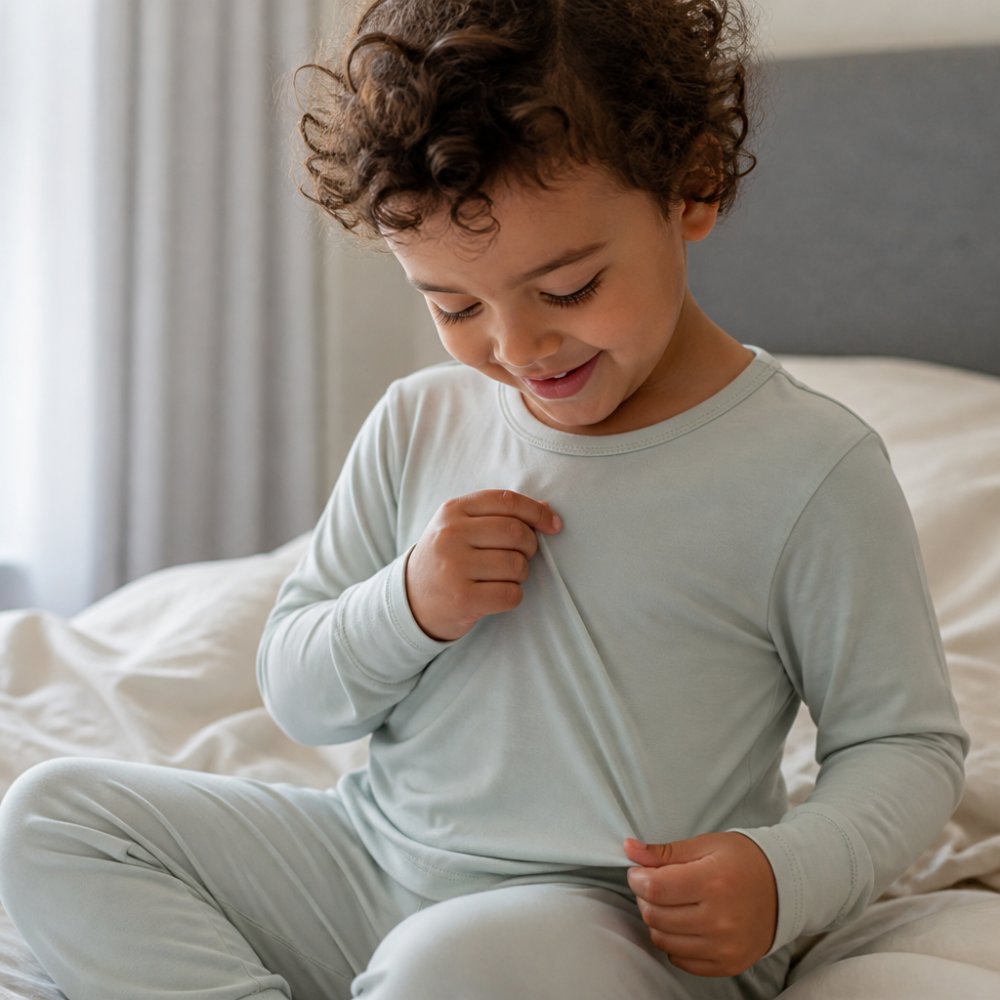
Two fabrics dominate the conversation for sensitive skin: bamboo viscose and organic cotton. Bamboo viscose, often blended with spandex, is renowned for its buttery-soft feel and superior moisture-wicking properties. Organic cotton is highly breathable and hypoallergenic, making it a safe, reliable choice for everyday wear.
Bamboo tends to have a silkier, smoother hand-feel that many sensory-sensitive kids prefer, and it offers excellent thermal regulation. Organic cotton is more absorbent and can feel more familiar, but it may hold moisture against the skin longer if a child sweats.
| Feature | Bamboo Viscose | Organic Cotton |
|---|---|---|
| Softness | Silky and smooth | Soft but can feel rougher over time |
| Breathability | Excellent, thermo-regulating | Excellent, very breathable |
| Moisture Management | Wicks moisture away from skin | Absorbs moisture, can feel damp |
| Durability | Holds shape well, resists pilling | Prone to shrinking if not careful |
| Best For | Sleepwear and high-sensitivity days | Everyday play clothes and layering |
Many families keep both in rotation. Bamboo is often the winner for pajamas and base layers because of its moisture-wicking and temperature-regulating abilities. Organic cotton is a fantastic choice for daytime outfits where breathability and a natural feel are priorities.
Top Picks: Tagless Pajamas for Sensitive Skin and All-Day Wear
Sleep is when the body repairs the skin, but it is also the hardest time to control scratching. Investing in high-quality tagless pajamas for sensitive skin is often the single most impactful change a parent can make. A bamboo pajama set can address common nighttime triggers: heat, friction, and tags.

For a versatile option that works for both sleep and lounging, the Girls Bamboo Ruffle Pants in Berry at $12.99 are a fantastic choice. They feature a tagless design and a relaxed, stretchy fit that moves with the child, preventing restriction. They are lightweight and breathable, making them suitable for play, travel, and layering.

For actual sleepwear, the Long Sleeve Pajama Set in Natural Bubbles at $29.99 is a reliable staple. It is crafted from a buttery-soft bamboo blend with a snug, safe fit and a tag-free label. The temperature-regulating qualities keep kids cool in the summer and cozy in the winter, helping break the itch-scratch cycle at night. For older kids who need a style incentive, the Minecraft: Summer Vibes Bamboo Kids Pajamas at $39.99 offers the same sensory-friendly benefits with a design they will be excited to wear.

Key Features to Look For in Eczema-Friendly Clothing
Beyond the fabric type, specific design features determine whether a garment will truly work for a child with eczema. Flat seams are essential because they lie flush against the skin, preventing the raised ridge of a standard seam from digging in. Tag-free designs are non-negotiable, as a single scratchy label can undo the comfort of an otherwise perfect shirt.
Look for clothing that is hypoallergenic and free from harsh chemical dyes. Certifications like OEKO-TEX provide peace of mind that the garment has been tested for harmful substances. Consider the fit as well; clothing that is too tight can restrict movement and cause chafing, while overly loose clothing can bunch up and create pressure points. A relaxed fit with a soft, stretchy waistband is often the most comfortable option.
How to Wash Clothes for Eczema: A Simple Care Routine
The way you wash clothes for eczema is just as important as the fabric you buy, and it becomes even more critical when your child is using topical treatments. Residue from standard detergents, fabric softeners, and dryer sheets can linger on clothes and directly irritate sensitive skin. There is a second, rarely discussed problem: laundry residue can also interfere with how well prescription creams and emollients absorb into the skin.
The residue-treatment interaction. Most topical eczema treatments, whether over-the-counter emollients like CeraVe or prescription corticosteroids like triamcinolone acetonide, are designed to penetrate the stratum corneum, the outermost layer of the skin. When fabric fibers are coated with detergent residue, fabric softener, or dryer sheet wax, that coating transfers to the skin throughout the day, creating a thin, invisible film that can reduce medication absorption. Dermatologists commonly advise parents to strip laundry of all additives precisely because of this interference.
The first rule: choose the right detergent. Use a fragrance-free, dye-free liquid detergent specifically formulated for sensitive skin. Brands like Tide Free & Gentle, All Free Clear, and Seventh Generation Free & Clear are widely available and formulated without common irritants (fragrance, optical brighteners, and dyes). Powdered detergents can fail to dissolve completely in cold water, leaving abrasive particles embedded in the fabric weave that rub against inflamed skin.
The second rule: strip new garments before first wear. Manufacturing processes leave behind residues: sizing agents that stiffen fabric, formaldehyde-based finishes that prevent wrinkling, and dyes that have not been fully fixed to the fibers. A single wash before first wear removes most of these. For bamboo viscose, use cold water and a gentle cycle. For organic cotton, warm water is acceptable but avoid hot water, which can cause shrinkage.
The third rule: double rinse, always. Most washing machines have a "second rinse" or "extra rinse" option. Use it. A single rinse cycle may leave up to 10% of the detergent behind, especially in high-efficiency machines that use less water. That residual detergent, even from a "free and clear" formula, can accumulate over multiple washes and irritate sensitive skin. Double rinsing reduces this to near zero.
The fourth rule: eliminate fabric softener and dryer sheets entirely. Fabric softeners coat fibers with quaternary ammonium compounds and silicone-based oils, reducing breathability and transferring to the skin where they can block topical medication absorption. Dryer sheets leave a similar waxy residue. If static is a problem, add 1/2 cup of white vinegar to the rinse cycle, it naturally softens fabric without leaving a chemical residue, and the smell dissipates as the clothes dry.
The fifth rule: dry with care. High heat damages bamboo fibers and can cause organic cotton to shrink, changing the fit and creating new friction points. Line drying is the gentlest option and preserves fabric softness longest. If you must use a dryer, select the lowest heat setting and remove garments while slightly damp, then lay them flat to finish drying. This prevents over-drying, which makes fibers brittle and rough.
A weekly stripping routine. Even with a gentle detergent, body oils, sweat, and residual emollients can build up in fabric over time. Once every 2-4 weeks, wash your child's eczema garments without detergent, using only 1/2 cup of white vinegar in the rinse cycle. This "strip" removes accumulated oils and restores the fabric's natural absorbency and softness. Do not use baking soda in the same load as vinegar, the two neutralize each other and leave a salty residue.
What about antimicrobial or silver-infused garments? Some medical-grade eczema clothing is treated with silver ions for antimicrobial properties. These garments require special care: silver treatments degrade with chlorine bleach and can be damaged by fabric softeners. Wash them inside out in cold water with a mild detergent, and air dry them. Never use bleach, even oxygen-based bleach, as it can oxidize the silver and reduce its effectiveness. Check the care label for specific instructions, most manufacturers recommend washing separately for the first few cycles.
Signs your wash routine needs adjustment. If your child's skin is consistently better on day one after laundry day but worsens by day three or four, the issue may be residue buildup rather than the detergent itself. Similarly, if your child's prescription cream seems less effective, examine your laundry routine before assuming the medication has stopped working. A simple test: wash one garment with a double rinse and no additives, have your child wear it for a full day, and compare the skin response to a garment from the regular wash.
Layering Strategies for Every Season
Managing eczema is a year-round job, and the weather dictates how you should dress your child. Overheating is a major trigger for itch, so the goal is to create layers that are easy to remove and add. In the winter, start with a soft, moisture-wicking bamboo base layer against the skin to protect it from rough textures while keeping the child dry.
During the summer, lightweight, breathable fabrics are essential to prevent heat rash and sweat buildup. Loose-fitting bamboo or organic cotton pieces allow air to circulate. For transitional seasons, a long-sleeve bamboo tee under a light cotton hoodie offers flexibility. The key is to avoid sudden temperature changes that can cause overheating and scratching.
The Bottom Line: Balancing Cost, Comfort, and Care
Parents often ask whether they need to spend $30-$40 on a single pair of specialized pajamas or whether a $12 organic cotton tee from a big-box retailer will do the job. The honest answer is: it depends on the child's flare pattern, the time of day, and the garment's job. Here is a practical framework for deciding where your dollars matter most.
When standard organic cotton is enough. If your child's eczema is mild, occasional dry patches that respond well to a daily moisturizer, you likely do not need medical-grade garments. A standard 100% organic cotton shirt with flat seams and no tags, priced between $8 and $15, will provide adequate breathability and low friction for daytime wear. Look for the GOTS (Global Organic Textile Standard) label to ensure the cotton was grown without pesticides and processed without harsh chemicals. This certification adds about 10-15% to the retail price compared to non-certified cotton, but it is a meaningful step up from conventional cotton, which may retain pesticide residues that can irritate broken skin.
When specialized garments are worth the premium. Invest in higher-priced bamboo or silk-based garments (typically $25-$45 per piece) when your child experiences any of the following: moderate-to-severe flares that require prescription topical steroids, nighttime scratching that disrupts sleep, or sensitivity to seams and tags that makes standard clothing unwearable. In these cases, the garment is not a luxury, it is a delivery mechanism for treatment and a barrier against mechanical irritation. A single night of uninterrupted sleep, which reduces cortisol and allows the skin barrier to repair, can be worth more than the price difference over a month of use.
A cost-per-wear calculation. Rather than comparing price tags, calculate cost per wear. A $39.99 bamboo pajama set worn 3 nights per week for 18 months costs roughly $0.17 per wear. A $12 cotton tee worn twice a week for 6 months costs about $0.25 per wear, and it is more likely to trigger a flare that requires additional moisturizer or doctor visits. When you factor in prescription copays ($15-$40 per visit) and specialized creams ($10-$30 per tube), the cheaper garment often becomes the more expensive choice.
A practical starter strategy. You do not need to replace the entire wardrobe. Begin with these three purchases in this order:
- Two bamboo pajama sets ($25-$40 each) for nighttime, when scratching is most damaging and skin repair is most active.
- Three tagless, flat-seam organic cotton tees ($10-$15 each) for school and daytime wear under layers.
- One bamboo base-layer set ($30-$45) for winter, to protect skin from wool and synthetic outer layers.
This approach costs roughly $120-$180 upfront, about the same as two months of over-the-counter eczema creams used at recommended levels, and it directly targets the highest-friction, highest-heat periods of the day.
The durability factor. Bamboo viscose fibers are longer and stronger than standard cotton staples, which means they resist pilling and maintain their softness through more wash cycles. In our experience, a bamboo garment that is washed on a gentle cycle and line-dried will outlast a comparable cotton piece by 6-12 months. That durability closes much of the initial price gap by the second year of use.
When to skip specialized clothing entirely. If your child's eczema is well-controlled with a consistent moisturizing routine and shows no signs of mechanical irritation from clothing, you can allocate your budget elsewhere. The evidence for specialized garments is strongest for children with moderate-to-severe atopic dermatitis who scratch at night or react to standard textile finishes. For mild cases, a careful laundry routine and tag removal may be sufficient.
The bottom line is not about spending more, it is about spending where the skin barrier is most vulnerable. Prioritize sleepwear and base layers, verify certifications, and calculate cost per wear rather than sticker price. That approach turns a clothing purchase into a targeted investment in skin health.
Frequently Asked Questions
What fabrics should children with eczema avoid?
Children with eczema should avoid rough, scratchy synthetic fibers like polyester, nylon, and wool, which can trap heat and irritate the skin barrier. These materials often lack breathability and can cause friction, triggering the itch-scratch cycle. Instead, focus on soft, breathable natural fibers like organic cotton and bamboo rayon, which are hypoallergenic and gentle on sensitive skin. Always check the label for flat seams and tag-free designs to minimize irritation.
Is bamboo clothing good for eczema?
Yes, bamboo clothing is an excellent choice for eczema-prone skin. Bamboo rayon is ultra-soft, breathable, and naturally hypoallergenic. It is also moisture-wicking and thermo-regulating, which helps prevent overheating and sweating, common eczema triggers. Many bamboo garments are also tagless and feature flat seams, making them ideal for sensitive skin. Look for OEKO-TEX certified options to ensure they are free from harmful chemicals.
Why does clothing irritate my child's eczema?
Clothing irritates eczema for a few reasons. Rough textures like wool or coarse seams rub against the skin, causing friction and inflammation. Tight-fitting clothes can also trap sweat and heat, leading to overheating and irritation. Additionally, detergents and fabric softeners used on clothes can leave residues that trigger sensitive skin. Opt for loose-fitting, tagless garments made from smooth, breathable fabrics like organic cotton or bamboo, and use a fragrance-free, gentle detergent.
What features should I look for in eczema-friendly pajamas?
When choosing eczema-friendly pajamas, prioritize soft, breathable fabrics like bamboo viscose or organic cotton. Look for tagless designs and flat seams to eliminate friction and itching. A snug yet stretchy fit helps keep the fabric in place without trapping heat. Moisture-wicking properties are also crucial to keep skin dry overnight. Consider options like the Playfully Strong Long Sleeve Pajamas, which are made from a bamboo blend and designed to grow with your child, lasting longer and reducing the need for frequent replacements.
How does organic cotton help children with eczema?
Organic cotton helps children with eczema because it is grown without harsh pesticides and chemicals that can remain in the fabric and irritate sensitive skin. It is softer and more breathable than conventional cotton, reducing friction and allowing air to circulate, which helps prevent overheating. Unlike synthetic fibers, organic cotton is gentle on the skin barrier. For best results, look for GOTS-certified organic cotton, which ensures the entire manufacturing process meets strict environmental and social standards.