Table of Contents
- What Makes Clothing Autism-Friendly?
- Why Tagless Pajamas for Sensitive Skin Matter
- The Benefits of Bamboo Fabric for Autism
- Best Clothing Brands for Sensory Processing Disorder
- Sizing, Fit, and Style for Tweens and Teens
- How to Care for Sensory-Friendly Clothing
- Conclusion
- Frequently Asked Questions
Last Updated: September 19, 2026
What Makes Clothing Autism-Friendly?
Autism-friendly clothing is apparel designed to remove the sensory triggers that make getting dressed difficult: scratchy seams, stiff tags, tight waistbands, and rough fabrics, and it is the reason autism-friendly clothing matters so much to families. The goal is simple. A garment should feel neutral or soothing against the skin, not distracting.
At Doodlebug's Children's Boutique, we hear the same story from parents again and again: the meltdown isn't about the outfit, it's about how the outfit feels. A child who can't tolerate a tag rubbing their neck will fight every morning. Fix the fabric and the fasteners, and mornings get calmer.
The Role of Seams, Tags, and Fasteners
Three details cause most clothing-related distress. Flat seams or seam-free construction prevent the ridge that digs into shoulders and ribs. Tagless necklines remove the label that scratches. And soft, covered waistbands replace the stiff elastic or metal button that presses into a tummy.
A common mistake is assuming "soft cotton" solves the problem. It often doesn't. The construction matters as much as the fabric.
Why Tagless Pajamas for Sensitive Skin Matter
Tagless pajamas for sensitive skin matter because sleep is when sensory defenses are lowest. A child lying still in bed has nothing to distract them from an itchy tag or a twisted seam. That small irritation can delay sleep for an hour.
Nightwear also sits against the skin for eight to ten hours, far longer than day clothes. Any roughness gets amplified over that stretch. For kids who already struggle to settle, removing that one variable can change the whole bedtime routine.
The American Academy of Pediatrics guidance on sleep and children notes that consistent, comfortable bedtime routines support better sleep. Comfortable sleepwear is part of that routine.
The Benefits of Bamboo Fabric for Autism
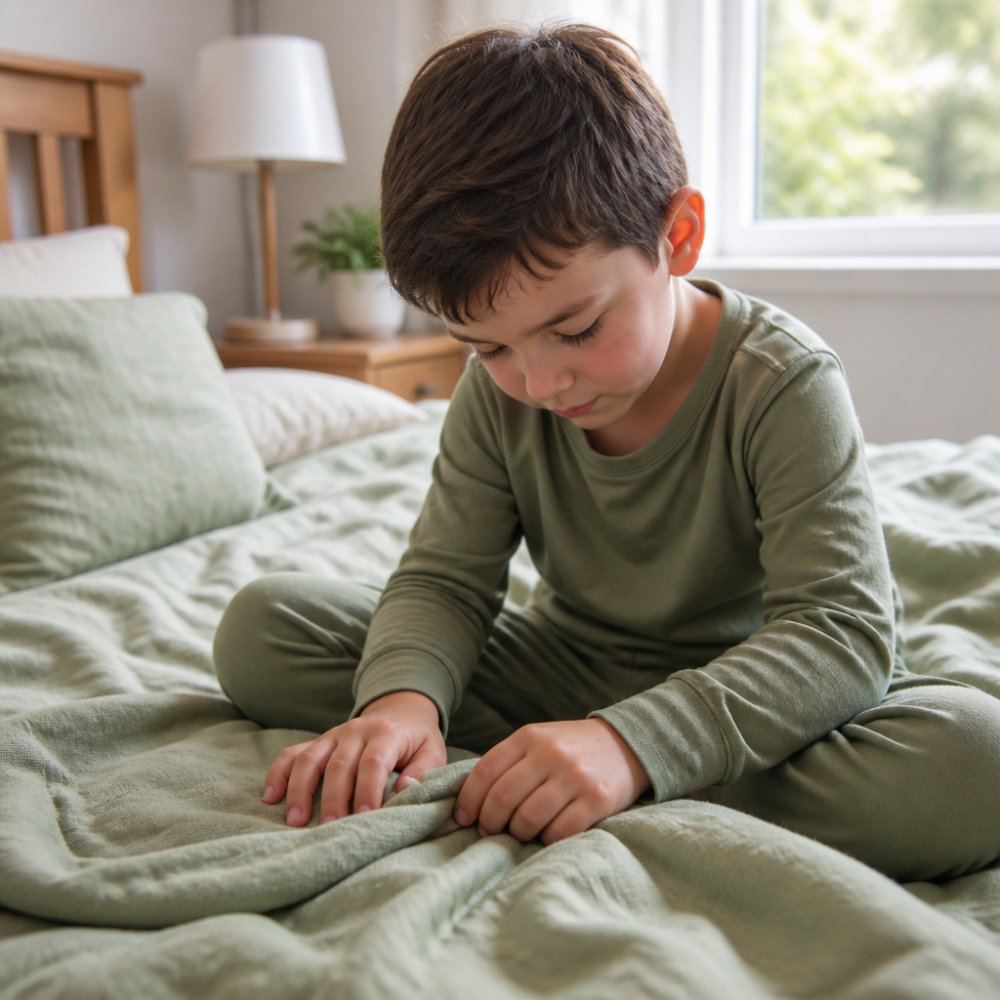
Bamboo fabric helps because it is smooth, breathable, and temperature-regulating. Many children with autism also have tactile sensitivities, and bamboo's silky surface creates less friction against skin than rougher weaves. It also wicks moisture, which reduces the damp, clingy feeling that can trigger discomfort.
The mechanism is worth understanding. Bamboo viscose and bamboo lyocell are spun into fine, round fibers with a smooth surface, so there are fewer microscopic rough edges to catch on skin. That smoothness is why a bamboo shirt can feel cool and slick rather than fuzzy. Cotton fibers, by contrast, have a natural twist that can feel softer at first but develops pills and fuzz over time.
How Bamboo Compares to Cotton and Synthetics
Each fabric behaves differently against sensitive skin. Here is how they stack up on the qualities that matter most for sensory needs.
| Fabric | Feel | Breathability | Moisture Handling | Durability Through Washing | Best For |
|---|---|---|---|---|---|
| Bamboo viscose | Silky, smooth | High | Wicks well | Holds softness well | Kids with tactile sensitivity |
| Bamboo lyocell | Silky, slightly denser | High | Wicks well | Holds softness very well | Sleepwear worn nightly |
| Organic cotton | Soft, can roughen | Moderate | Absorbs, stays damp | Pills over time | Everyday basics, budget |
| Conventional cotton | Softer at first, roughens faster | Moderate | Absorbs, stays damp | Pills faster than organic | Short-term wear |
| Polyester blend | Varies, can feel slick or clammy | Low | Traps moisture | Very durable | Durability, lower cost |
Organic Cotton vs. Polyester for Sensitive Skin
This is the comparison most brand roundups skip, and it matters more than the bamboo-versus-cotton question for many families.
Organic cotton is grown without synthetic pesticides and processed without the chlorine bleaching used on conventional cotton. For a child with skin sensitivities, the practical benefit is fewer residual processing chemicals and a fiber that feels closer to natural.
Girls Bamboo Ruffle Pants in Berry →
What to Check Before You Buy
- Look for the fiber percentage, not just the fiber name. "Bamboo" on the front of a tag can mean 5% bamboo and 95% polyester.
- For sleepwear, check for a snug-fit label. The U.S. Consumer Product Safety Commission sets flammability and fit standards for children's sleepwear, and snug-fit construction is how most bamboo pajamas comply.
- Wash a test piece once before committing. Bamboo holds its softness through repeated washing better than cotton, which can pill over time. That durability matters when you're buying pieces a child will wear constantly.
Best Clothing Brands for Sensory Processing Disorder
The best clothing brands for sensory processing disorder share three traits: tagless construction, soft waistbands, and fabrics that stay comfortable all day. Rather than chase a long list of names, focus on what a brand actually builds into its garments. The categories below show how to read a label before you buy.
What to Look For on the Tag
- Seam construction: Flatlock or seam-free shoulders and side seams. A raised ridge under a backpack strap or along the ribs is a common trigger.
- Neckline: Tagless or printed labels. If a brand still sews in a tag, check whether it can be removed without leaving a scratchy stub.
- Waistband: Covered elastic, encased elastic, or a soft drawstring. Exposed elastic and metal buttons press into the belly when a child sits or bends.
- Fiber content: Bamboo viscose, bamboo lyocell, or long-staple cotton for the body; a small percentage of spandex (usually 5%) for stretch without bagging.
- Fit standard: For kids' sleepwear, look for a snug-fit label. The U.S. Consumer Product Safety Commission requires children's sleepwear to meet flammability and fit rules, which is why snug-fit construction appears on so many kids' pajama labels.
Brand Categories That Tend to Work
Bamboo-first sleepwear labels. These brands build their whole line around viscose from bamboo or bamboo lyocell, usually with tagless necklines and covered waistbands. They tend to run slightly stretchy, which helps with growth and with kids who dislike pressure.
Real Product Examples from Doodlebug's Children's Boutique
A few pieces show how these details work in practice:
- Girls Bamboo Ruffle Pants in Berry ($12.99): made from 95% viscose from bamboo and 5% spandex, tagless, hypoallergenic, and moisture-wicking. The relaxed, stretchy fit and soft waistband suit kids who dislike pressure around the middle.
- Minecraft: Time to Mine Bamboo Kids Pajamas ($39.99): a long-sleeve set with a super soft waistband and tagless design, built for kids with sensitive skin or sensory sensitivities.
- Snuggies & Nuggies Long Sleeve Pajama Set ($36.00): 95% bamboo lyocell with a snug fit that meets CPSC compliance, tagless, and stretchy enough to fit up to three times longer.
- Galileo Dragon Scales Bamboo Pajama Set for Adults ($48.99): a drawstring-waist option so parents can match without sacrificing comfort.
A Simple Buying Test
- Turn it inside out and feel the shoulder seam and the neckline. If you can feel a raised edge, your child will too.
- Stretch the waistband and let it snap back. If it leaves a red mark on your wrist after a minute, it's too tight.
- Wash it once the way you plan to wash it normally, then feel it again. If it roughens up, it won't survive a season.
Sizing, Fit, and Style for Tweens and Teens
Sizing gets harder as kids grow, because tweens want to look their age, not their diagnosis. The trick is to keep the sensory features while choosing styles that read as "cool." Character prints, jogger cuts, and solid colors all work.

How to Care for Sensory-Friendly Clothing
Sensory-friendly clothing keeps its softness only if you wash it correctly. Heat and harsh detergent break down bamboo fibers and rough up the surface, undoing the very quality you paid for.
Follow these habits:
- Wash cold on a gentle cycle
- Skip fabric softener, which coats fibers and reduces breathability
- Avoid bleach and high heat
- Tumble dry low or lay flat to dry
- Turn prints inside out to protect the design
Conclusion
Finding clothing that works for a sensory-sensitive child takes trial and error, and the wrong purchase can mean a week of morning battles. The right fabric, seams, and waistbands change that.
Frequently Asked Questions
What features make clothing autism-friendly?
Autism-friendly clothing typically avoids tags, seams, and rough textures. Look for tagless designs, flat seams, and soft materials like bamboo. Elastic waistbands and magnetic closures can help if fasteners cause distress. The goal is to minimize sensory triggers so getting dressed is easier.
Why is bamboo fabric recommended for sensory-sensitive children?
Bamboo fabric is naturally hypoallergenic, moisture-wicking, and temperature-regulating. It feels silky-soft against the skin, which reduces irritation for kids with autism or eczema. Many parents find that bamboo pajamas and daywear help prevent meltdowns related to clothing discomfort.
Are there specific brands that specialize in tagless clothing?
Yes, Doodlebug's Children's Boutique offers a range of tagless pajamas and sensory-friendly apparel. Their bamboo ruffle pants and Minecraft pajama sets are designed without tags to prevent itching. You can find options for babies, kids, and tweens, all made from gentle materials.
How do I choose the right sensory-friendly pajamas for my child?
Start by identifying your child's specific triggers, such as tags, seams, or tight waistbands. Choose tagless, bamboo pajamas with a relaxed fit. Check the care instructions to ensure they stay soft after washing. Doodlebug's Children's Boutique offers a variety of sizes and styles to match your child's preferences.